









What Thrihnukagigur is
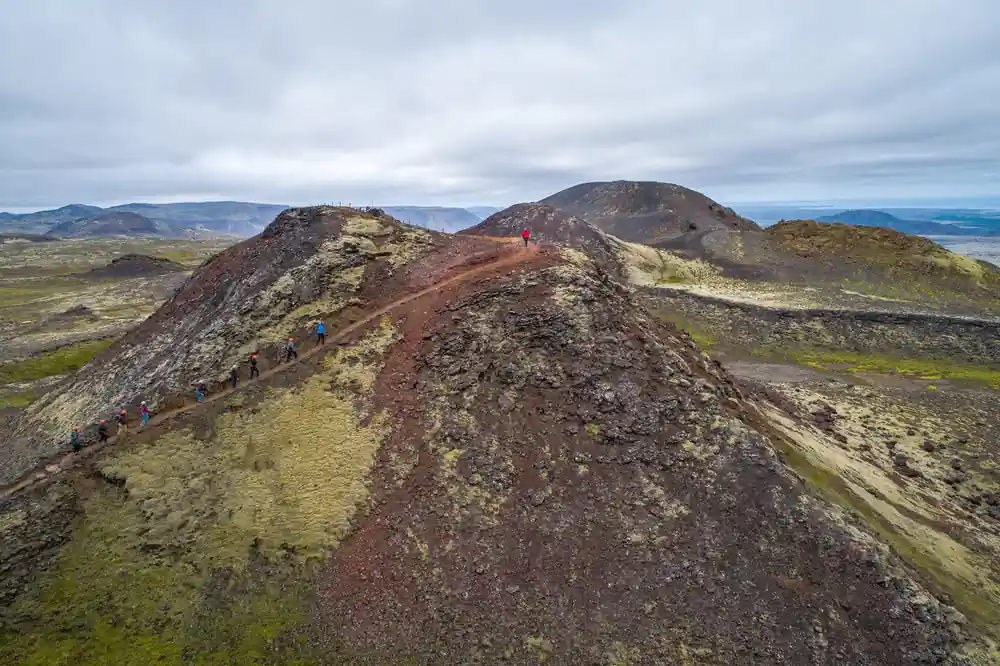
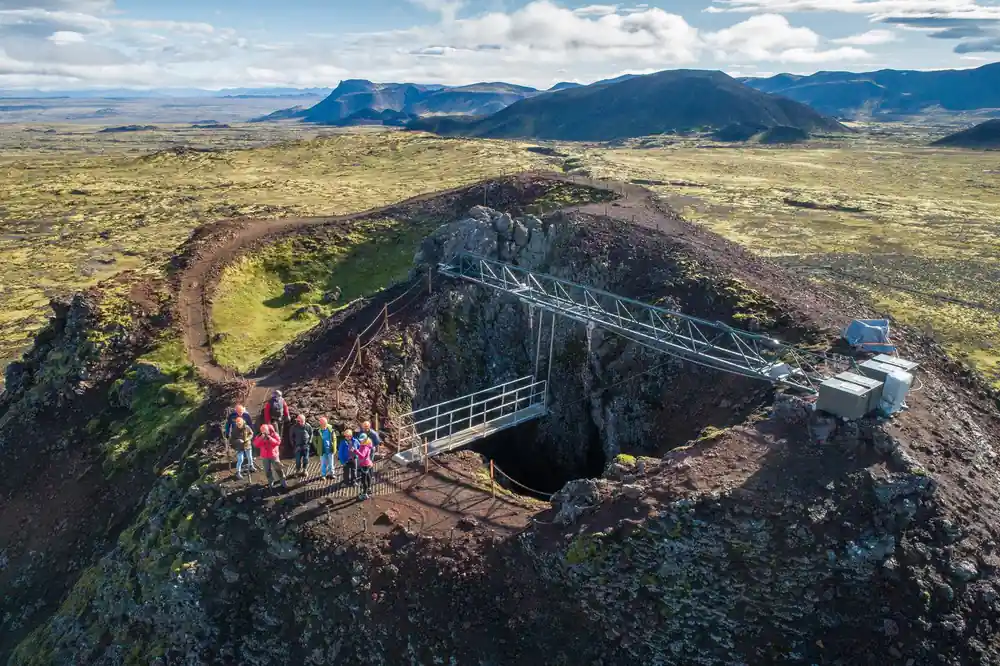
The name breaks into three Icelandic words: thri, three; hnukar, peaks; gigur, crater. The crater of the three peaks. It sits in the Blafjoll hills about half an hour south-east of Reykjavik, and from the outside it is entirely unremarkable, a low reddish cone among other low reddish cones on a lava plain.
The reason anyone goes there is underneath. Thrihnukagigur last erupted roughly four thousand years ago, and when the eruption ended the magma did not do what magma normally does. Instead of cooling in place and setting into solid rock, it withdrew, and left the chamber it had occupied standing open.
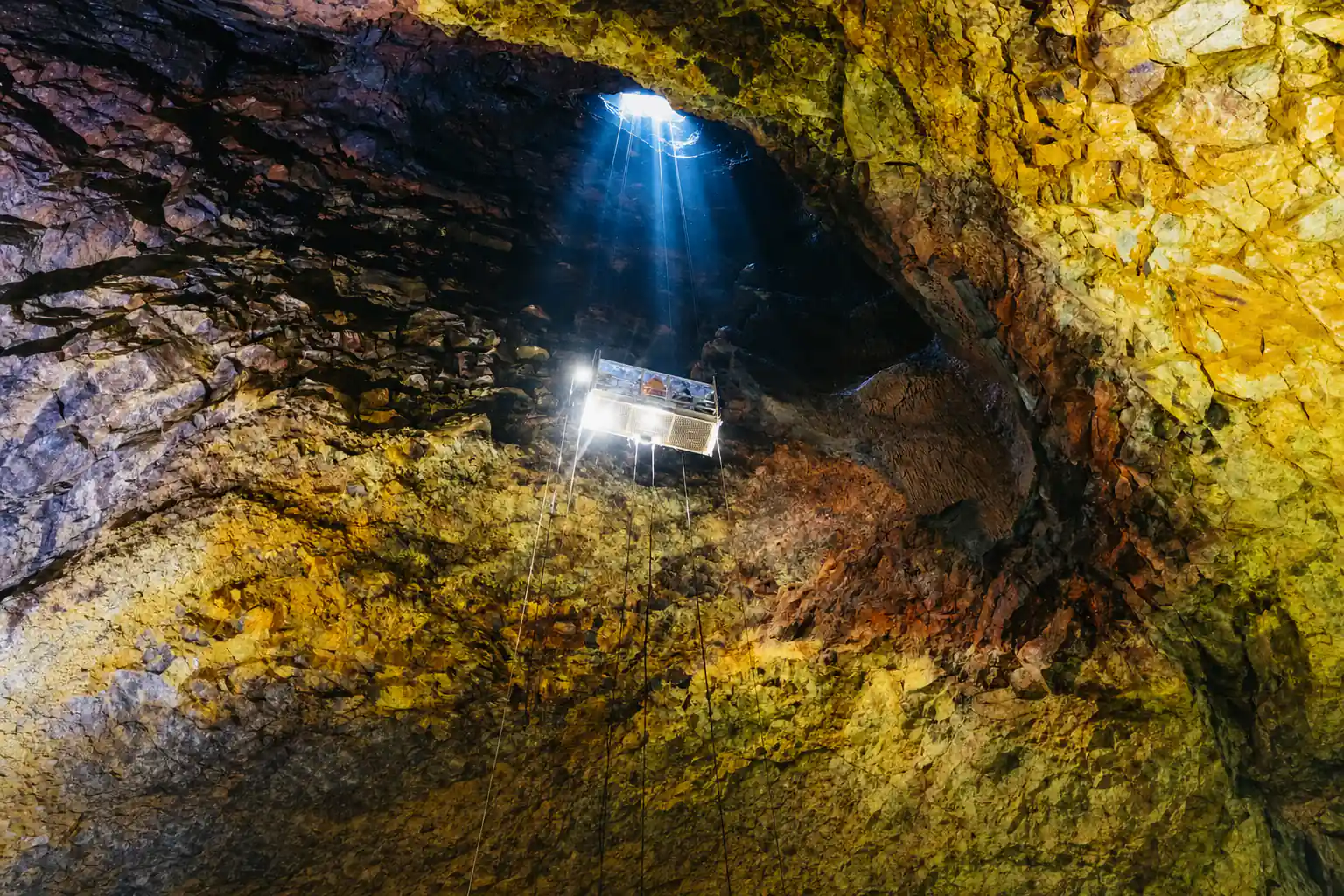
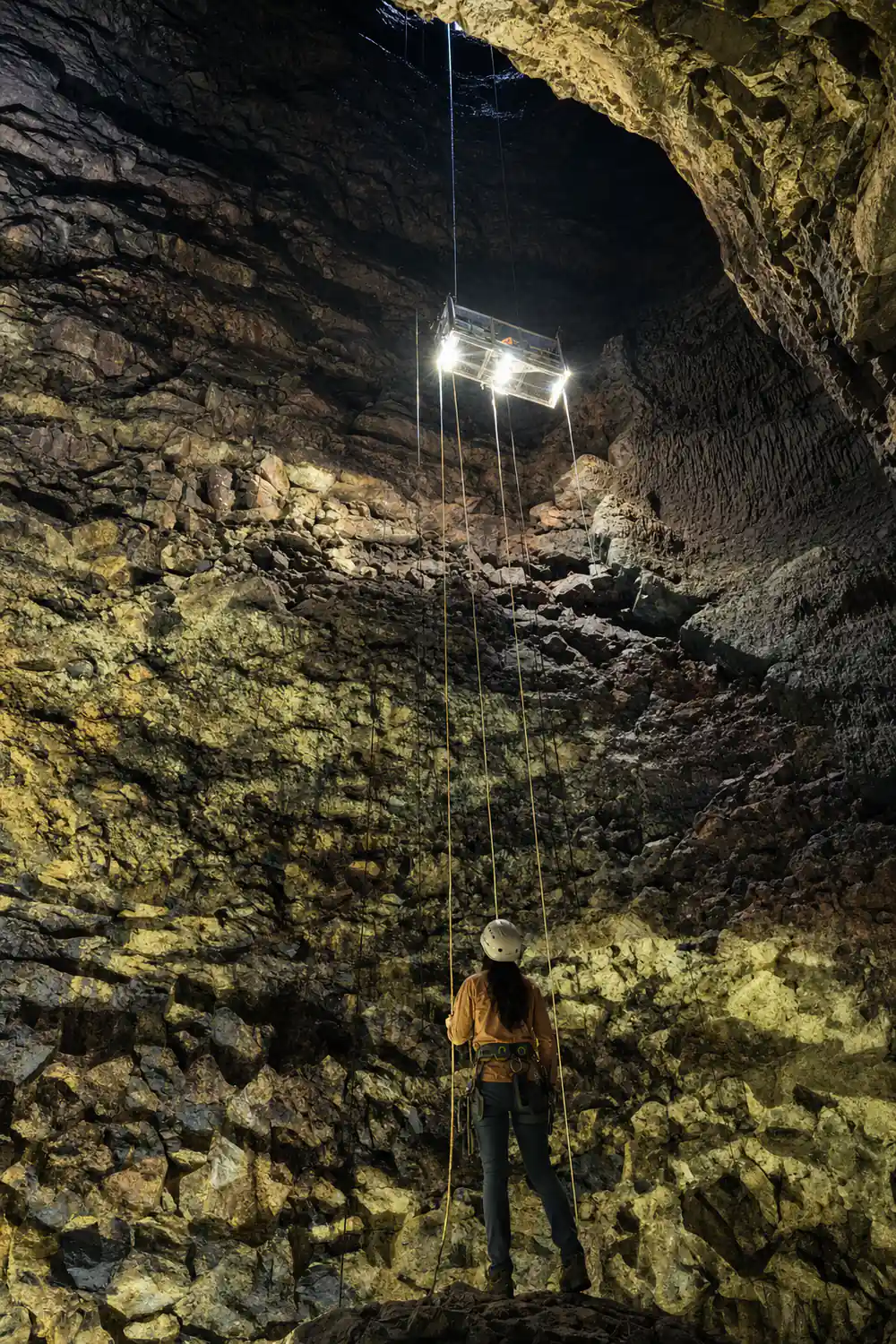
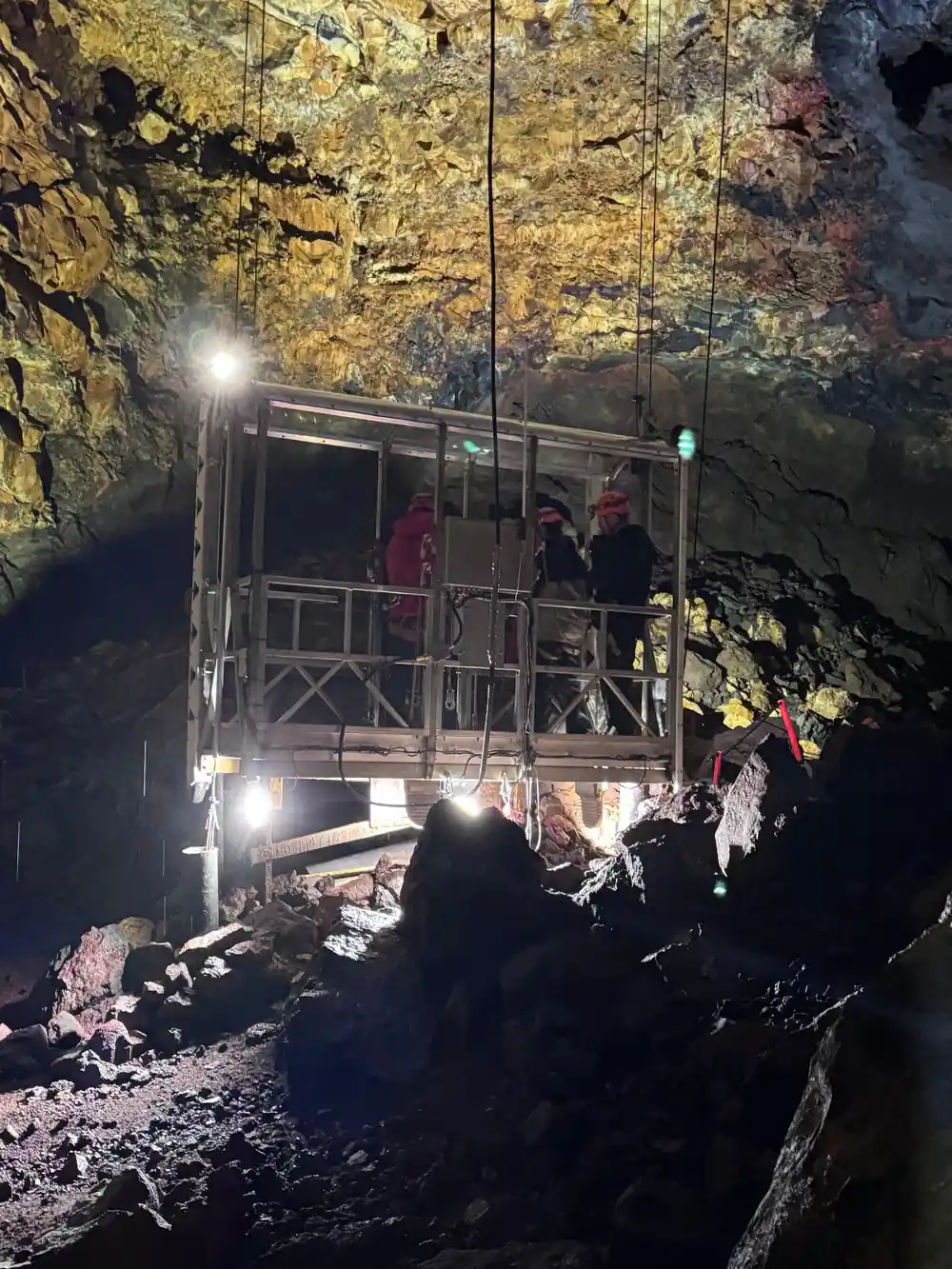
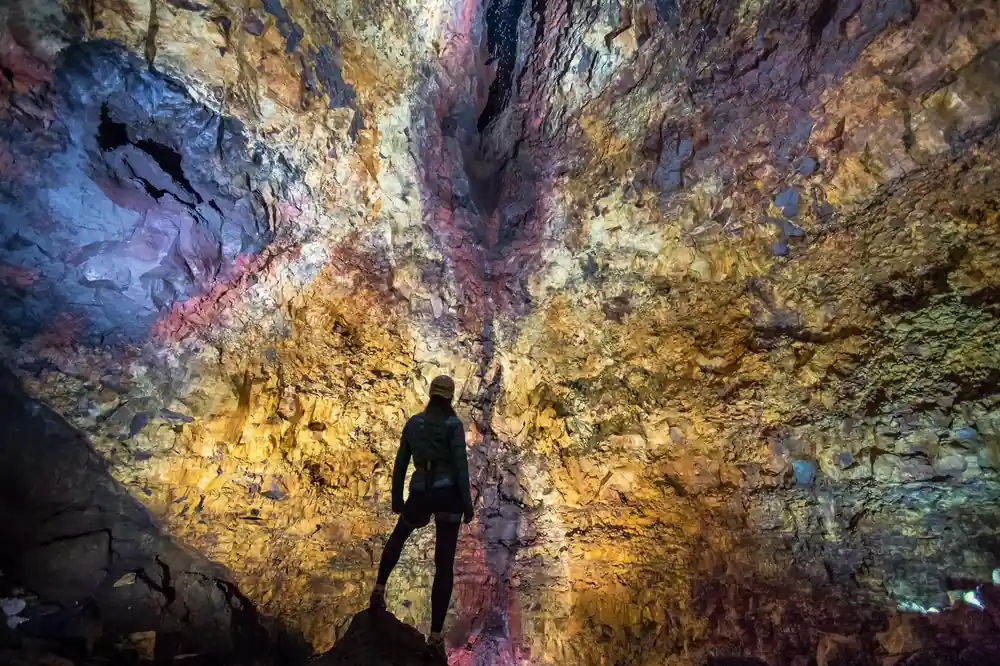
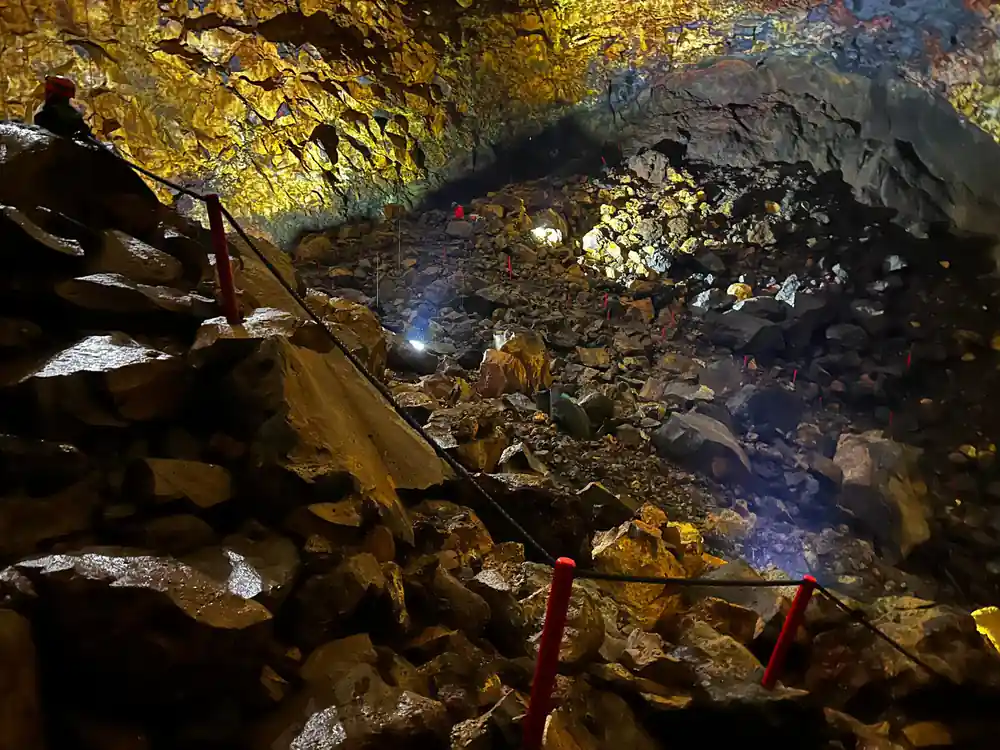
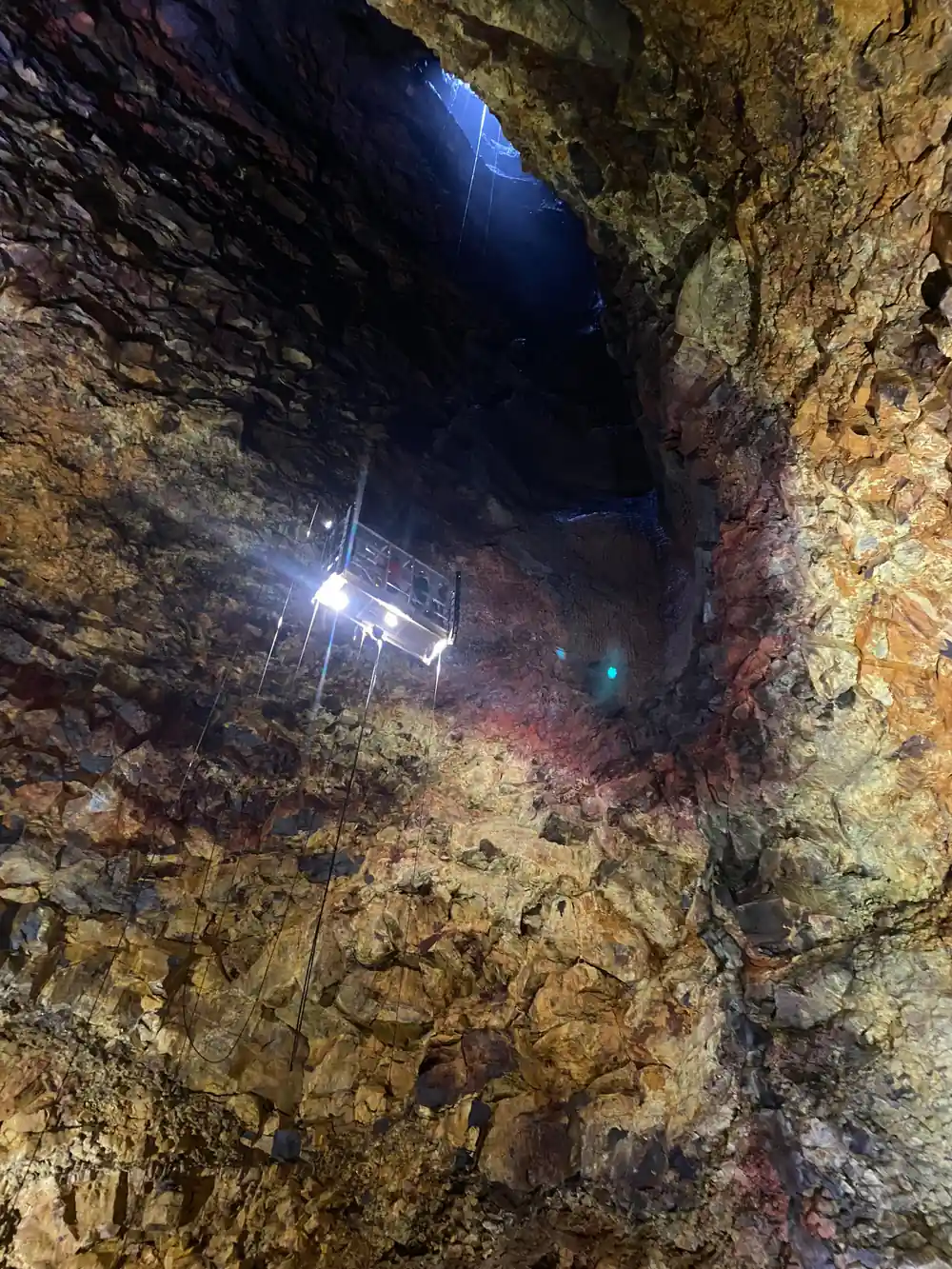
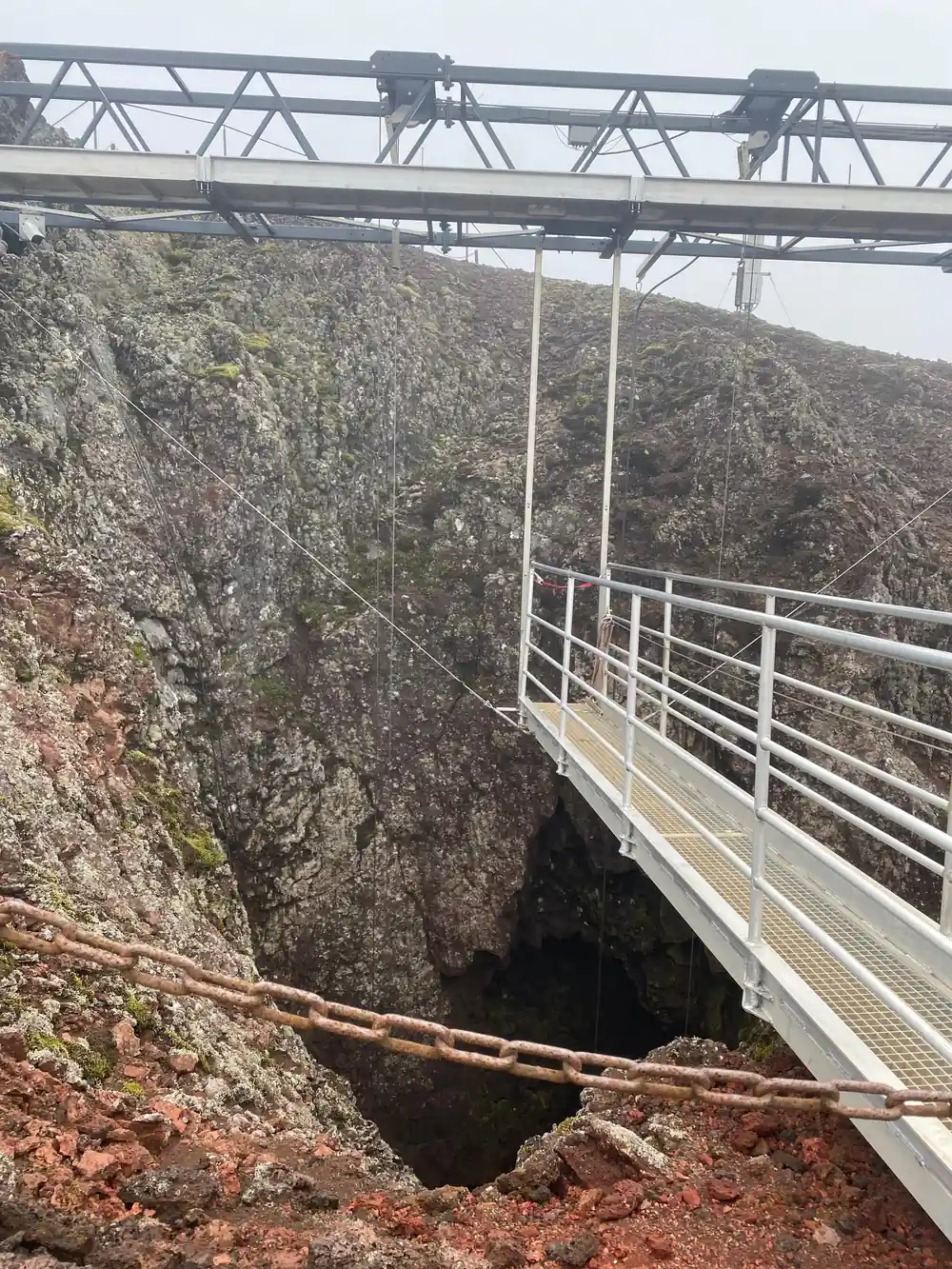
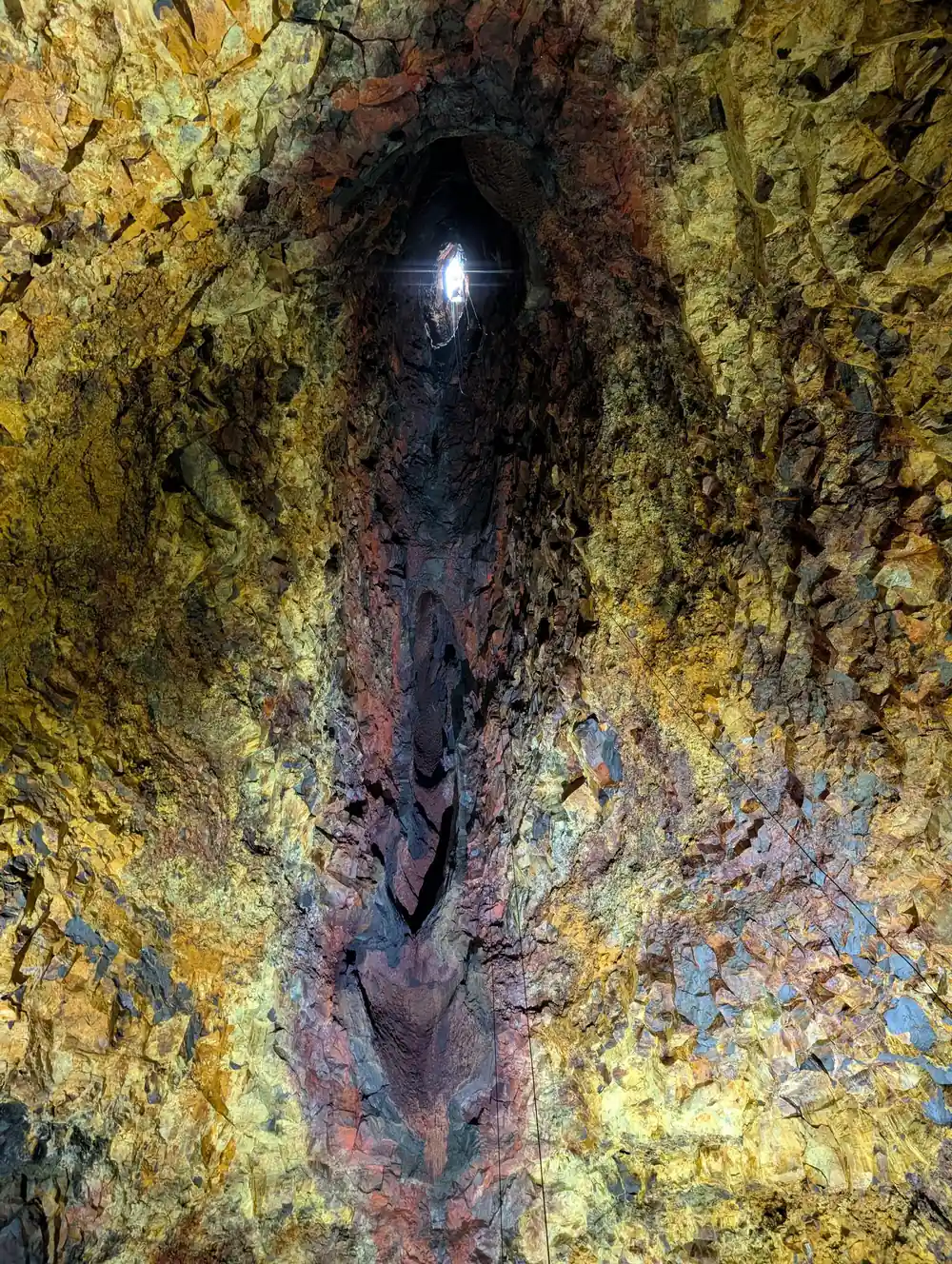
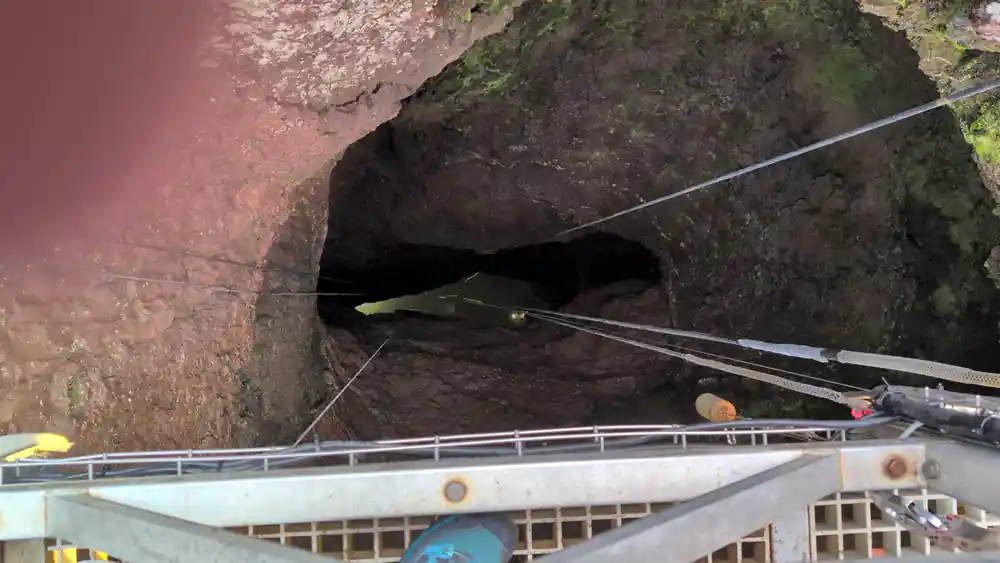
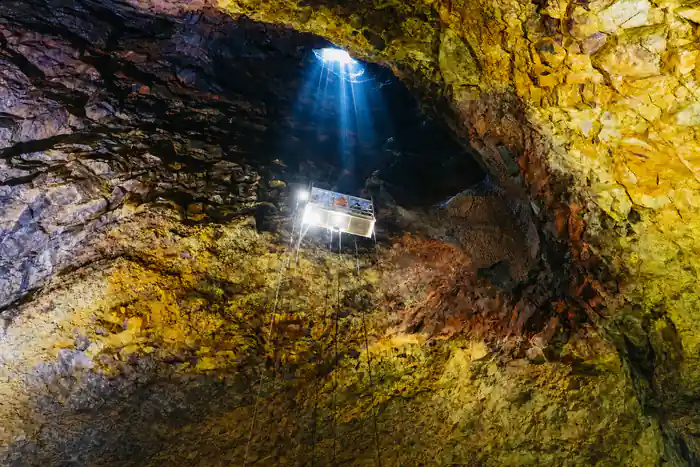
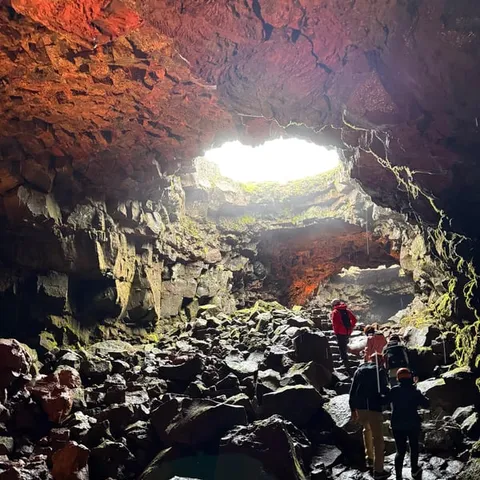
That space is about 120 metres deep. It is entered through a hole in the crater floor only a few metres across, and it widens as it goes down, so the floor is far broader than the opening. An open platform on a steel gantry lowers small parties into it. There is nowhere else on earth where you can do this.
Why an empty chamber is remarkable
It is worth being precise about what is unusual here, because the marketing shorthand does not capture it. It is not that a volcano has a hole in it; lava tubes are common, and Iceland has a great many caves you can walk into. It is that this is the reservoir itself, the space the molten rock was actually stored in before the eruption.
Almost every magma chamber ends its life as an intrusion. The melt loses heat to the rock around it, crystals form, the remaining liquid becomes stiffer, and eventually the whole body freezes into gabbro or granite. Geologists find these all over the world, as solid masses exposed by erosion millions of years later. What they do not find is one you can walk about inside.
Here the magma drained instead. Where it went is not entirely settled, and anyone telling you confidently is telling you more than is known: it may have withdrawn downwards as pressure dropped, or moved sideways into fractures. What is certain is that it left, the walls held, and the roof did not collapse.
The colours, which are real
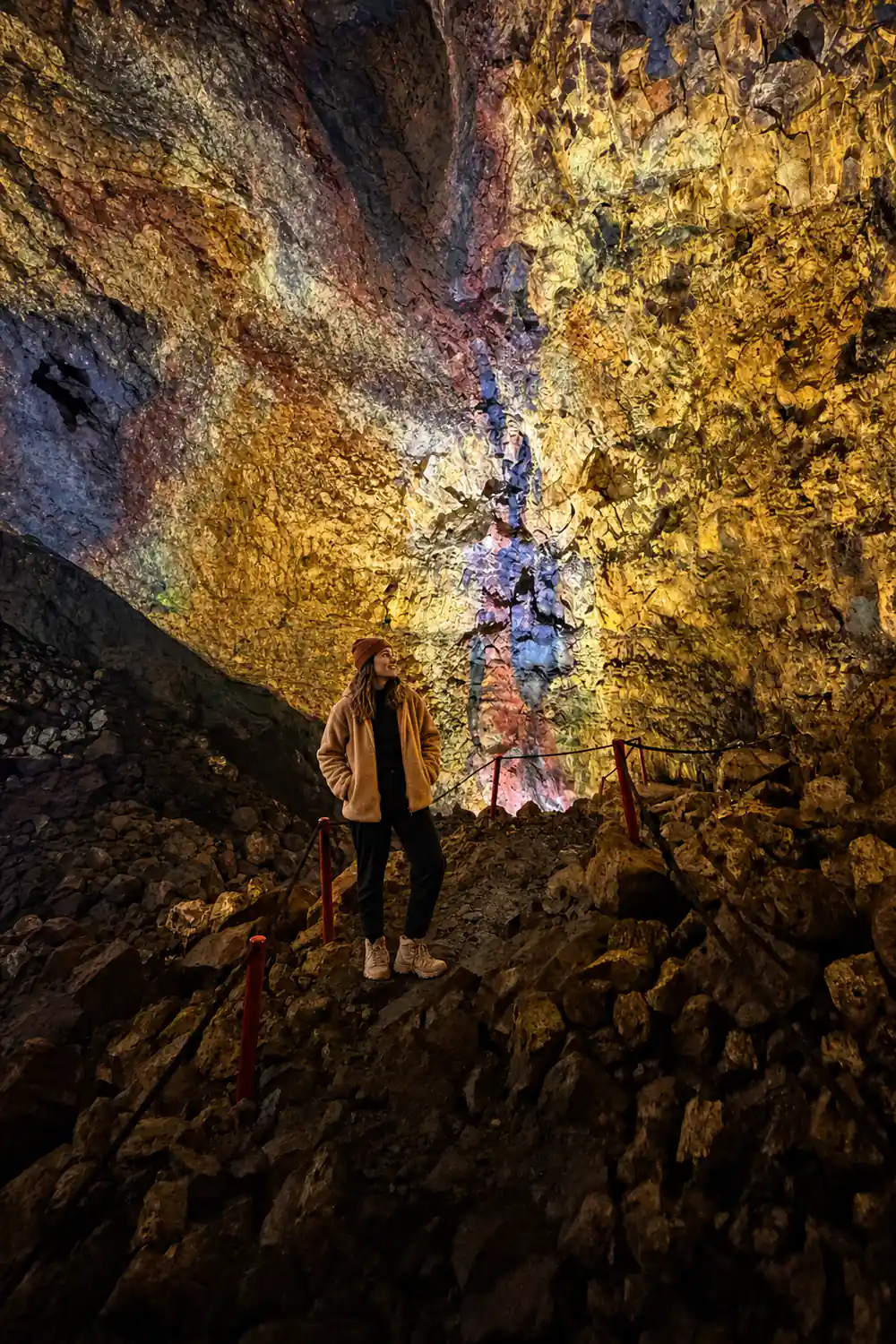
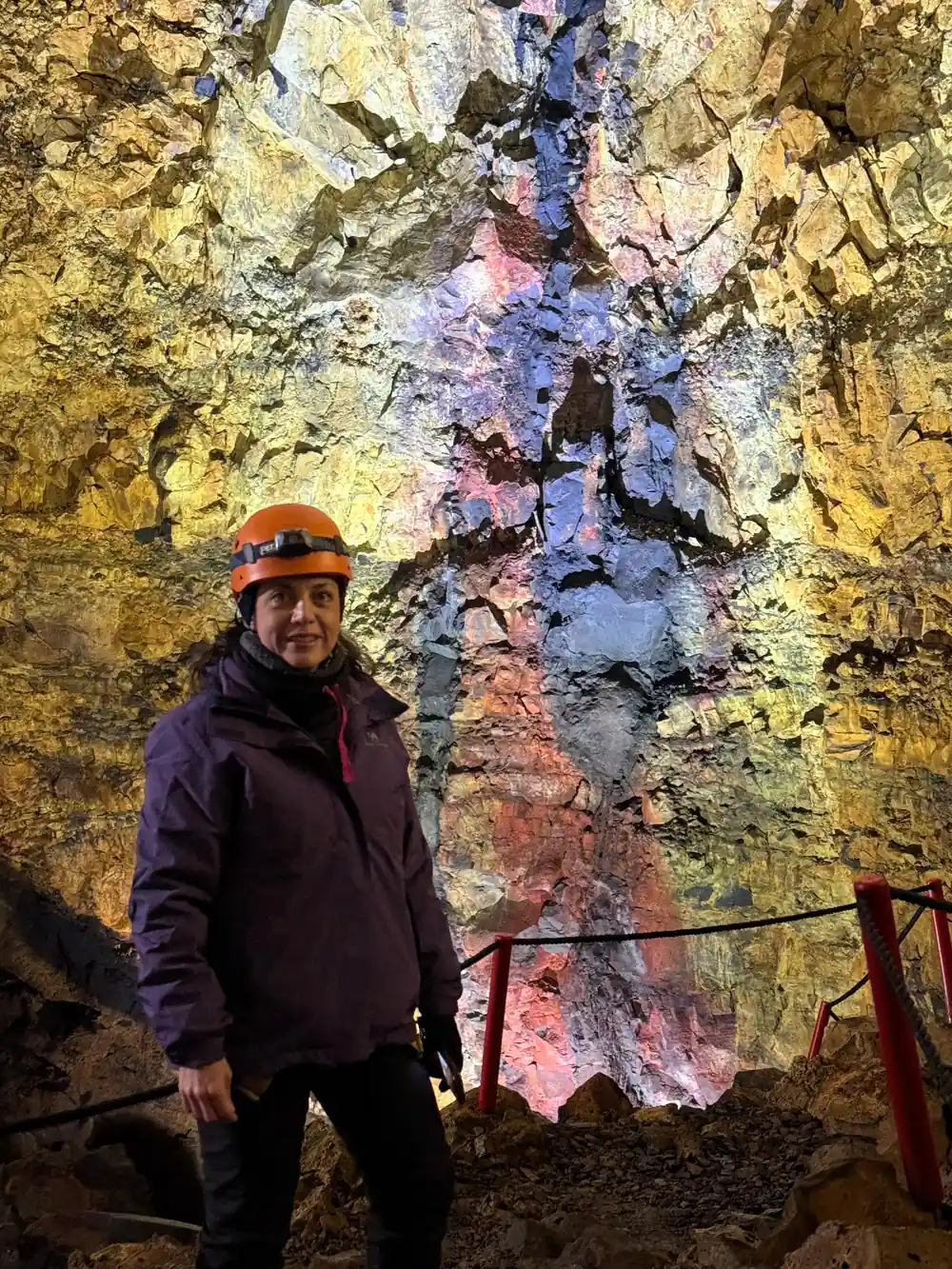
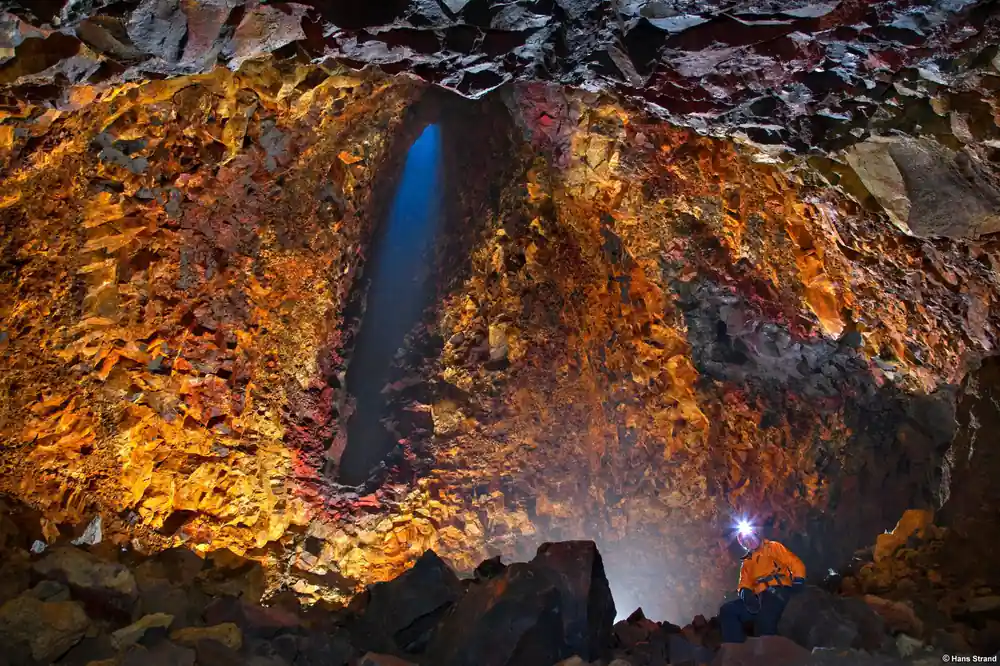
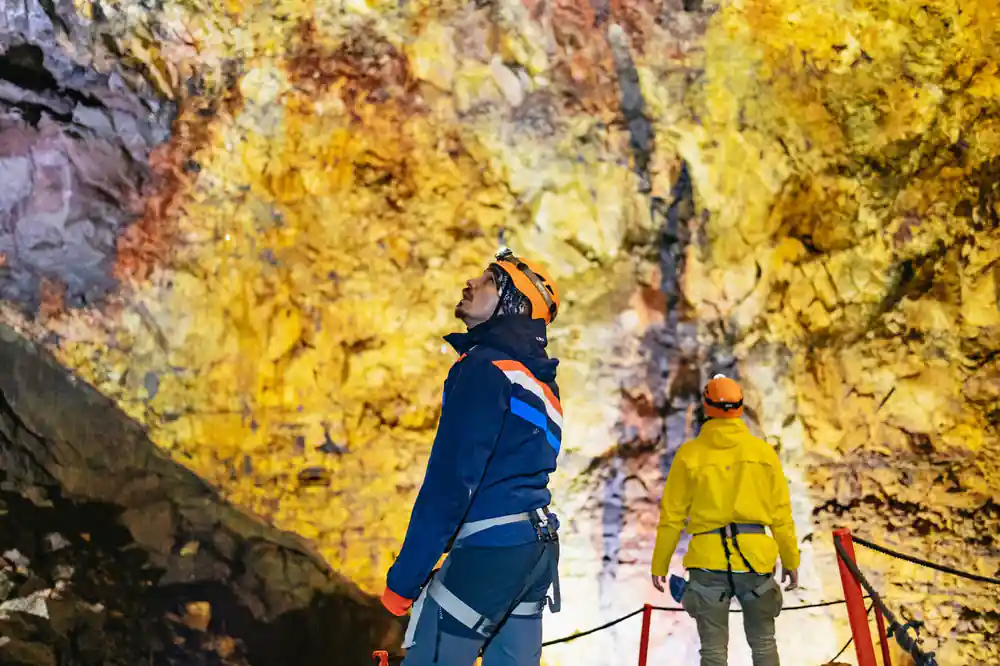
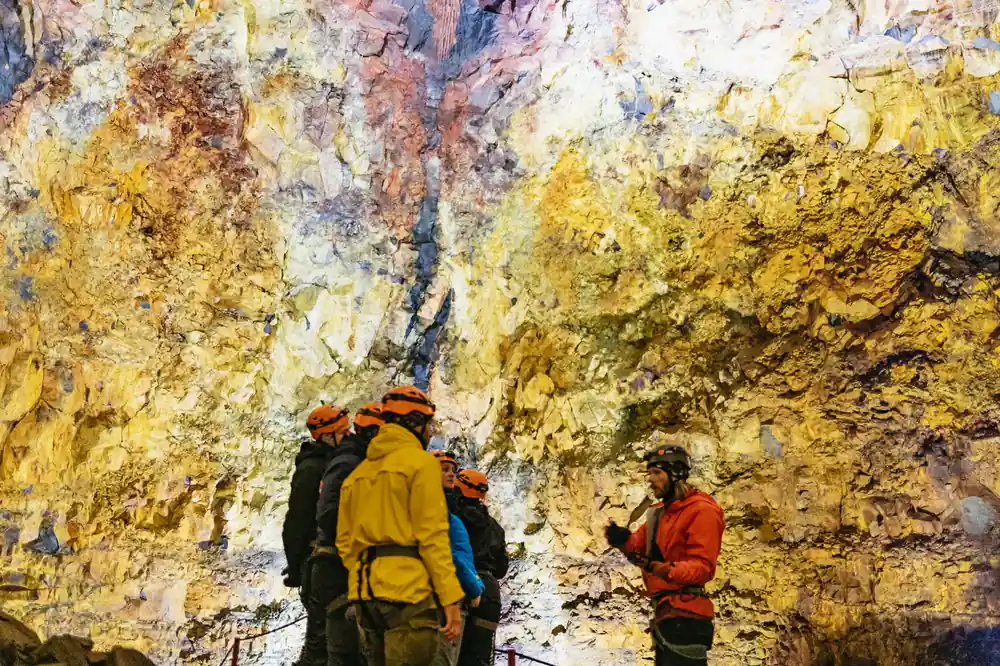
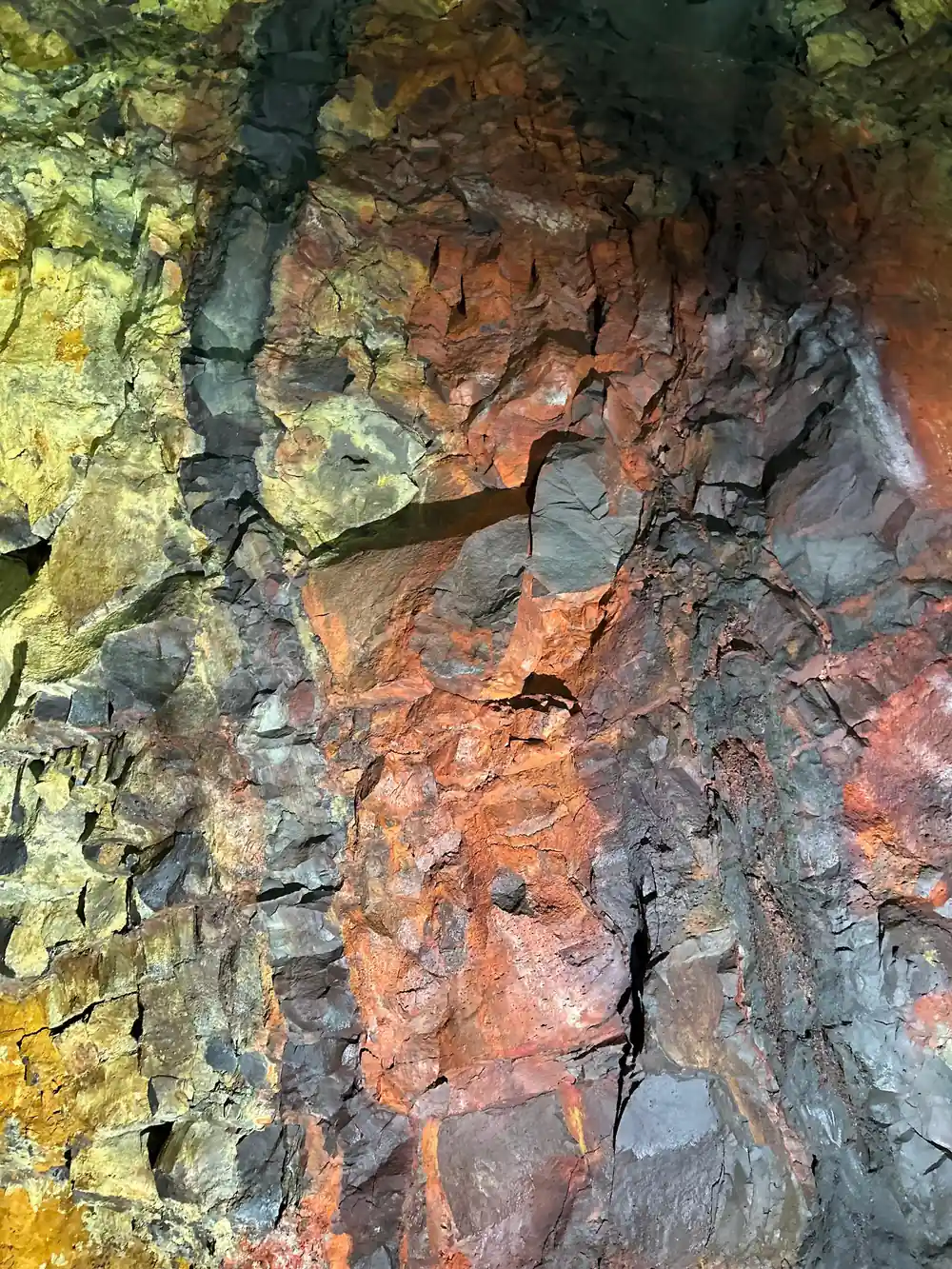
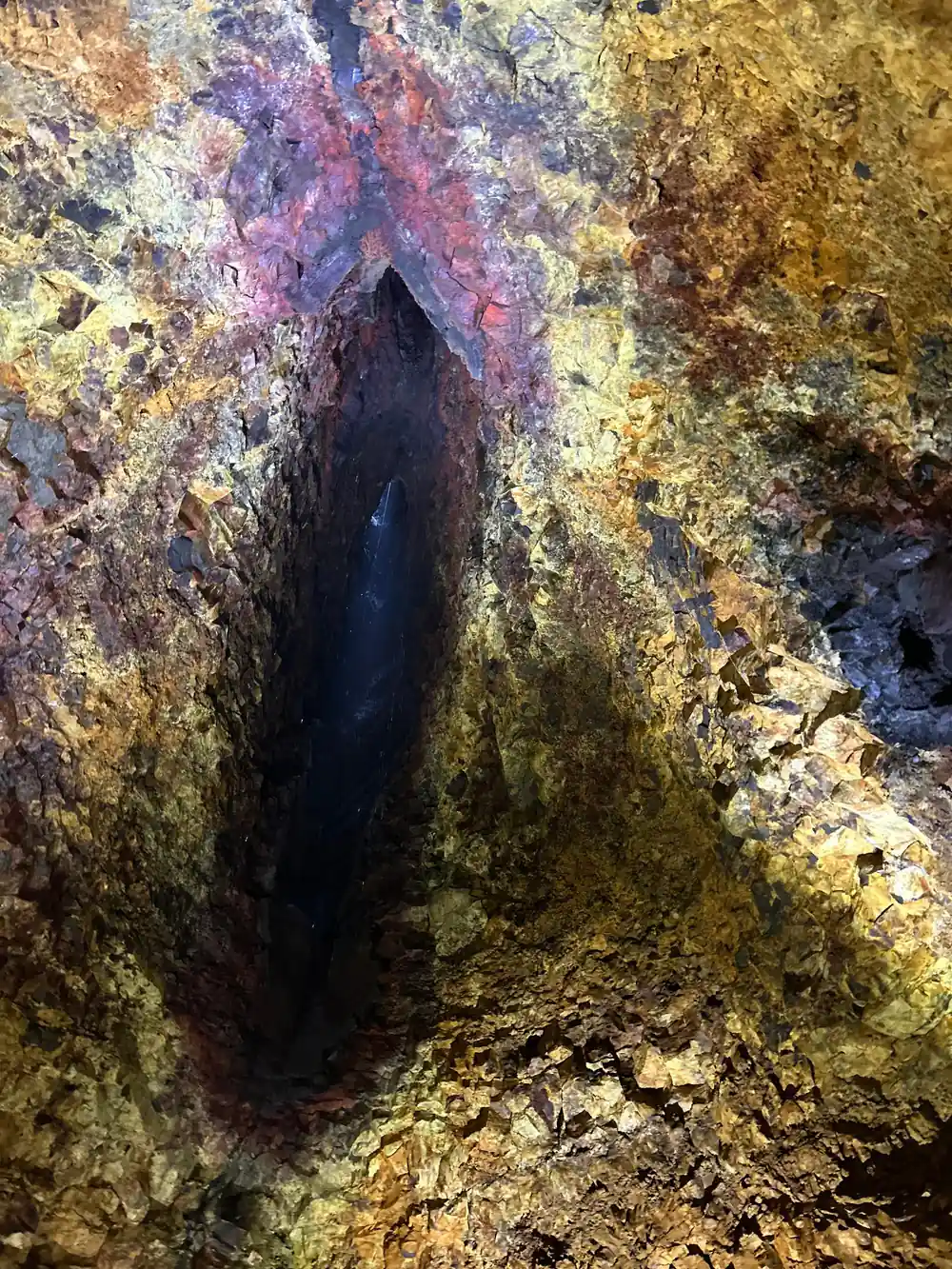
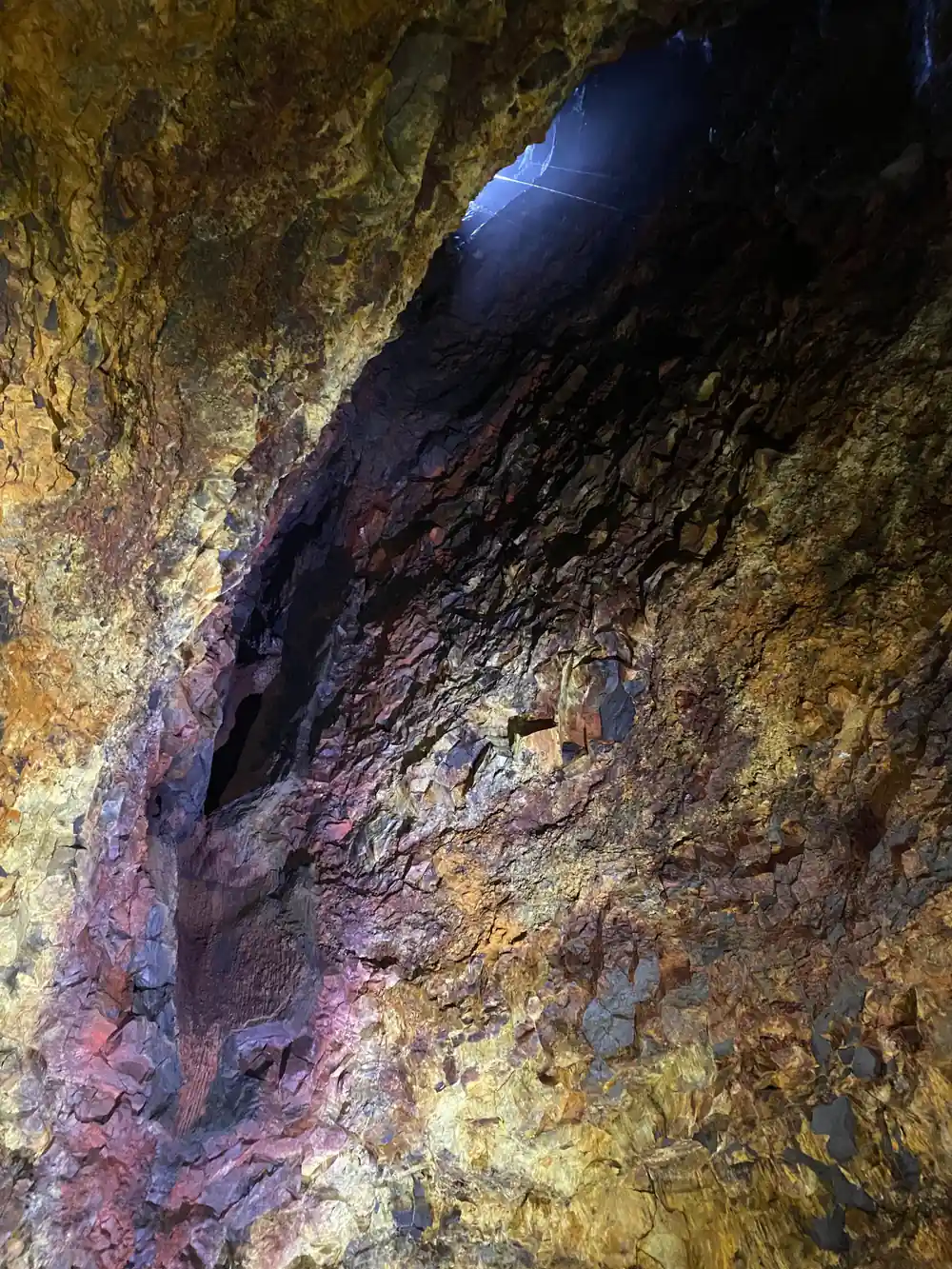
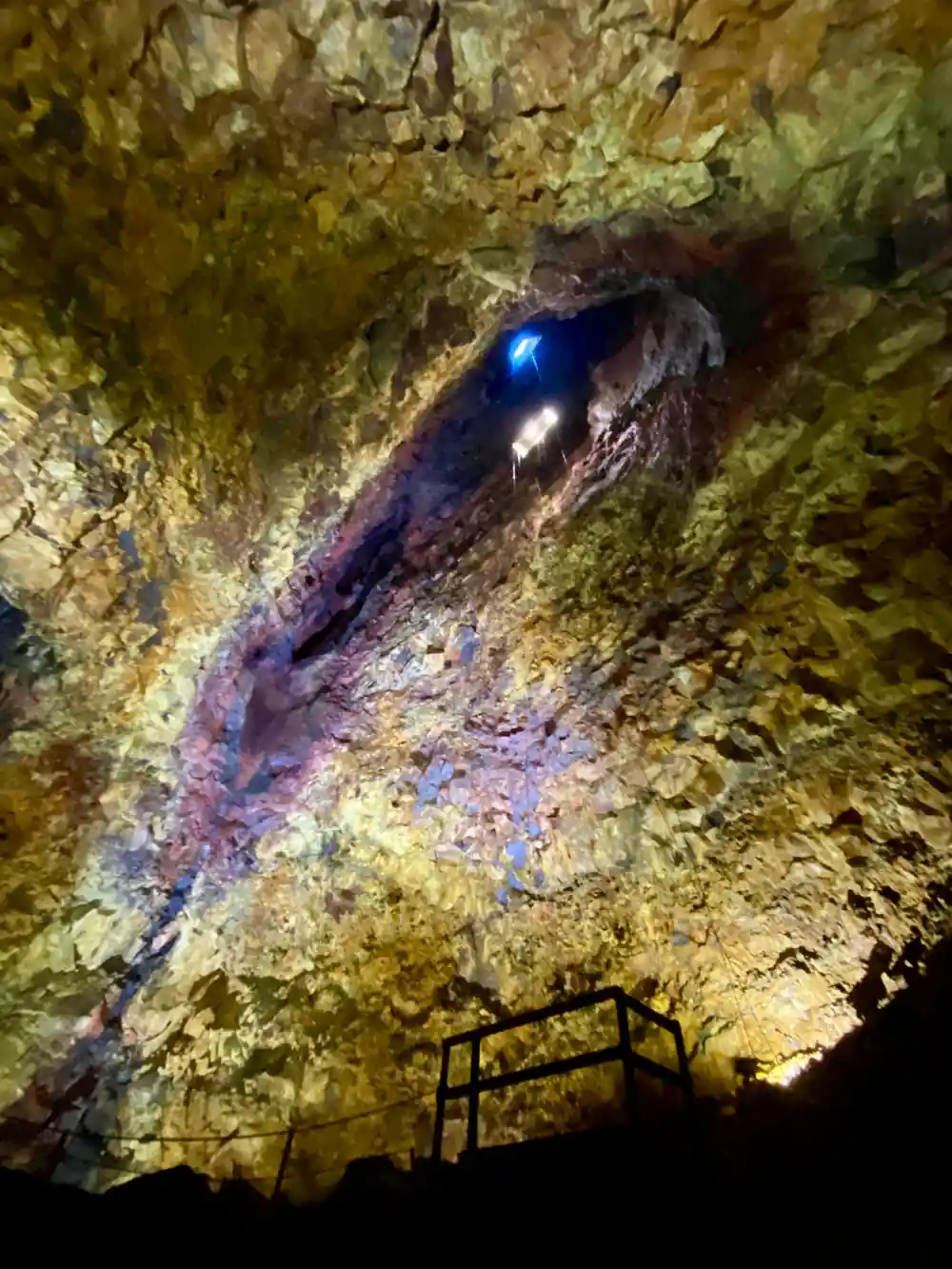
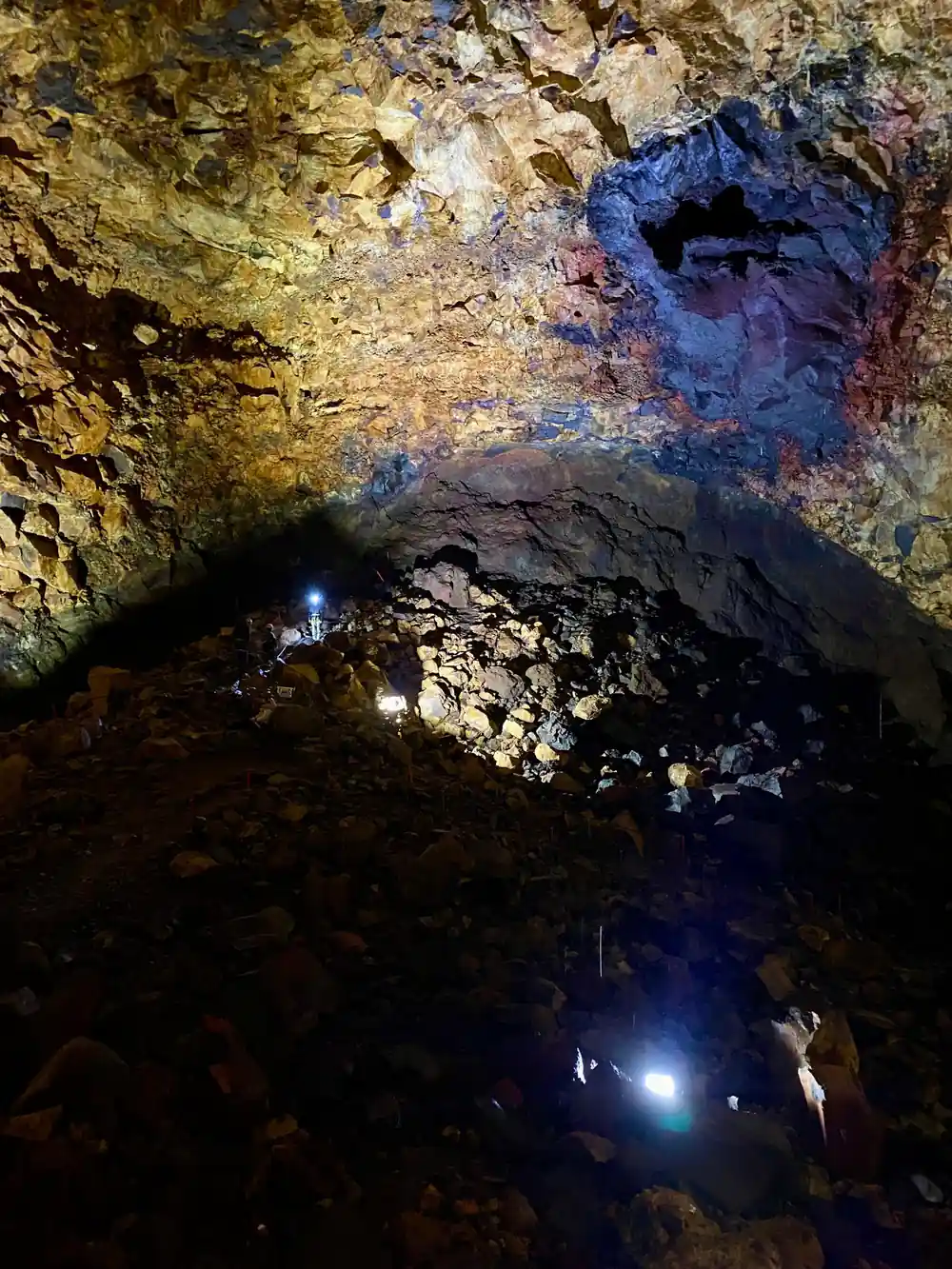
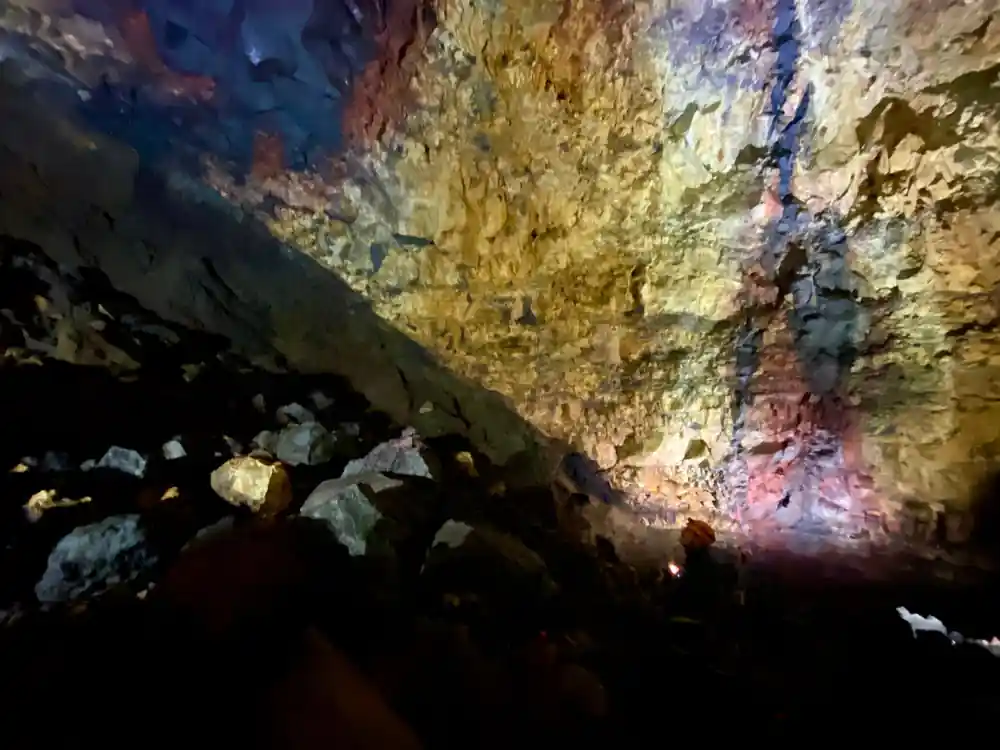
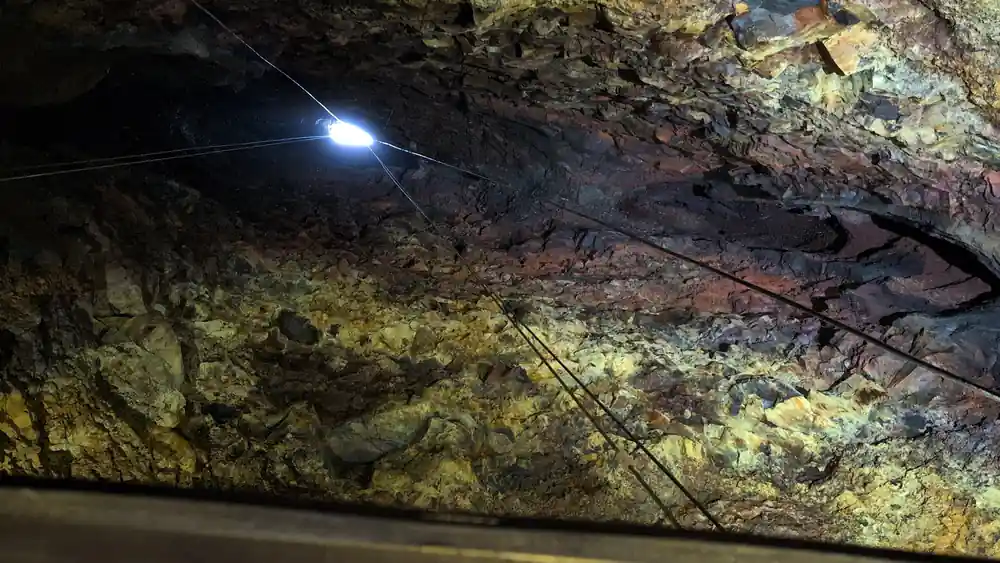
Every photograph of the inside of this volcano shows walls in red, orange, yellow and violet, and a reasonable person looks at them and assumes a filter. They are not edited. The rock is that colour.
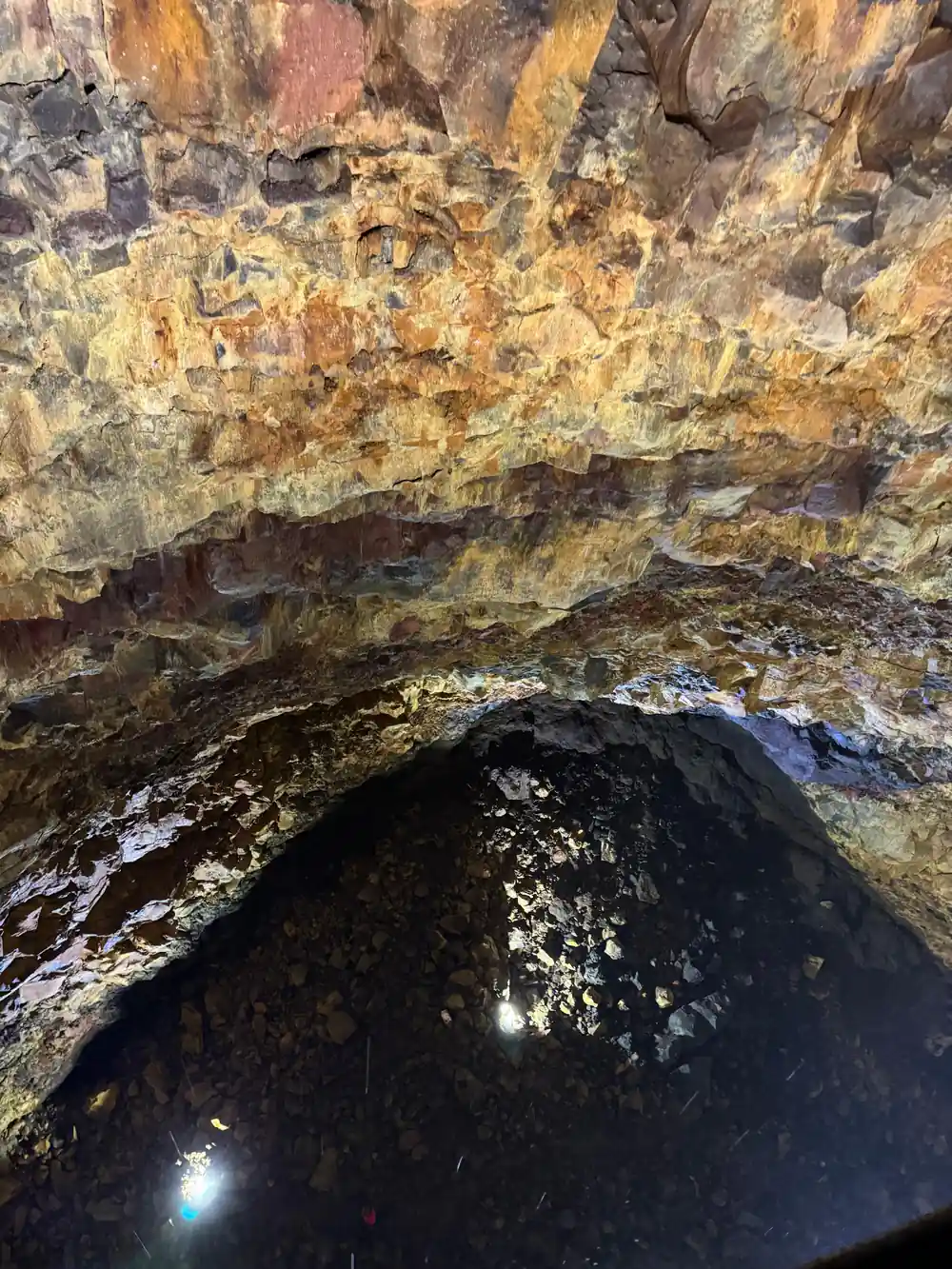
What produced it is hot gas moving through cooling rock. Iron compounds oxidised to reds and oranges. Sulphur left yellows and ochres. Other minerals contributed the greens and the odd violet. Because the gas moved along particular paths, the colour is banded and streaked rather than uniform, and it changes as you descend.
One honest qualification: the chamber is lit. Daylight reaches only the top of the shaft, and without the lamps you would see essentially nothing. The colours are genuine, and you are seeing them by artificial light, which is why they read differently in different photographs.
How you get down
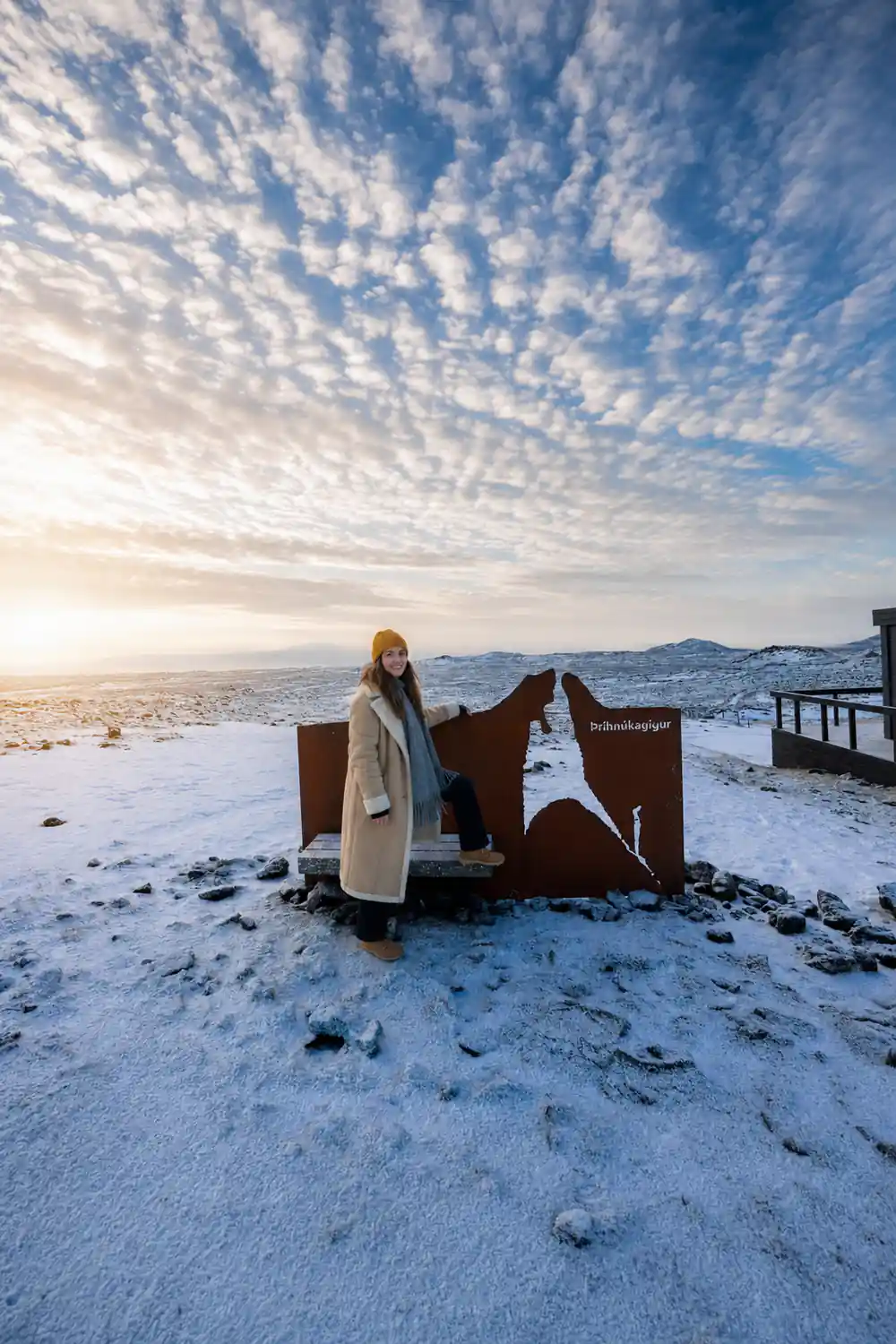
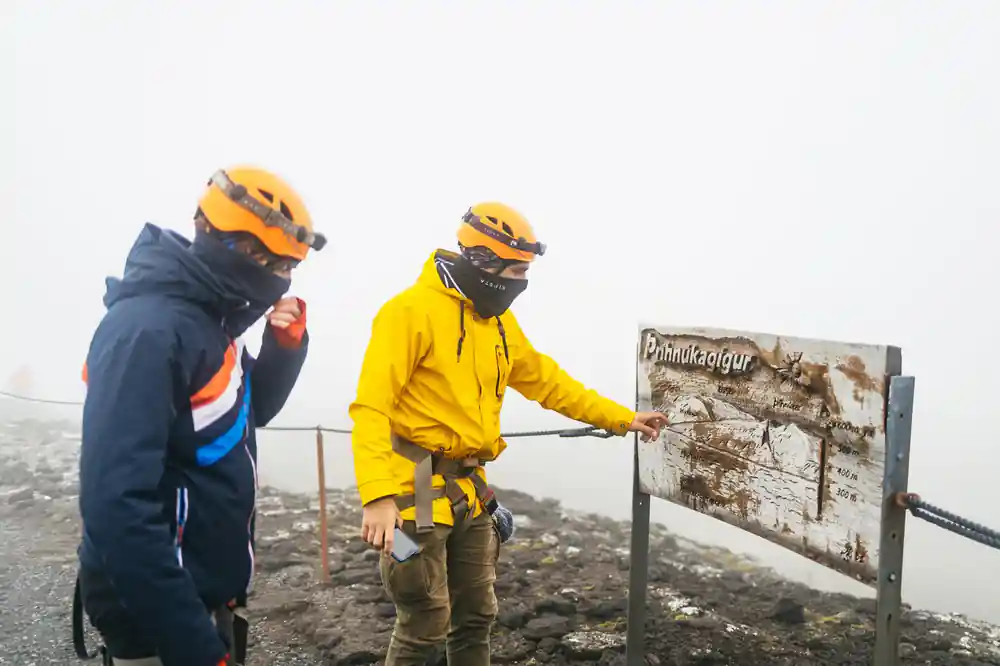
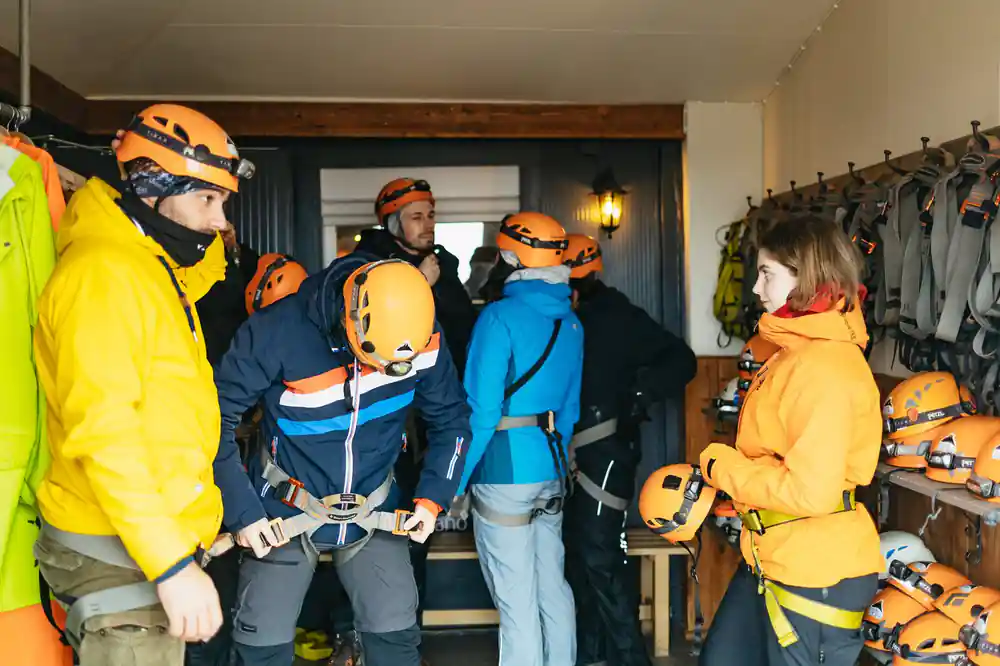
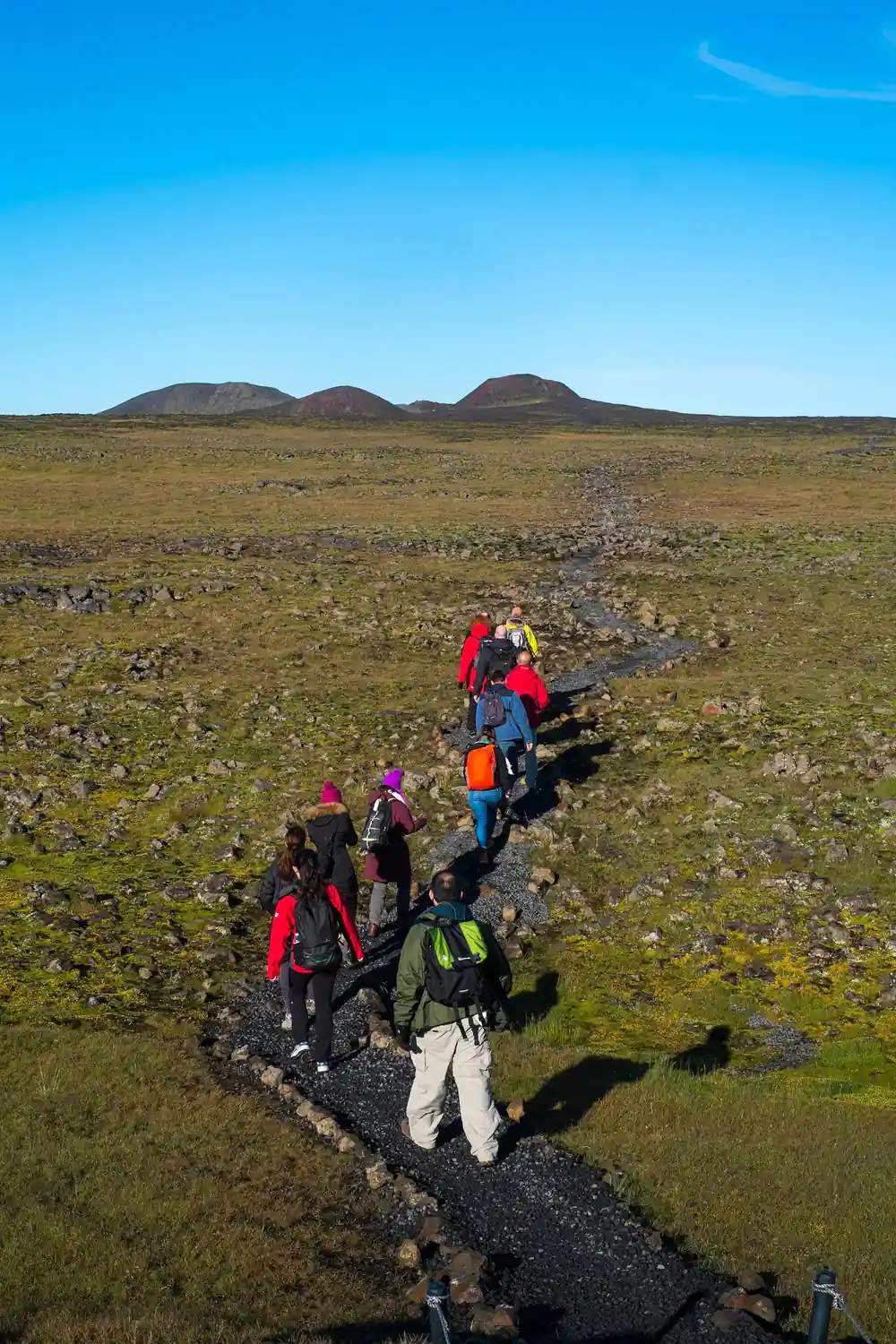
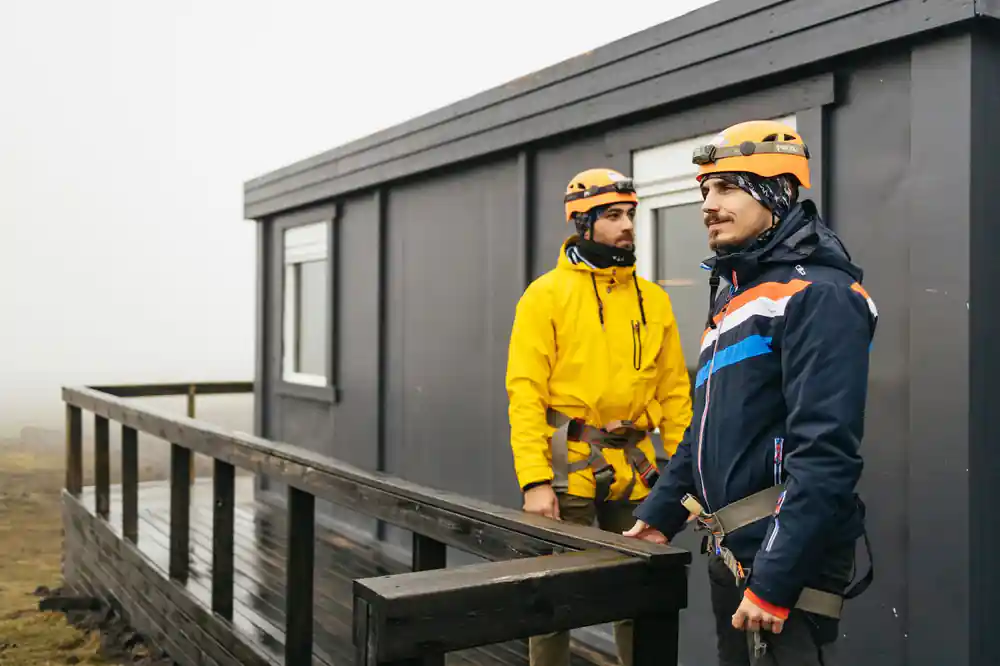
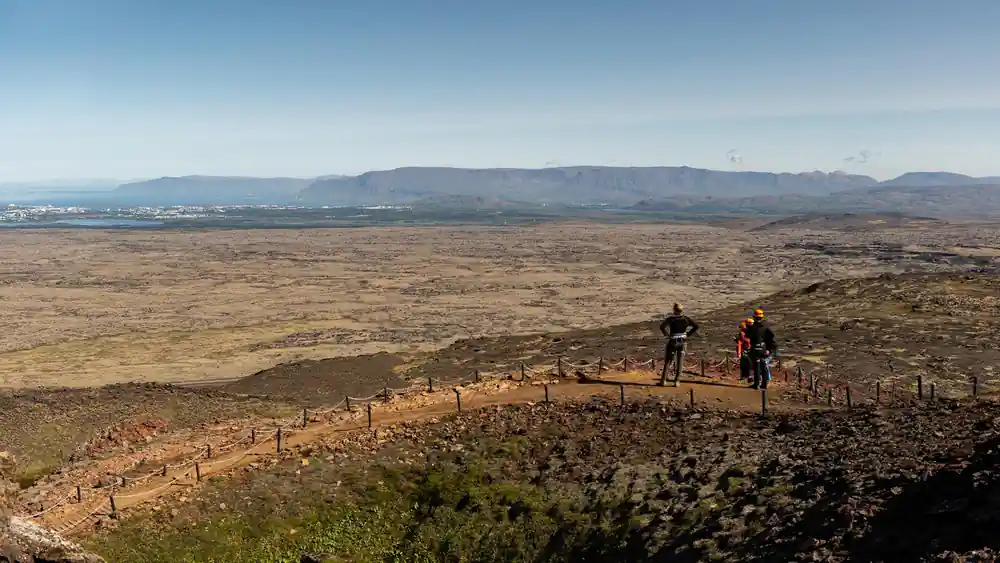
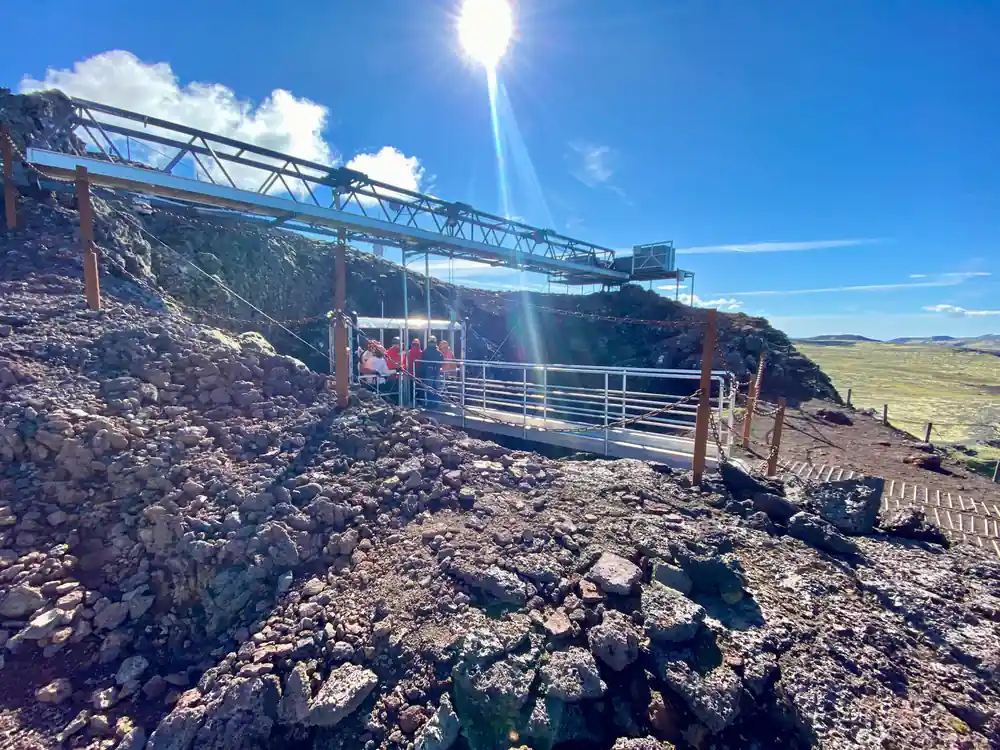
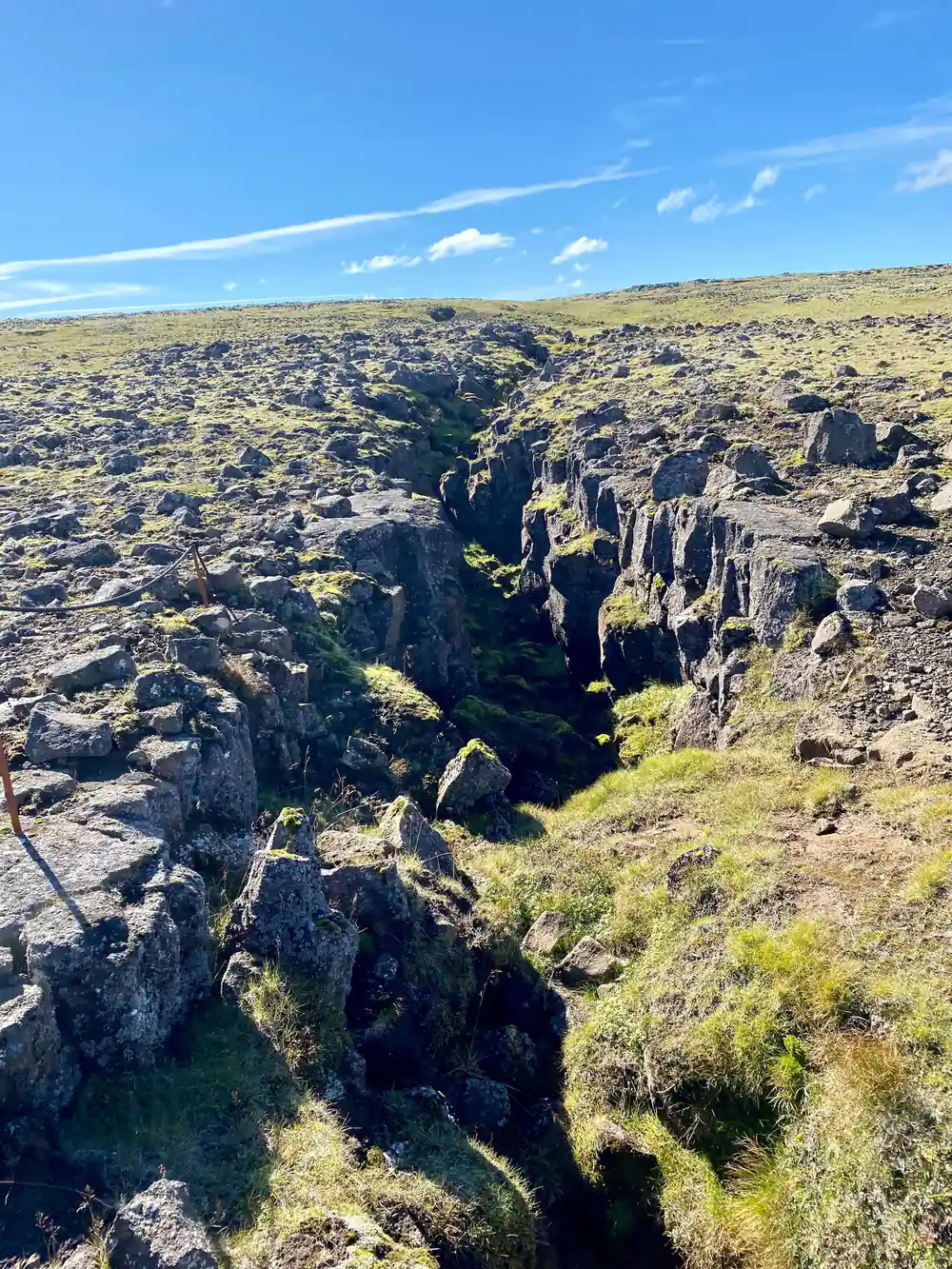
The volcano is not at the road. The tour meets at a ski cabin in Blafjoll, about thirty minutes from Reykjavik on tarmac, and from there it is a walk of 45 to 50 minutes across the lava field to the crater. That walk is the part people underestimate. It is not steep, but the ground is old lava under a thick moss layer, uneven throughout, and the operator is blunt that trainers and jeans will not do.
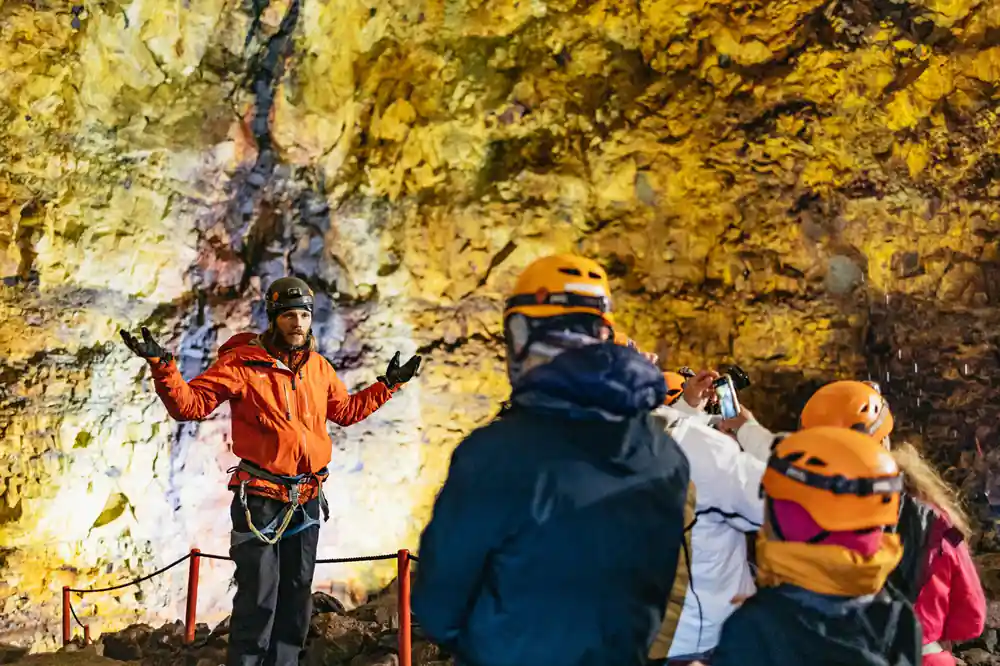
At the crater there is a gantry over the mouth and an open platform hung from it. Groups are split into parties of four or five, fitted with helmets and harnesses, briefed, and lowered. The descent takes about ten minutes, deliberately slowly, and it is the ten minutes everybody remembers: the walls open out, the daylight above shrinks to a bright point, and the scale becomes obvious in a way no photograph manages.
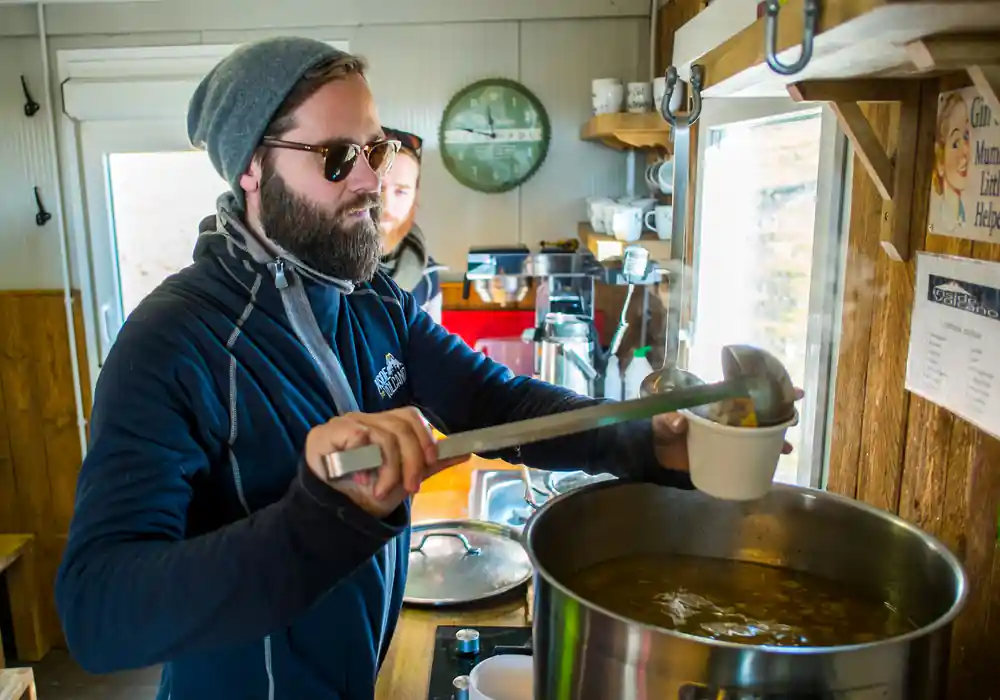
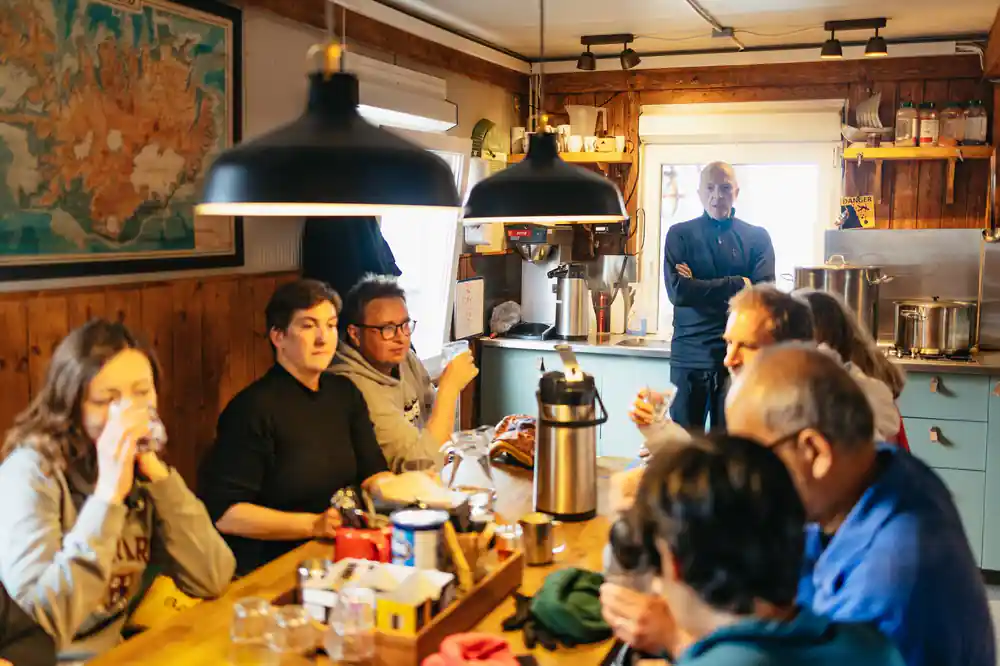
You spend up to an hour on the floor, or less if you would rather. Then back up, back across the lava, and Icelandic meat soup in the cabin at the end.
The ground you cross to get there
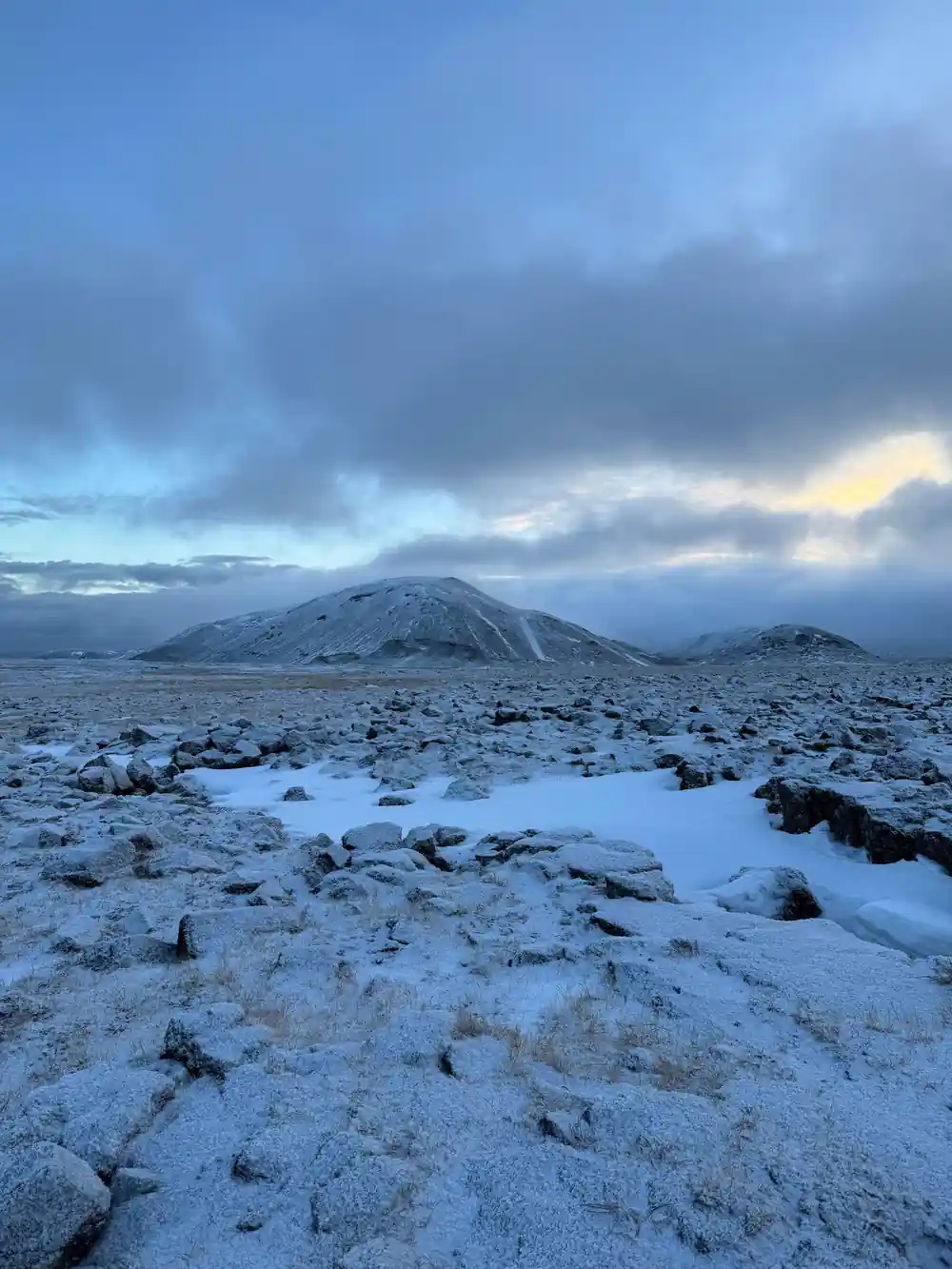
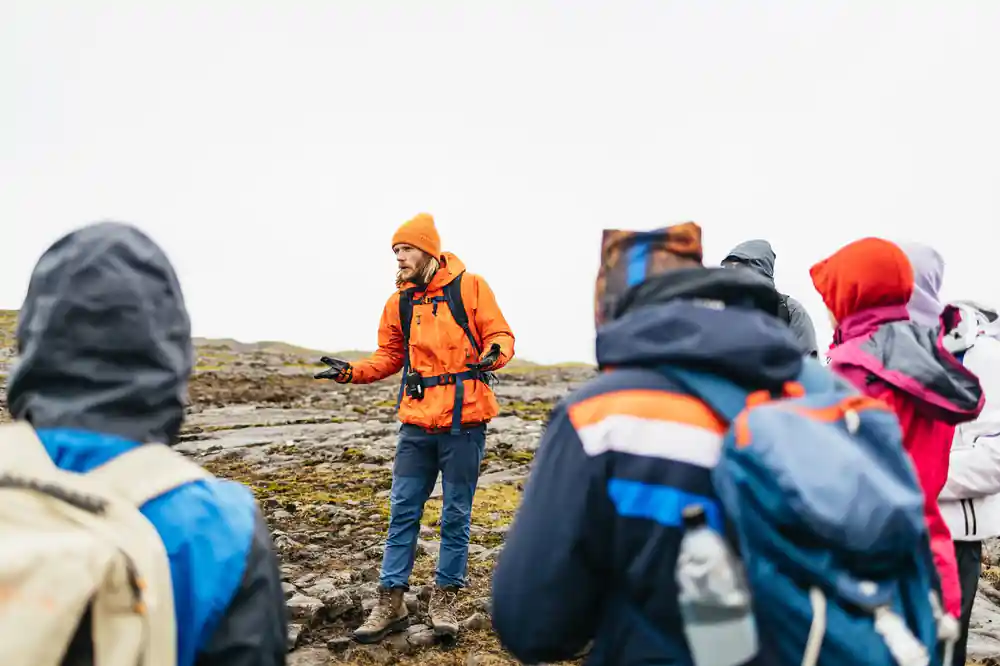
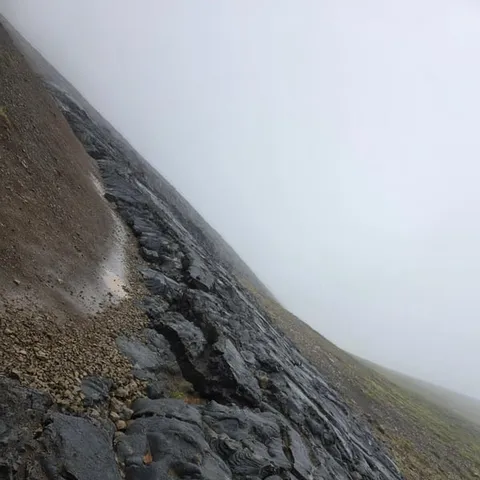
The lava field is worth paying attention to rather than enduring. It is the product of the same eruption, four thousand years of weather old, and the moss growing on it is far older than it looks and takes decades to recover if walked off the path.
The weather up there is its own thing. The cabin is half an hour from Reykjavik and several hundred metres higher, and it is entirely normal for the city to be clear while the mountain sits in cloud. A good proportion of visitors do this walk in fog, which is atmospheric rather than ruinous, and makes the arrival at a hole in the ground rather more dramatic.
There is wildlife, sparingly. Arctic foxes work this ground and are seen from the path often enough that it is worth watching for one.
Where it sits among Iceland's volcanoes
Readers arriving from the news have Eyjafjallajokull and the recent Reykjanes eruptions in mind, and reasonably want to know how a tour that lowers people into a volcano squares with that.
Iceland sits astride the Mid-Atlantic Ridge, where two plates are pulling apart, and over a hotspot as well. That combination is why the island exists and why it has a few hundred volcanoes. Most of the activity is concentrated in rift zones that run across the country, and eruptions in them are frequent on a geological timescale and occasional on a human one.
Thrihnukagigur is not one of the active systems. It last did anything four thousand years ago, it is classed as dormant, and the chamber has been empty and stable for that entire period. The lift did not go in without that question being asked first.