Quick summary
- A 120-meter descent by lift takes you to the floor of a drained magma chamber.[1][2]
- The rock is painted by minerals left behind by the volcano's last eruption, around 4,500 years ago.[1][2]
- You walk about 3 km (2 miles) each way over the lava field, usually taking about 45 minutes.[3]
- Expect to spend 35-45 minutes in the chamber, including the lift down and back up.[4]
- The season runs from May 5th to October 30th each year.[3]
- Top choice Inside the Volcano from US$432 Duration4 - 6 hours[5]Rating4.85 from 630 reviews[5]What it isHike and lift into a volcano Check availability
- Lava Tunnel by Bus from US$153 Duration3 hours[6]Rating4.59 from 850 reviews[6]What it isGuided visit to a lava tunnel See this tour
- Lava Show from US$53 Duration50 - 75 minutes[7]Rating4.75 from 4,030 reviews[7]What it isTheatre-style lava experience See this tour
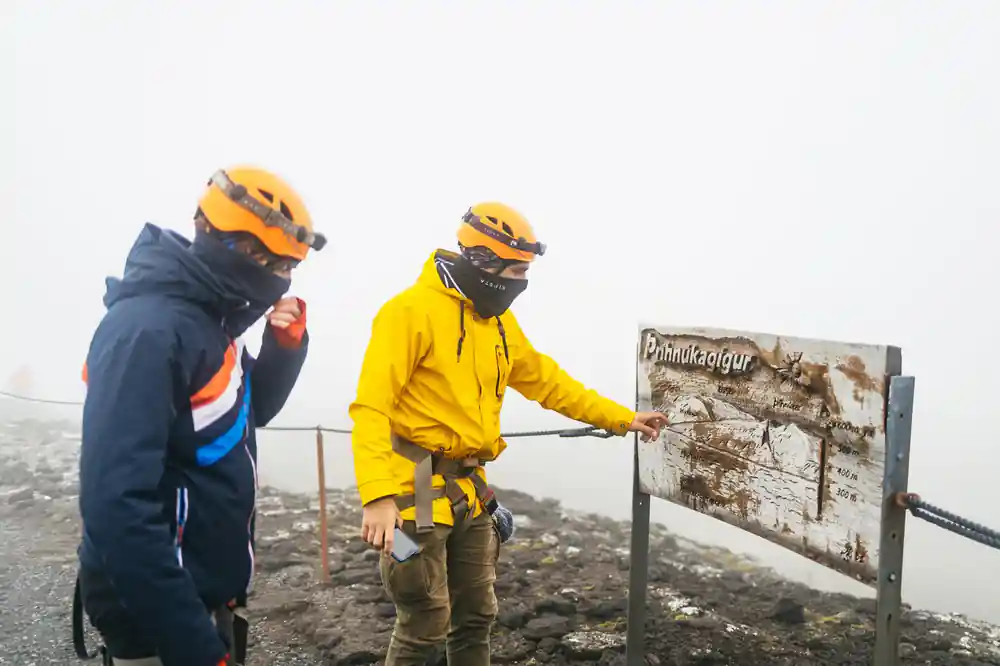
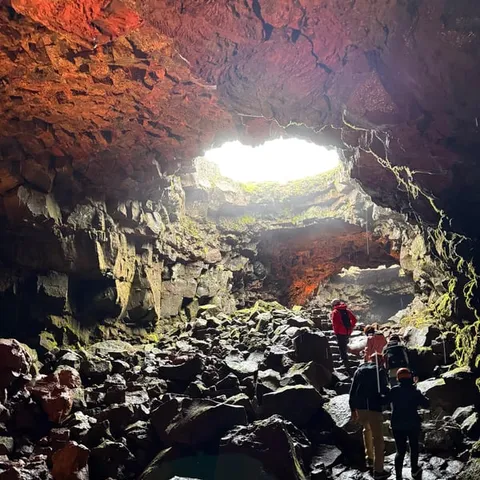
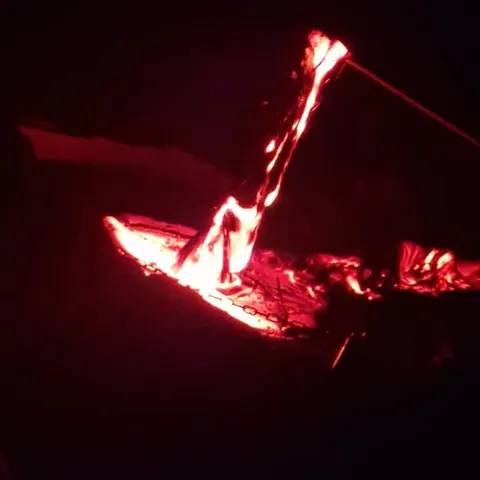
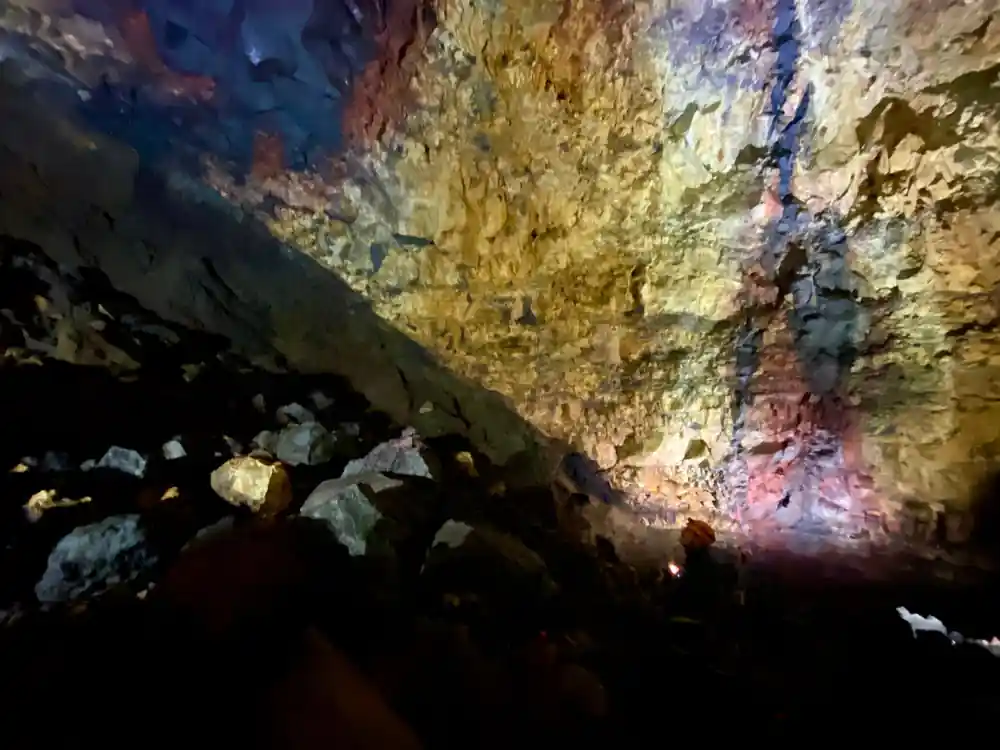
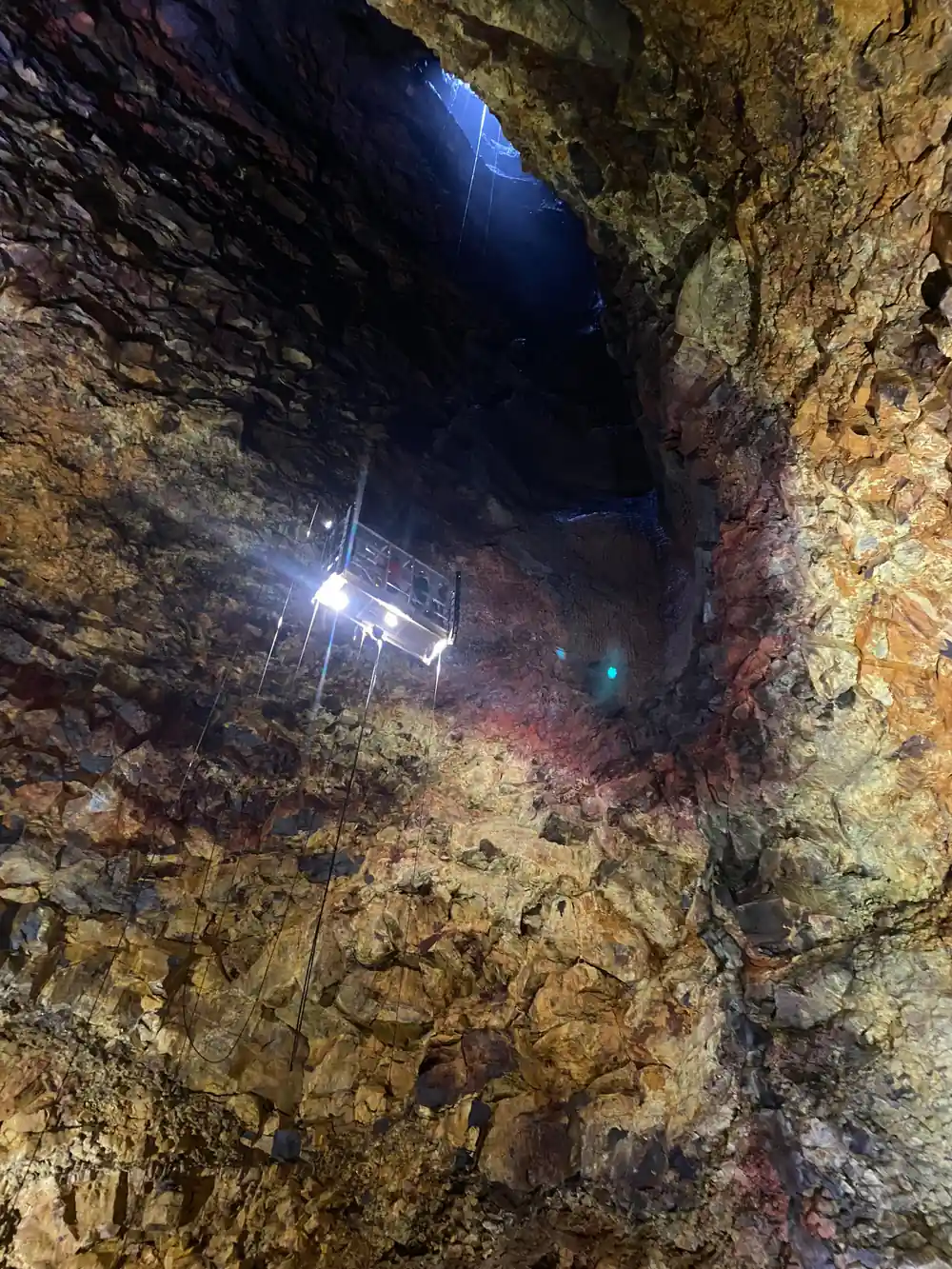
Once you’re inside the volcano, you’ll see the mesmerizing colors on the walls. They’re the minerals deposit left by the last eruption.
Worth the walk down
Practical details
The reasonable suspicion, answered
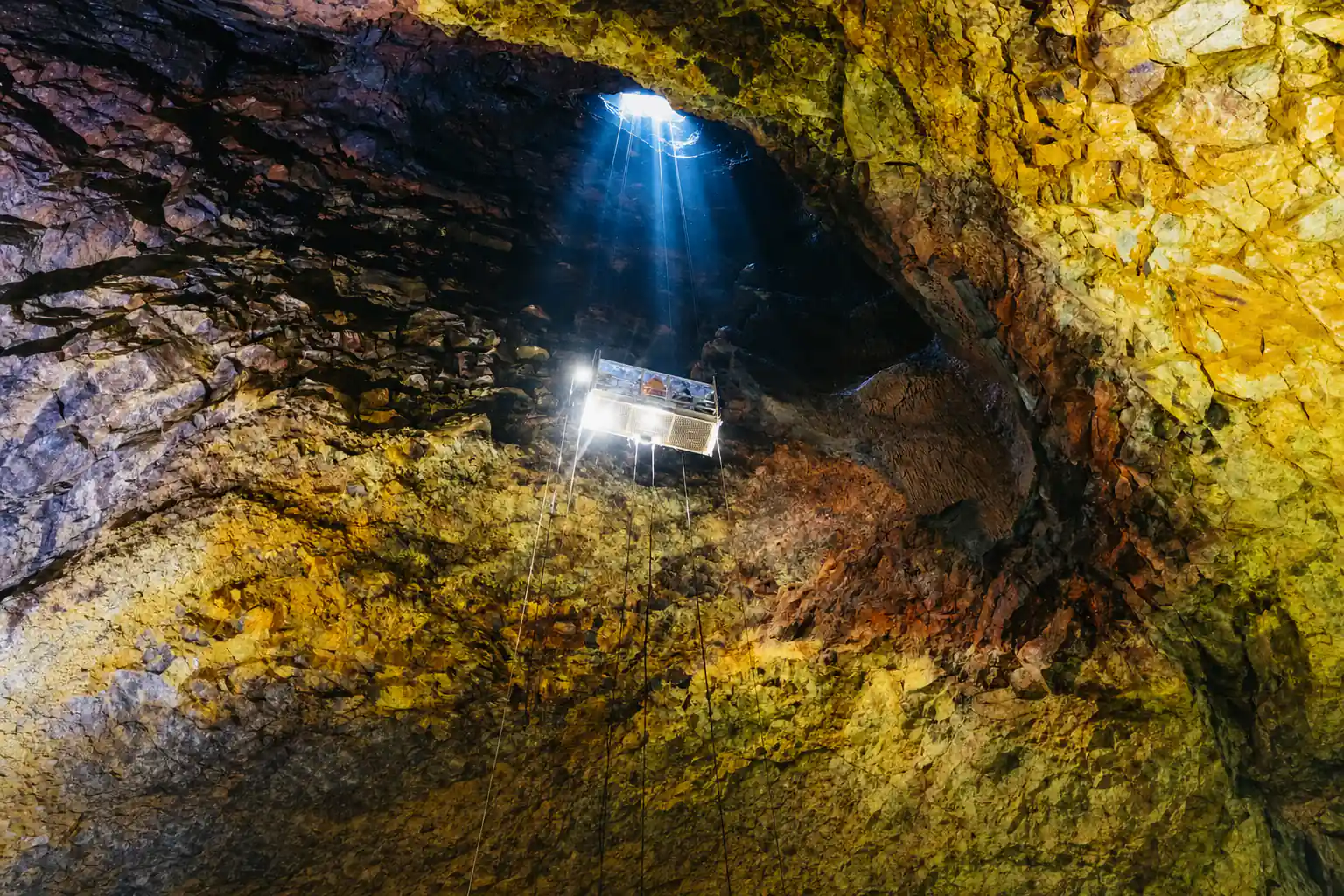
Look closely at any good thrihnukagigur photo and the question is hard to avoid: is the colour real, or has someone turned up the saturation? The answer is visible the moment the lift doors open. The walls of this volcano are streaked with reds, golds, greens and near-black greys, and they shift as the light moves across the rock. No filter needs to be added. The air is cool and still, and the first impression is of walking into a painting that has been left to dry for thousands of years. When your boots touch the chamber floor, the scale changes completely. The ceiling disappears into gloom, the walls curve away, and the colours seem to glow in the dim light.
The volcano last erupted about 4,500 years ago.[2] Cave explorer Árni B. Stefánsson became the first person to enter Þríhnúkagígur in 1974.[2] Those dates explain why the chamber is so raw: the rock has had time to cool, but it has not been smoothed by the surface weather. This is the closest most people will come to standing inside a volcano. It is also why the experience does not feel like a museum exhibit; you are standing in the actual space where molten rock once rose and then drained away. You can see the layered rock, the uneven ceiling and the marks left by the melt; it feels alive in a way that no diorama can match.
There is none of the polished, roped-off feeling you might expect from a famous natural attraction. Visitors move freely across the open floor, guides point out details, and the hush of the space does the rest. The quieter you stand, the more the chamber seems to offer.
Where the colour comes from
The story starts with the eruption itself. When Thrihnukagigur last erupted, the molten rock drained away through a deep underground rift, leaving behind a hollow cavity.[2] That emptying is what created the space you walk into. The mineral deposits left by the eruption stayed on the walls, and those minerals are the source of the colours.[1] They are not spread evenly. In places the stain is dense and glossy, in others it is thin and dusty, and the effect is closer to watercolour than to paint. Some patches look almost wet, while others are chalky and dry. Touching the rock is not the point; just being near it is enough.
The result is a natural palette that changes with the angle. In some places the colour is almost metallic; in others it softens into pastel washes. The bottom floor is 50×70 m, so there is plenty of room to move around and watch the walls change as you walk.[2] It feels more like a vast cathedral of rock than a narrow cave. The ceiling is out of reach, the walls lean away, and your footsteps echo in a way that makes the silence feel bigger than it is. Small pools of shadow gather at the base of the walls, and the light shifts with every step, so no two minutes look quite the same.
It is tempting to rush straight to the most colourful wall, but the chamber rewards patience. Stand near the lift shaft first, then walk the perimeter, then pause in the centre. Each position frames the mineral streaks differently, and the view from the middle is the one that stays with you longest.
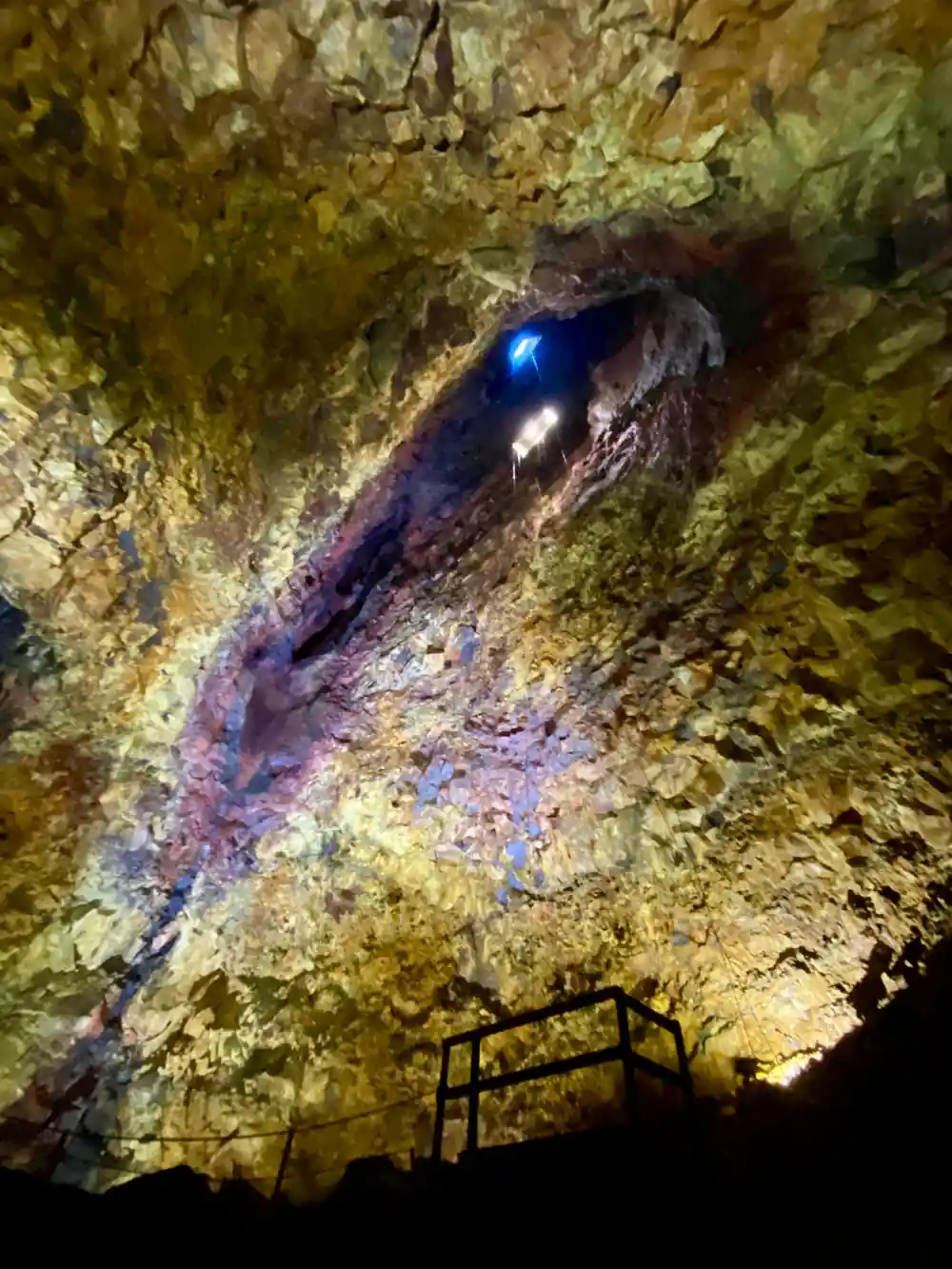
Mineral reds and golds streak the volcanic rock in the main chamber.
Why it is streaked rather than uniform
The colour is patchy rather than uniform. Some walls are heavily stained, while others remain almost plain. This patchwork is what makes the chamber feel so alive; your eye keeps moving from one cluster of colour to the next. The unevenness also gives the space a sense of history, as if each section of wall records a slightly different moment from the cooling process. The streaks follow cracks and ledges, as if the mineral-rich water once seeped along the easiest path. Where the flow stopped, the colour stops too, which is what makes each patch of wall feel like a separate little landscape.
The variation also makes the chamber far easier to photograph. A single photo cannot capture the full range, so it is worth moving between the pale sections and the saturated ones. From the lift platform, you can see the whole floor; from ground level, the streaks loom overhead. Both views belong in a set of thrihnukagigur photos. If you have time, look for the places where red fades into rust and the greens turn almost black; those transitions are the most striking.
This unevenness also makes the chamber forgiving in photos. A patch of plain rock can anchor a composition, letting the coloured sections stand out rather than compete. The eye needs somewhere to rest, and Thrihnukagigur provides plenty of quiet spaces between its bright stretches.
What the melt itself left behind
The melt is not hiding beneath the floor; it is gone. A deep underground rift drained the molten rock, leaving the chamber empty.[2] That is why you can stand here without any heat haze or glow from the rock, just the mineral-stained walls above and the level floor below. The stillness is remarkable. There is no rumble, no drip, no sense of movement; only the solid presence of the volcano around you.
The scale of the empty space is the biggest surprise. The vault is about 120 m deep, and its bottom measures 50×70 m.[2] For context, that is enough room to walk across the floor and still feel small, and the lift descent only adds to the sense that you have entered somewhere hidden. It takes a moment to orient yourself. The walls rise gently, the floor is broad, and the light from above makes the far corners fade into shadow.
The floor itself is uneven in places, with low ridges and shallow dips that show how the lava once moved. There is no heat here now, but the shapes on the ground still read as motion, frozen mid-flow. It is another quiet reminder that you are standing in the plumbing of an eruption, not just a decorated cave.
from US$432
The full guided Thrihnukagigur day trip from Reykjavík, with the hike, the lift descent, and time on the chamber floor.
The lighting, and what it does
Inside the chamber, artificial lighting does most of the work. It picks out the mineral deposits and gives the walls a soft glow, but it also creates shadows that make the rock look more sculpted than it would under flat daylight.[1] The effect is theatrical, but it never feels fake; the colours are still the rock's own.
For visitors, the practical effect is simple: move slowly and look from different angles. The same patch of wall can look different from the lift platform and from the floor. This is also why the thrihnukagigur photos you take here will have more depth than a quick snap from the entrance. If you let your eyes adapt to the dimness, the same minerals suddenly appear darker, brighter, or more layered.
If you are travelling with others, split up briefly and look across at one another from opposite sides. The sense of scale becomes clearer when you see a person standing small against the rock. That distance is hard to judge from the lift platform alone.
Photographing the chamber
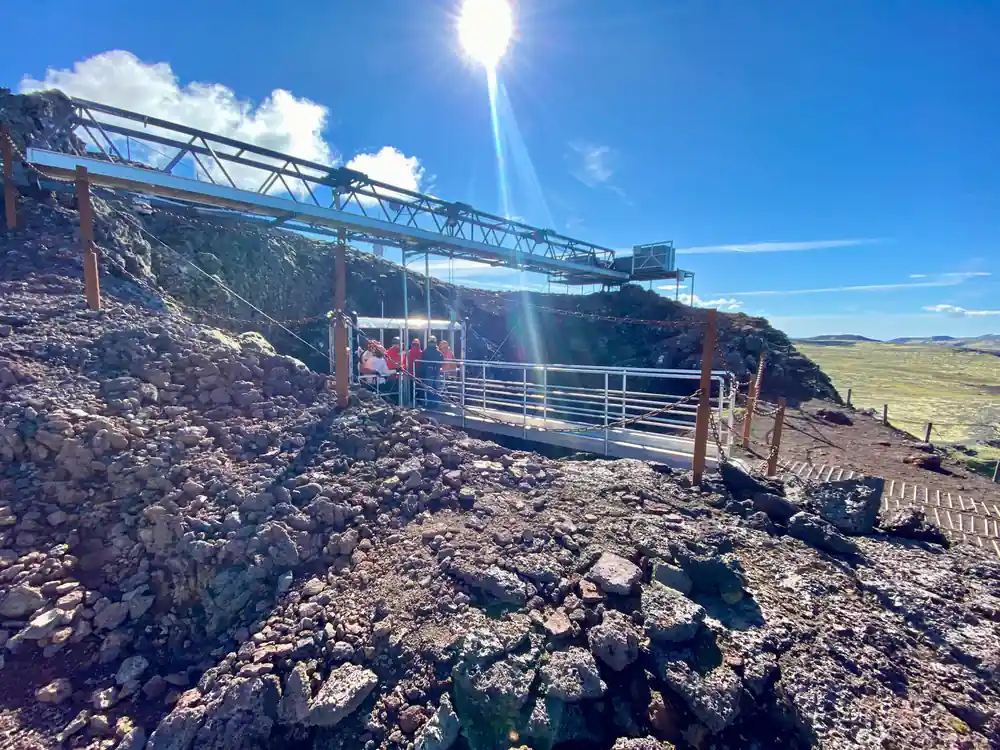
If you want strong photos, start at the lift platform. From there you can see the entire floor and the biggest patches of colour before you step down. Use a wide-angle lens if you have one, but a phone held steady at chest height works well too. Switch off the flash, because it bounces off the rock and flattens the mineral tones. Brace yourself against the handrail if you need to keep the camera still.
Give yourself permission to stop photographing. The trip includes roughly 35-45 minutes inside the chamber, covering the descent, time on the floor, and the ascent.[4] That is enough time to work through compositions, but the memory of standing beneath that ceiling is usually stronger than any image. Put the camera down for a minute, walk to the middle of the floor, turn slowly in a full circle, and let the colours surround you.
For a final frame, look back at the lift platform from the floor. The small opening above, the tiny cables and the ring of light are a useful reminder of how far you have come. It also makes a good final shot before you head up.
Planning your visit
The guided hiking day trip from Reykjavík lasts 4 - 6 hours and costs from US$432.[5] It runs every year from May 5th to October 30th.[3] Pickup is available, and the meeting point at Bláfjöll is about a 30-minute drive from the city on paved road.[5][8] Wear layers, because the lava field can be windy even when the city is calm, and bring sturdy shoes with a good grip.
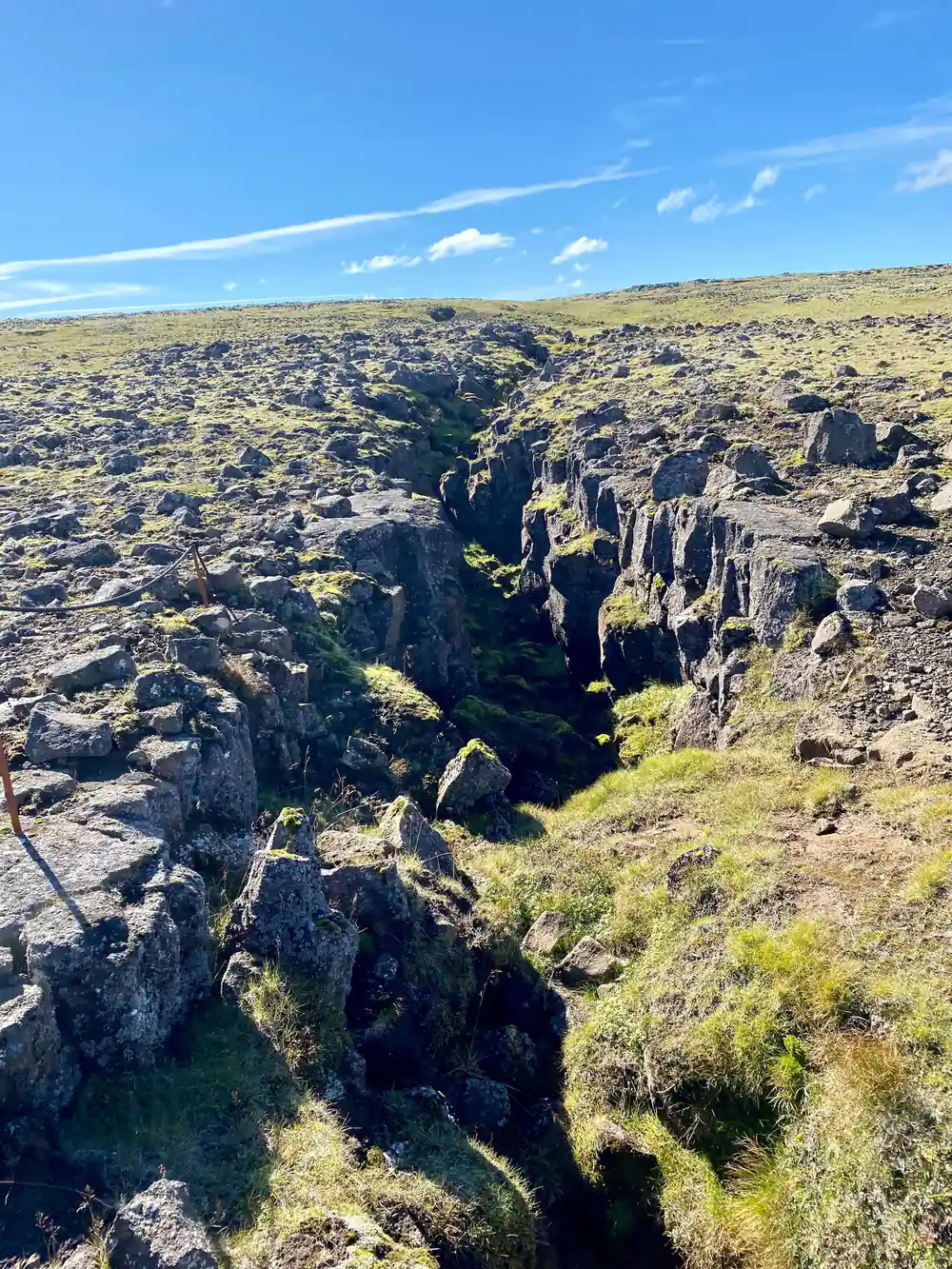
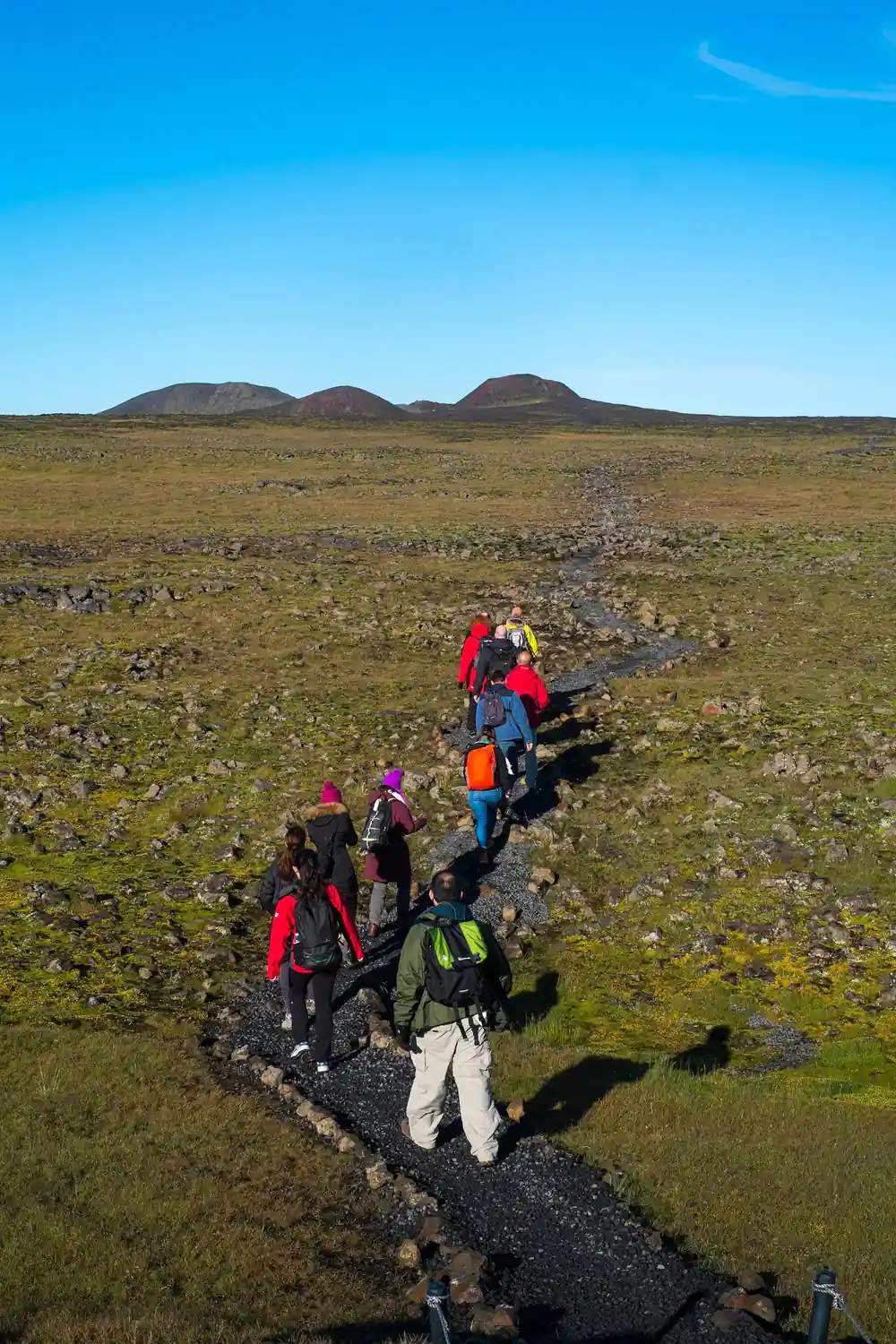
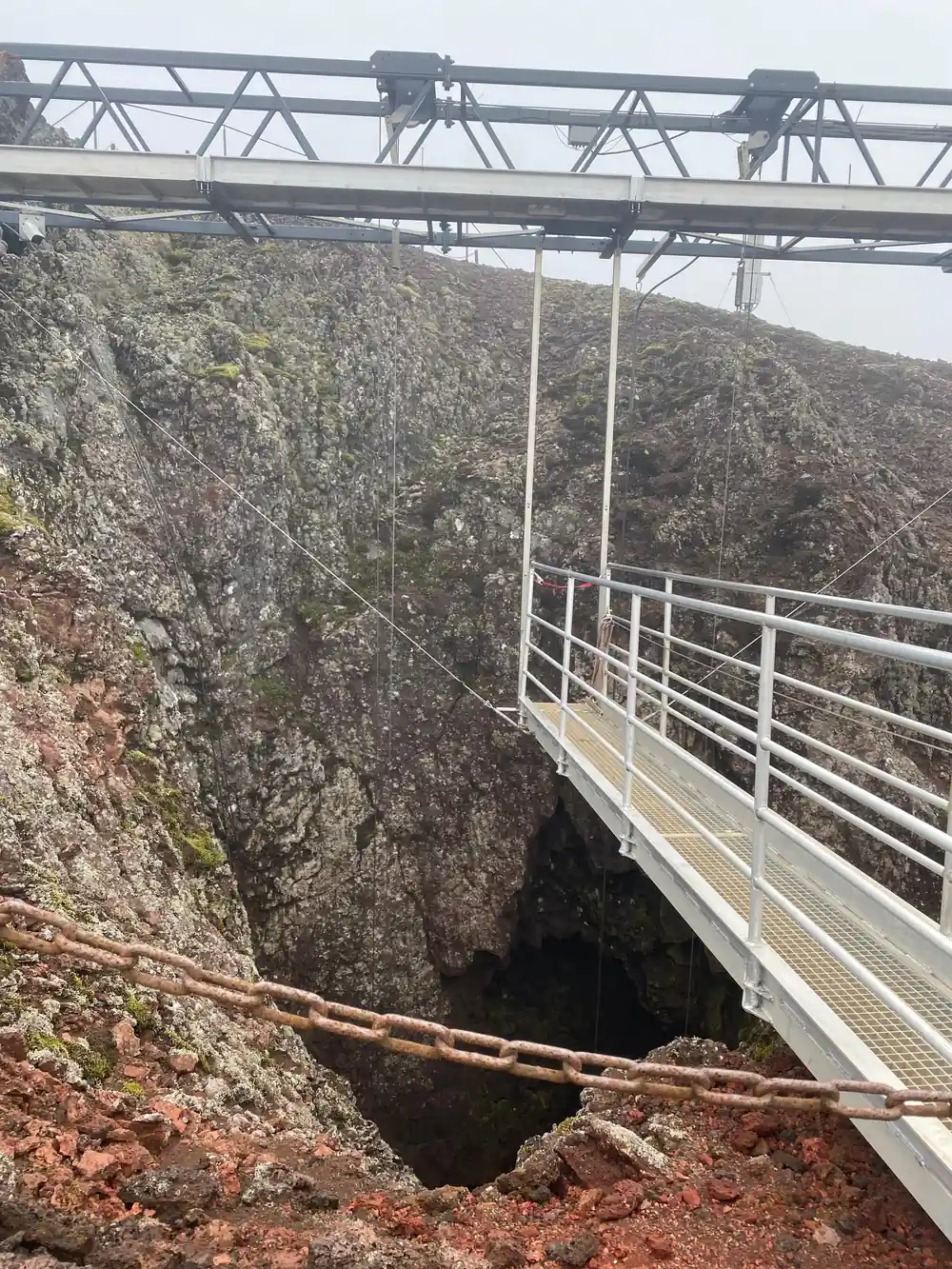
The walk to the crater is about 3 km (2 miles) each way and usually takes about 45 minutes.[3] Children need to be at least 8 years old.[4] If the hike is the barrier, a helicopter option skips it.[9] But for most people, the walk across the lava field is the perfect preamble: the colours appear only after you have earned them. The route takes you over dark, wrinkled rock, past patches of moss and scattered stones, and the quiet of the field makes the moment when you first look down into the crater even more memorable.
A little planning makes the day smoother. Book the guided hiking day trip, confirm the pickup point, and leave yourself a loose evening afterwards; the walk and the descent are exciting, but they also fill the day in a satisfying way.
How travellers rate the lava experiences
What will you pay to get close to lava?
From-prices in USD:[5],[6],[7],[11].
When to book
How to plan your visit
Meet in Bláfjöll
The meeting point is about a 30-minute drive from Reykjavík on paved road.[8] Pickup is available for the tour.[5]
Hike the lava field
Walk about 3 km (2 miles) each way; most people take about 45 minutes.[3]
Ride down
The 120-meter (400-foot) descent takes about 6 minutes by lift.[1]
Explore the chamber
Spend about 35-45 minutes underground, including the descent, time on the floor, and the ascent.[4]
Walk back and ride on
Return across the lava field to the coach and head back to Reykjavík.
Ready to see the colours inside a real volcano?
from US$432Reserve now & pay later