Quick summary
- A lift carries you about 120 metres down into an empty magma chamber, a ride of about 6 minutes.[1]
- Discovered in 1974 by cave explorer Árni B. Stefánsson.[2]
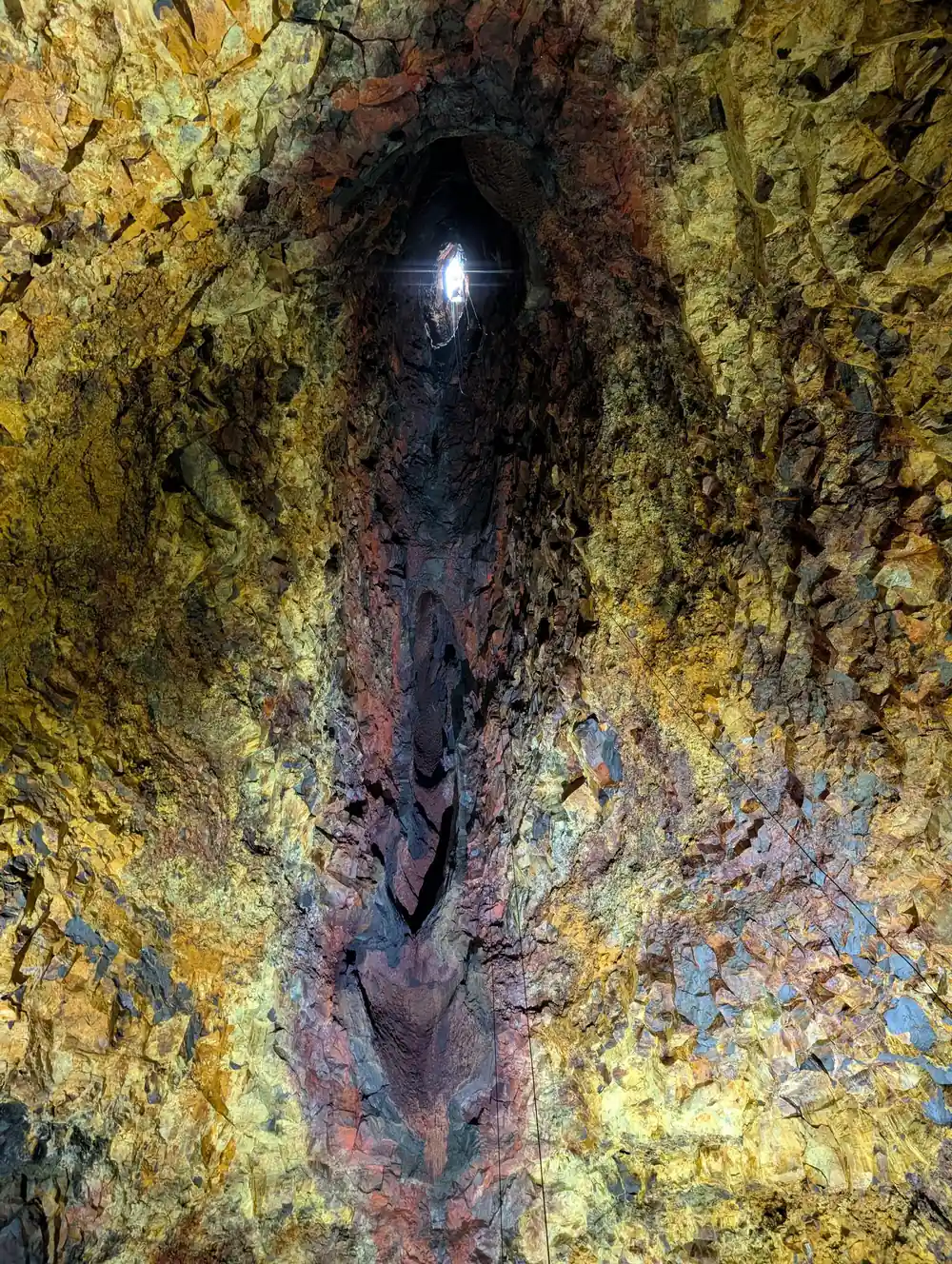
- The chamber walls glow with mineral colours left by the last eruption about 4,500 years ago.[1][2]
- The path to the crater is about 3 km each way and usually takes about 45 minutes.[3]
- The only ways to reach the base are the guided tour hike or a helicopter tour, and the season runs from May 5th to October 30th.[3]
- Top choice Inside the Volcano from US$432 Duration4 - 6 hours[4]Rating4.85 from 630 reviews[4]Guide languageEnglish, Icelandic[4]What you seeThe empty magma chamberCancellationFree up to 24 hours[4] Check availability
- Lava Tunnel by Bus from US$153 Duration3 hours[5]Rating4.59 from 850 reviews[5]Guide languageEnglish[5]What you seeA 1,360 m lava tunnel[7]CancellationFree up to 24 hours[5] See this tour
- Reykjanes Volcano Hike from US$132 Duration9 hours[6]Rating4.65 from 1,154 reviews[6]Guide languageEnglish[6]What you seeEruption site and Reykjanes highlightsCancellationFree up to 24 hours[6] See this tour
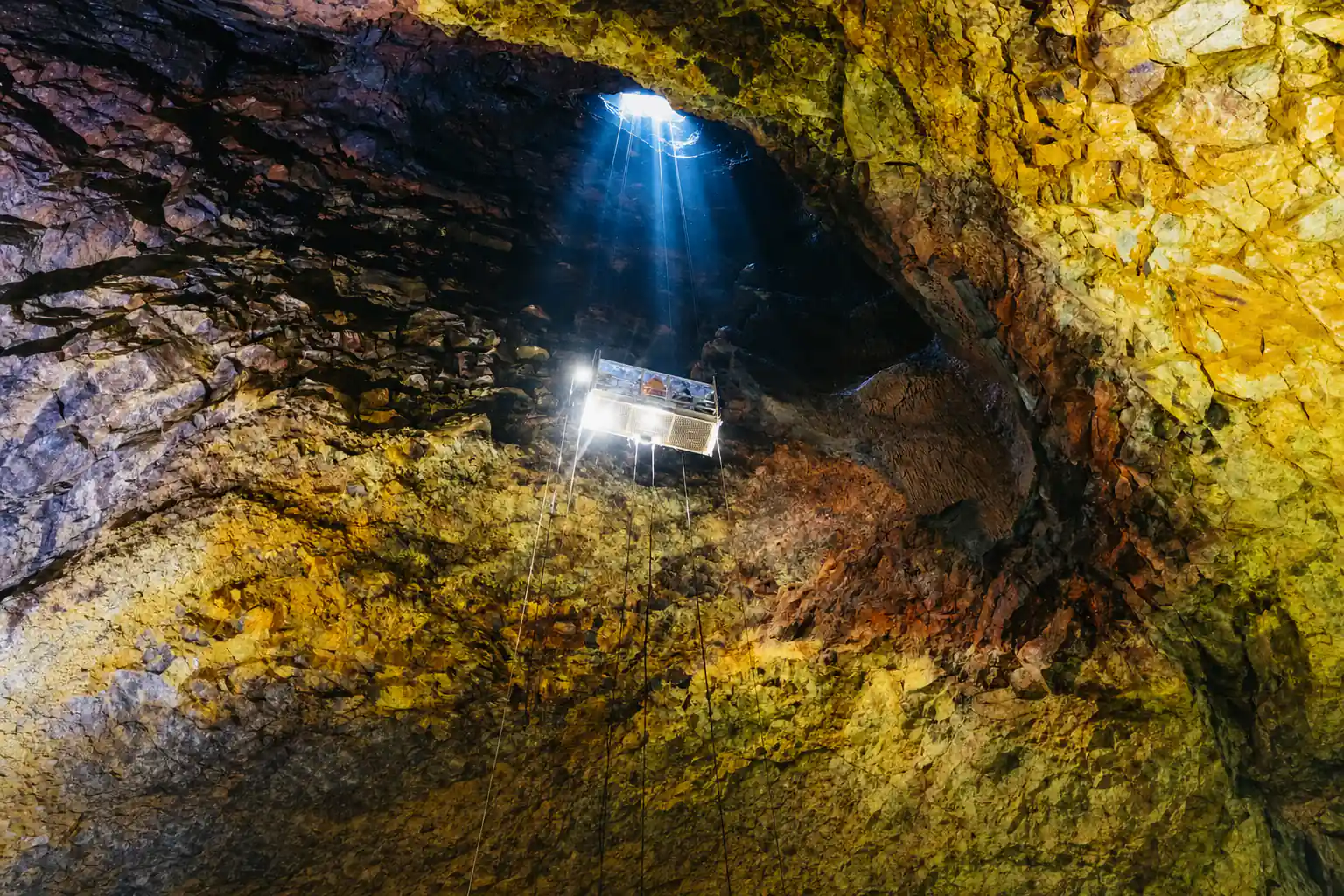
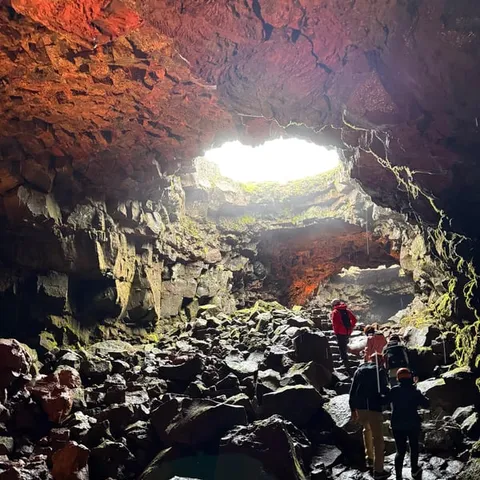
On a bright winter day in 1974 the cave explorer Árni B. Stefánsson became the first human being to enter Þríhnúkagígur.
Stand inside the volcano
Check before booking
A known hole nobody had entered
On the surface, Thrihnukagigur is easy to miss. It is a red scoria cone sitting on a mossy lava plain, one modest bump among many on Iceland's Reykjanes peninsula. Walk up to its rim, however, and the ground suddenly stops. Below you is a funnel-shaped opening that drops away into darkness, and at the bottom of that opening waits something extraordinary. The volcano last erupted about 4,500 years ago, and for most of the time since, that hole stayed exactly as the eruption left it.[2]
The vault below is not a narrow crack in the rock. It is a bottle-shaped chamber about 120 m deep, with a bottom floor measuring 50×70 m.[2] That is roughly the floor area of a small cathedral, a space large enough to hold a modest apartment block laid on its side. For centuries, local people must have known the crater was there, but knowing a hole exists is not the same as knowing what waits at the bottom. That secret stayed intact for thousands of years.
What makes Thrihnukagigur so unusual is that the chamber is empty. A deep underground rift drained the molten rock away after the last eruption, leaving behind a hollow cavity you can walk into.[2] There is no fire and no lake of lava, just stillness, rock and a shaft of daylight falling from far above. That is what the first explorers found, and it is still what visitors find today.
1974: the discovery below the crater
The man who finally solved the crater was Árni B. Stefánsson, a cave explorer. In 1974 he discovered Thrihnukagigur, finding the chamber floor for the first time.[2] It was a classic piece of exploration: a known hole, an unknown bottom, and a curious person willing to be lowered into it. Whatever he expected, the empty magma chamber was not it.
For a long time, that discovery remained known to only a few. The gantry, lift and walkways that now serve the crater make it possible to reach the chamber floor, and the journey has been made safe enough for ordinary travellers. Since then, travellers have been able to follow the route of that first explorer, though today the descent is rather different. The rope has been replaced, and the destination is unchanged.
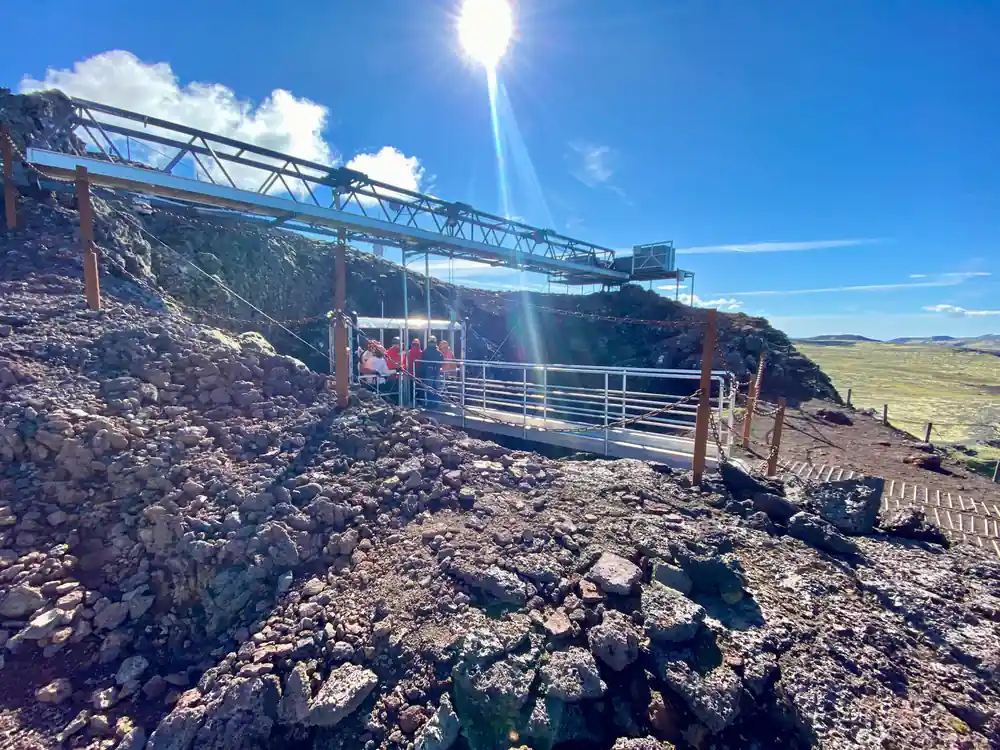
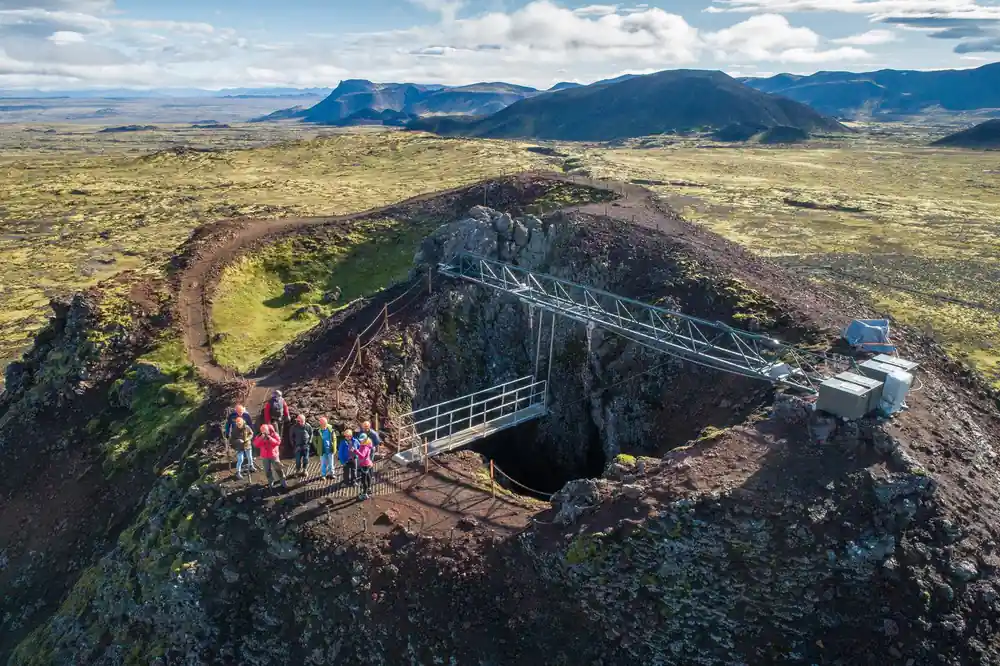
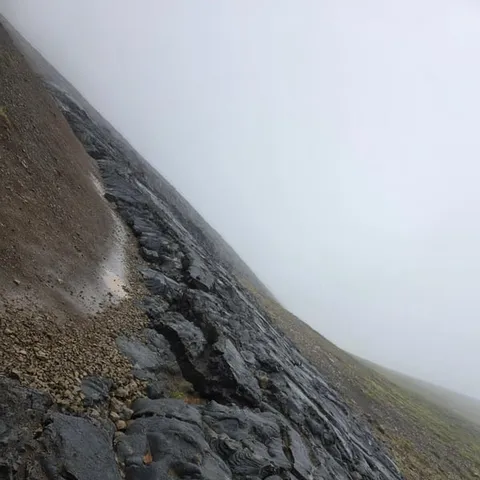
Hikers cross the lava field on the approach to Thrihnukagigur's crater.
From rope to platform
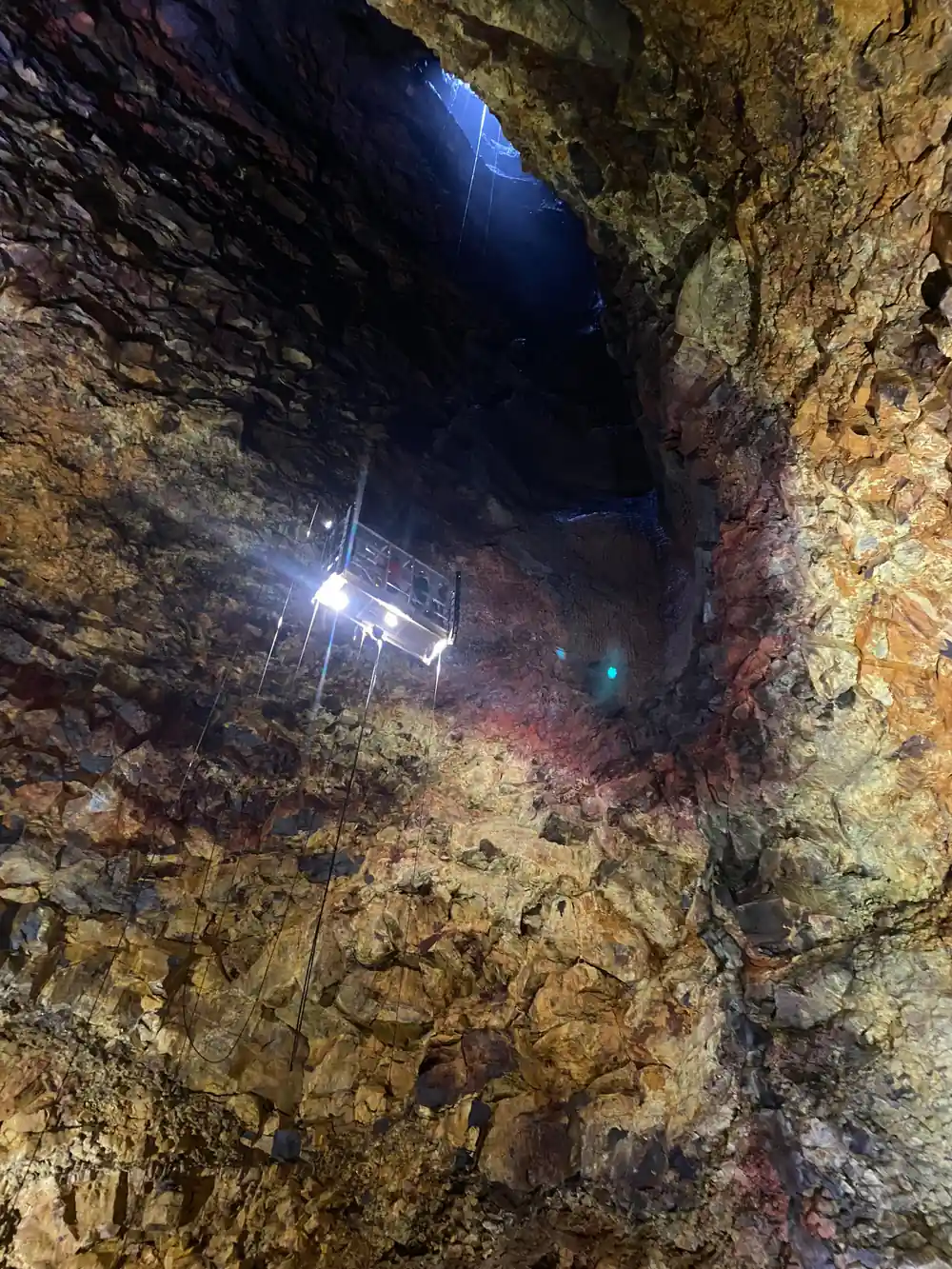
The first descent was done the hard way. Explorers needed ropes to reach the chamber floor, and every return to daylight meant climbing back out the same way, 120 metres of rock above them.[1] The modern visit ends in the same place, but the route down is a lift ride. You step into a steel basket with your group, and the platform machinery lowers you through the crater opening and into the vault. The ride takes about 6 minutes.[1]
The lift is part of a platform system built around the crater. The descent is 120 meters (400 feet), and the whole time inside the volcano, from leaving the surface to returning to it, is approximately 35-45 minutes.[1][8] That includes the ride down, time spent exploring the chamber floor, and the ride back up. The sequence has stayed the same since the opening: walk in, lower down, wander, rise, walk out.
What was at the crater before the gantry
Before the gantry was installed, the crater was simply a hole in the mountain, open to the sky and the weather. The approach to it has not changed: you cross the lava field on foot, following a path of about 3 km each way that usually takes about 45 minutes.[3] The trail climbs gently across the rim of the cone, with wide views over the plain and the mountains beyond.
The meeting point for the experience is at a ski cabin in Bláfjöll, the Blue Mountains, about a 30-minute drive from Reykjavík on paved road.[9] From the cabin, the walking trail climbs across the lava towards the cone, and for hikers it is the only way to the crater. Early explorers would have made the same approach, carrying rope and gear instead of day packs.
What visitors found at the crater before the gantry was raw geology: a ragged opening, wind, and a dark mouth leading into the mountain. The colours inside were already there, painted on the walls by mineral deposits left by the last eruption.[1] The platform changed access, but it did not change the place itself.
120 m
The descent into Thrihnukagigur is 120 meters (400 feet), and the lift ride takes about 6 minutes.[1]
Why access is still deliberately small
Thrihnukagigur cannot be visited independently. The only ways to get to the volcano base are the guided tour hike or a helicopter tour, and for most travellers that means joining the organised day trip from Reykjavik.[3] A helicopter option exists separately if you want to skip the walk, but the hiking approach is the classic way in.[10]
The tour operates every year from May 5th to October 30th, the minimum age is 8 years old, and access remains deliberately small.[3][8] There is no independent entry, no roadside viewpoint, no way to turn up and walk in. You book the guided day trip or you do not go below.[3]
All of this means the reliable way to stand on the chamber floor is the guided hiking day trip. Pickup is available from Reykjavik, and the live tour guide speaks English and Icelandic.[4] The trip lasts 4 - 6 hours in total, which is enough for the hike, the descent, the time underground, and the return journey.[4]
What the descent is like today
The descent begins after the hike, at the platform hanging over the crater mouth. You are fitted with a harness and helmet, then step into the lift with your group and drop through the opening into the vault. The ride is about 6 minutes, and the walls change around you as the light fades and the chamber opens out.[1]
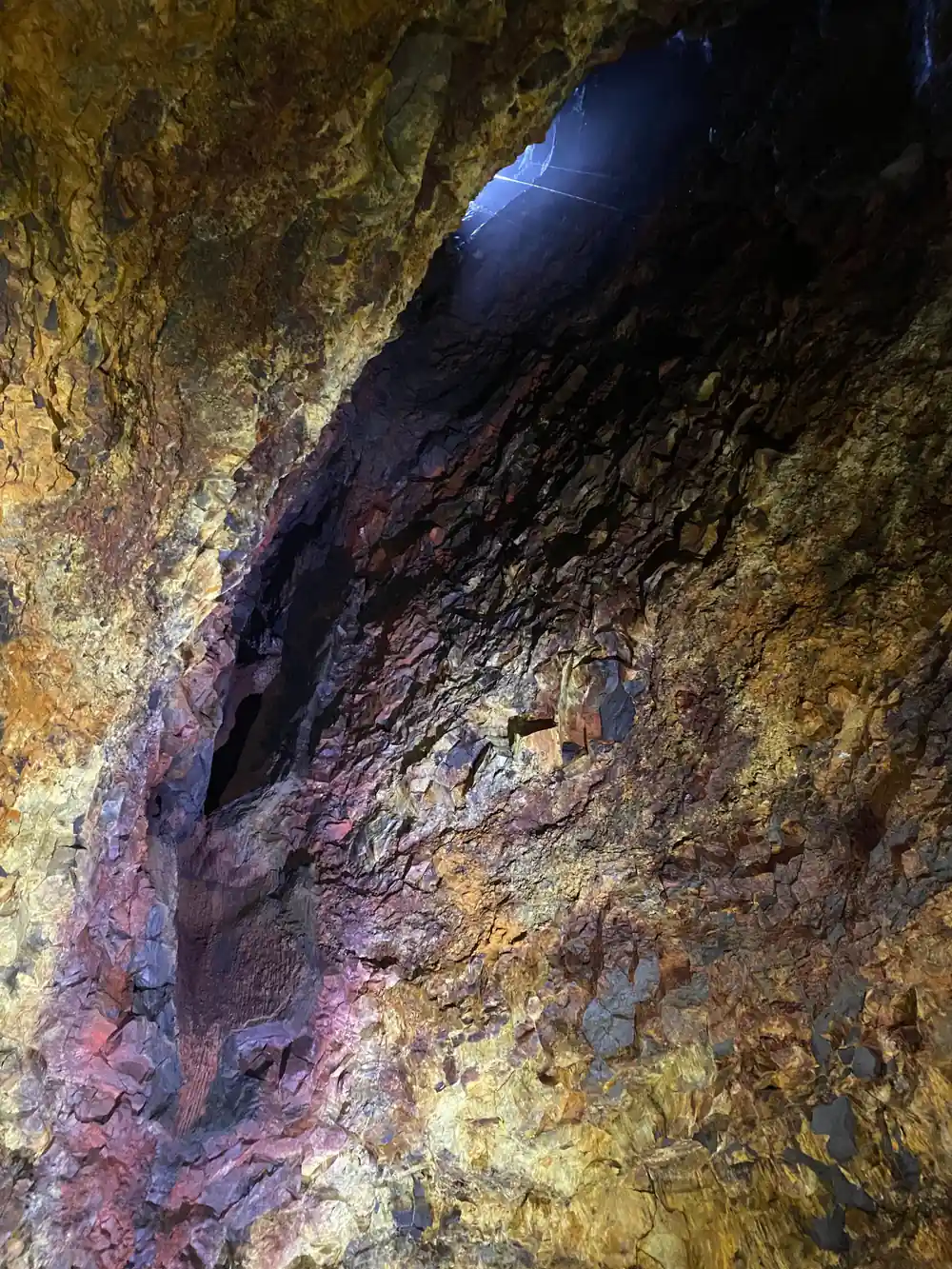
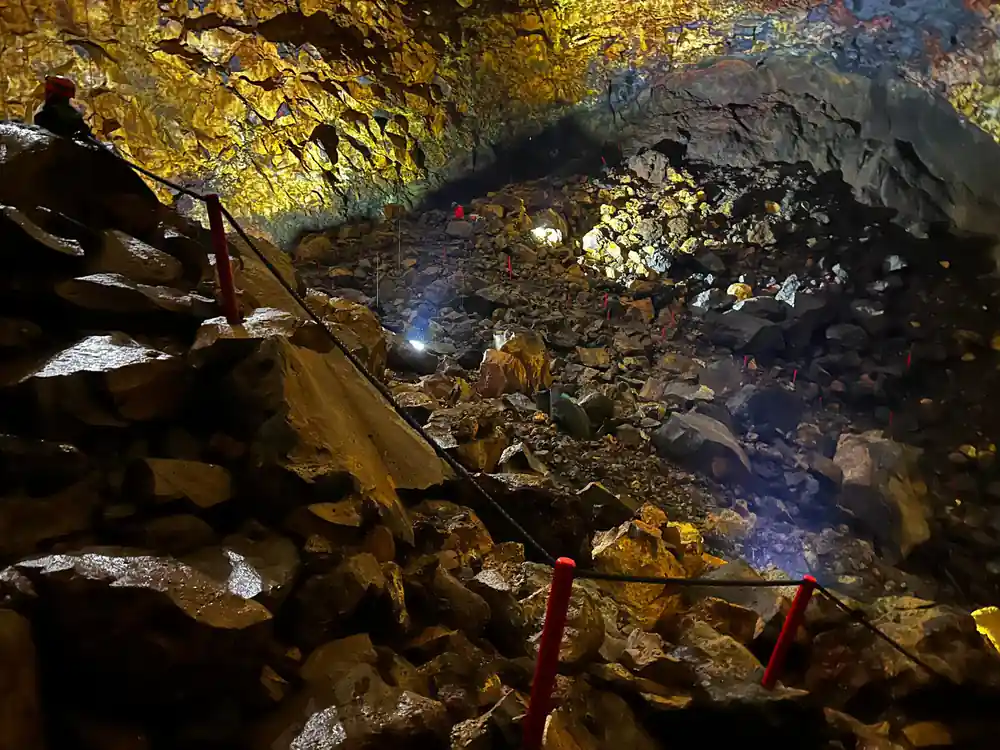
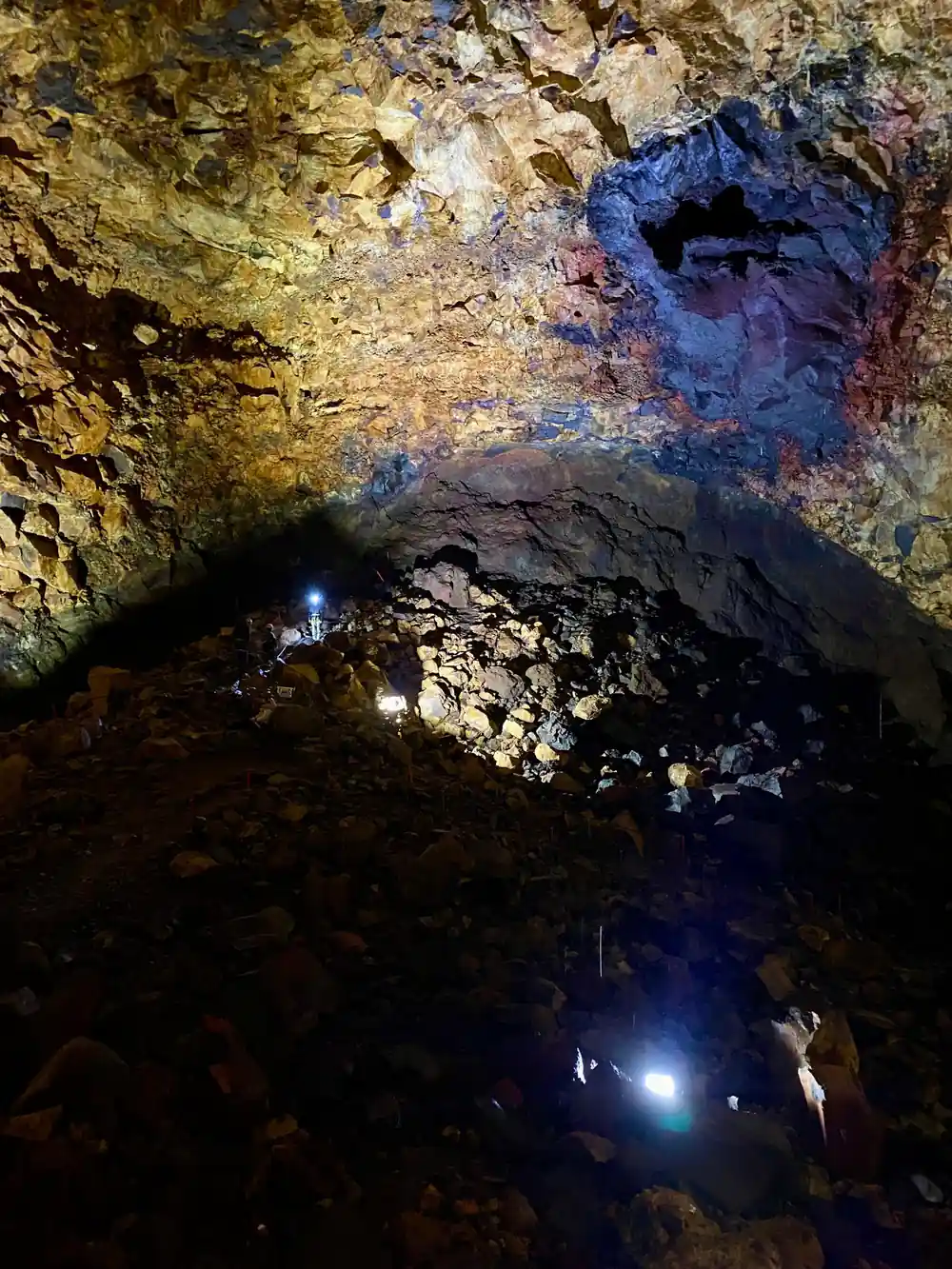
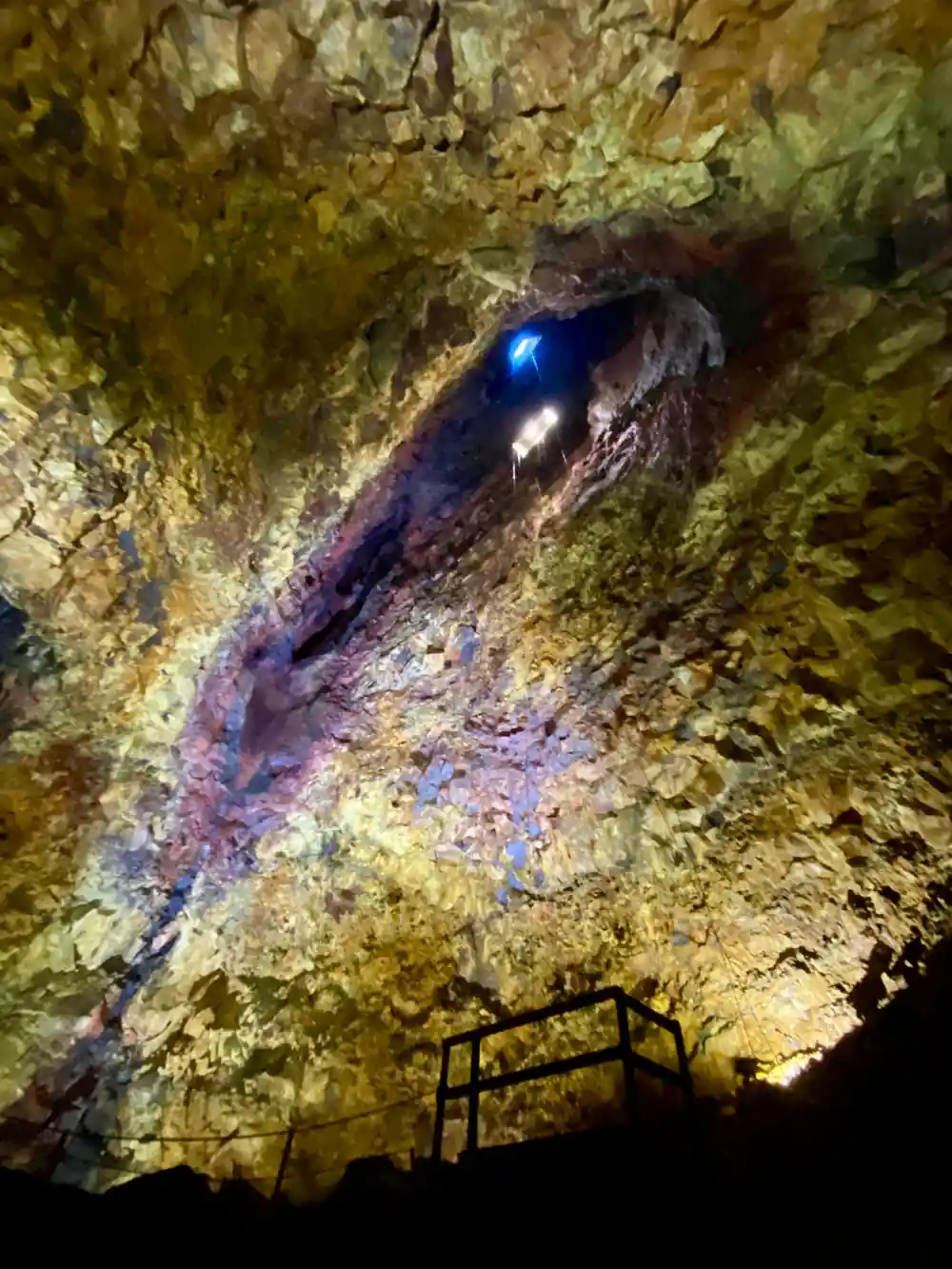
On the chamber floor the space opens up around you. The vault is about 120 m deep with a bottom floor measuring 50×70 m, big enough to wander and to look up.[2] The walls glow in bands of red, yellow, green and black, colours left by mineral deposits from the last eruption.[1] Visitors spend approximately 35-45 minutes inside the volcano, including the descent, time on the chamber floor, and the ascent.[8]
Standing on the floor, it is worth remembering why the chamber is empty: a deep underground rift drained the molten rock away after the last eruption, leaving the hollow space around you.[2] The scale only becomes clear when you look up at the opening far above and realise you are inside the volcano, not standing on top of it.
Planning your descent from Reykjavik
The tour booked through this site is the Reykjavik: Thrihnukagigur Volcano Guided Hiking Day Trip. It is priced from US$432, runs for 4 - 6 hours, and has a live tour guide who speaks English and Icelandic.[4] Pickup is available, and you can reserve now and pay later.[4] Free cancellation is included: cancel up to 24 hours in advance for a full refund.[4]
Travellers rate the trip 4.85 from 630 reviews.[4] The combination of a gentle hike, a lift into a magma chamber and the coloured walls below makes it an unusual way to spend a day. For many, the moment the lift clears the crater edge is the one they remember longest.
Come prepared for the weather. The meeting point is about a 30-minute drive from Reykjavík on paved road, and the hike crosses open lava field, so layers, sturdy shoes and a rain shell are sensible.[9] The tour runs from May 5th to October 30th, which makes it a summer or early autumn experience.[3]
Time inside and around the volcano
Minutes stated by the tour operator: about 45 minutes hiking each way[3], about 6 minutes in the lift[1], and 35-45 minutes inside the vault[8].
Compare US dollar from-prices
US dollar from-prices from GetYourGuide listings[4][5][6][11][12].
When to book
Your descent, step by step
Meet in Reykjavik
Pickup is available from the city, and the meeting point in Bláfjöll is about a 30-minute drive away on paved road.[4][9]
Hike to the crater
Cross the lava field to the rim of the cone, a path of about 3 km each way that usually takes about 45 minutes.[3]
Ride the lift down
Step into the lift and drop 120 metres into the vault; the ride takes about 6 minutes.[1]
Explore the chamber
Spend about 35 to 45 minutes inside the volcano, on a chamber floor measuring 50×70 m.[2][8]
Ride back up and walk out
Take the lift to the surface and follow the same trail back to the meeting point for the return coach.
Finish in Reykjavik
The whole trip runs 4 - 6 hours, leaving the rest of your day free.[4]
Book your Thrihnukagigur volcano descent day trip
from US$432Reserve now & pay later