Quick summary
- The path to the crater is about 3 km (2 miles) each way and usually takes about 45 minutes with your guide.[1]
- A lift carries you 120 meters (400 feet) down into the volcano; the ride takes about 6 minutes.[2]
- Visitors spend approximately 35-45 minutes inside the volcano including the descent, time on the chamber floor, and ascent.[3] The bottom floor measures 50 by 70 m.[4]
- The tour operates every year from May 5th to October 30th.[1]
- From US$432 for the Reykjavik day trip, with pickup available and free cancellation up to 24 hours in advance.[5]
| Guided hike day trip | Helicopter transfer | On your own | |
|---|---|---|---|
| Getting to the base | 3 km (2 miles) hike, about 45 minutes[1] | Helicopter transfer, no hike[6] | No independent access[1] |
| Depth below ground | 120 meters (400 feet) by lift[2] | -- | -- |
| Inside the chamber | 35-45 minutes[3] | -- | -- |
| Season | May 5th to October 30th[1] | -- | -- |
| From | from US$432[5] | -- | -- |
The path to the volcano is about 3 km / 2 miles each way. It is relatively easy and usually takes about 45 min to cover with your guide.
Worth the walk into the thrihnukagigur cave
Check before booking
Where you are walking
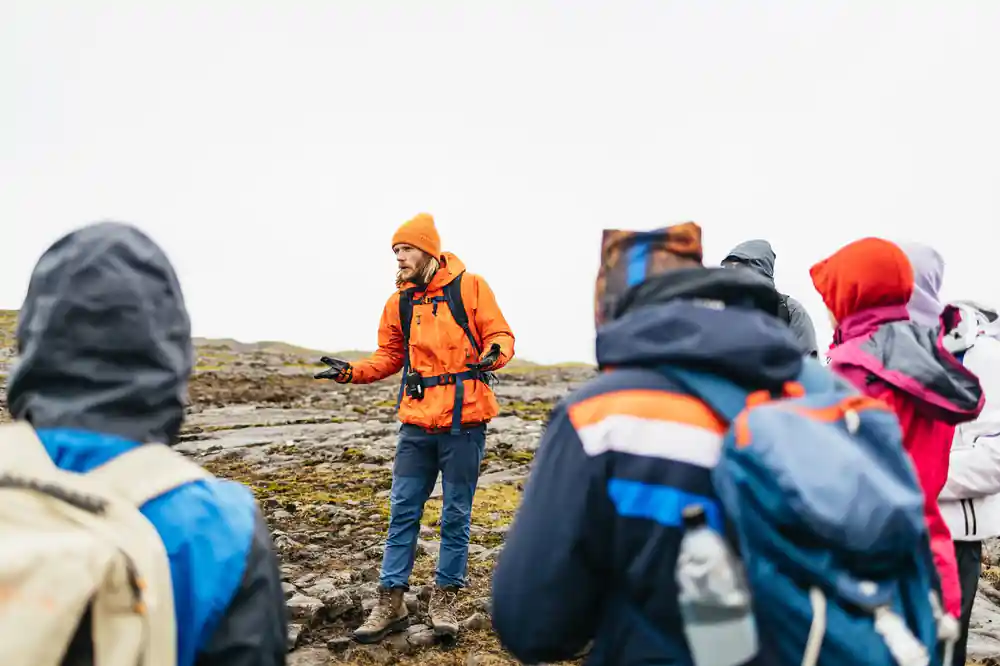
Your day starts at a ski cabin in Blafjoll, the Blue Mountains, about a 30-minute drive from Reykjavik on paved road.[7] From there the tour is part walk, part descent. The path to the Thrihnukagigur crater is about 3 km (2 miles) each way, and it usually takes about 45 minutes to cover with your guide.[1] Thrihnukagigur cannot be visited independently; the only ways to get to the volcano base are the guided tour hike or a helicopter tour.[1] That means every visitor earns the view the same way, one step at a time across the lava. The experience begins before the path does, with the cone framed by the Blue Mountains and the long quiet ridge you are about to cross.
That first hour sets the tone. You leave the road and follow a broad track across an old lava field, with the flat-topped cone of the volcano growing ahead of you. Walkers string out in a long, friendly line, stopping for photos of the blue-green mountains around them. The route is a walk, not a climb. With sturdy shoes and an easy pace, most people enjoy the approach as much as the cave itself. Small cairns mark the line in places, and the path is wide enough to walk side by side. There is no scrambling and no real exposure, just a steady climb and an easy, satisfying rhythm in the boots. The ground underfoot changes enough that you are never bored.
What the surface is actually like
The lava field around Thrihnukagigur is not the sharp black crust you might expect. In long stretches the ground is scoria, loose red and brown gravel that crunches underfoot, with larger boulders pushing through where the surface has settled. Elsewhere the path crosses smooth, ropy lava that flowed like treacle before it cooled, then blocky, shattered rock from a slower advance. You want to watch your footing on the steeper patches, but the track is well worn and easy to follow.
The colours are the real surprise. Red and ochre scoria, black basalt, grey-green moss and the white of early-season snow make the field look more like a desert than a mountain. The path rises along the ridge of the red cone before dropping to the crater entrance. Turn around on a clear day and Reykjavik sits low on the horizon, with the noise of the city gone completely. Only wind, birdsong and the crunch of boots on scoria remain. The guides set a pace that suits the whole group, so there is no need to hurry and no risk of being left behind.
Walkers crossing the lava field toward the red cone of Thrihnukagigur.
The moss, which is older than it looks
Between the rocks, the lava field is patched with moss. The growth looks soft and cushiony, but it is far older than it appears. In this cold, windy climate moss grows slowly, and a clump the size of a dinner plate may have taken decades to form. Old footprints in the moss stay dark and scarred for years, which is reason enough to keep to the path that is already there. It is one of those places where leaving no trace is not a slogan but an everyday habit.
The moss also tells you how quiet this landscape is. There is no turf and no pasture, only a thin living skin over the lava. On wet days the moss turns deep green and holds the light; in dry spells it fades to silver-grey and feels brittle underfoot. The volcano above you last erupted about 4,500 years ago,[4] and the ground you walk on has been settling ever since.
The weather, which is not Reykjavik's
Reykjavik can be mild while Blafjoll is doing something entirely different. The meeting point sits higher and more exposed, and the wind here finds every gap in your clothing. A waterproof shell is essential even on a blue-sky day, and a hat and gloves are sensible in the early and late parts of the season. The walk is short, but you are fully in the open for it.
A wet track is slippery on the rock slabs, and wind across the open field can be strong, so dress in layers you can adjust as you walk. A neck gaiter or thin scarf costs little space in a daypack and makes the final stretch much more comfortable. The colours inside the chamber do not depend on the weather, but your comfort on the approach certainly does.
from US$432
A full guided day trip from Reykjavik: the lava-field hike, the 120-metre lift descent and time on the floor of the drained magma chamber.[2][5]
What lives out there
Life on the lava field is sparse but real. In summer, small birds nest among the boulders and flit along the path edges, and you may spot an Arctic fox trotting across the scoria. There are no trees to speak of, only the occasional stunted birch low against the wind. The plants you notice are the mosses, the lichens and a few hardy grasses that hold on in sheltered hollows.
The walk passes no farms and no houses, just open ground between the mountains. That emptiness is part of the experience. A small hut sits at the crater entrance, where the group gathers before the descent. Then the landscape drops away below you and the thrihnukagigur cave takes over. The emptiness is a large part of the appeal, and it makes the arrival at the crater feel even more dramatic.
Inside the thrihnukagigur cave
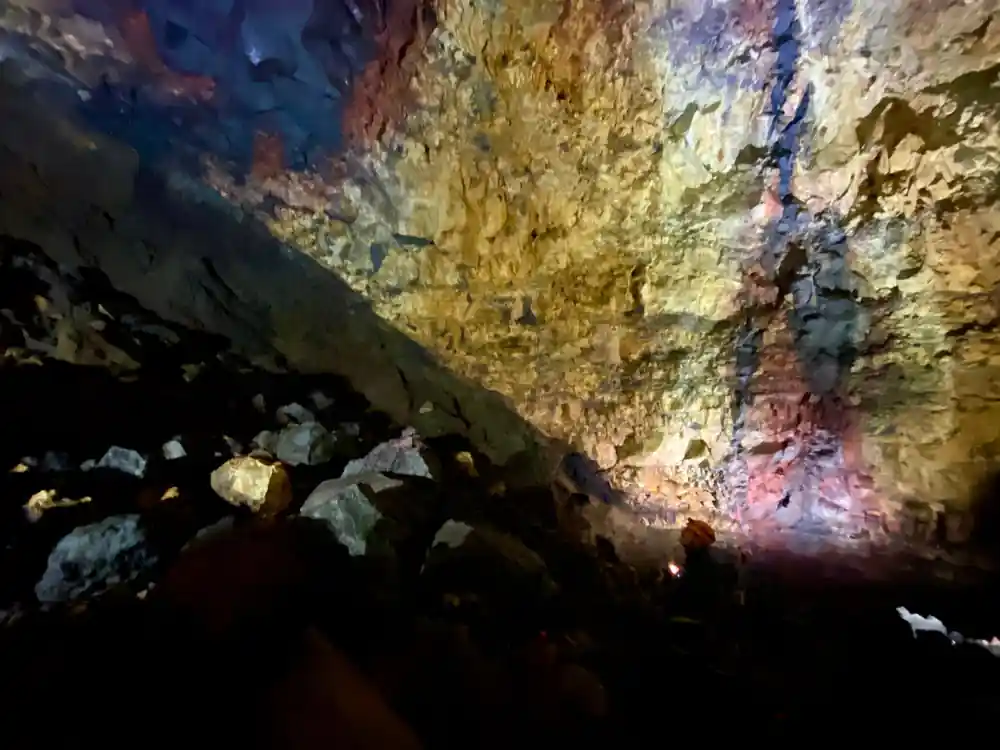
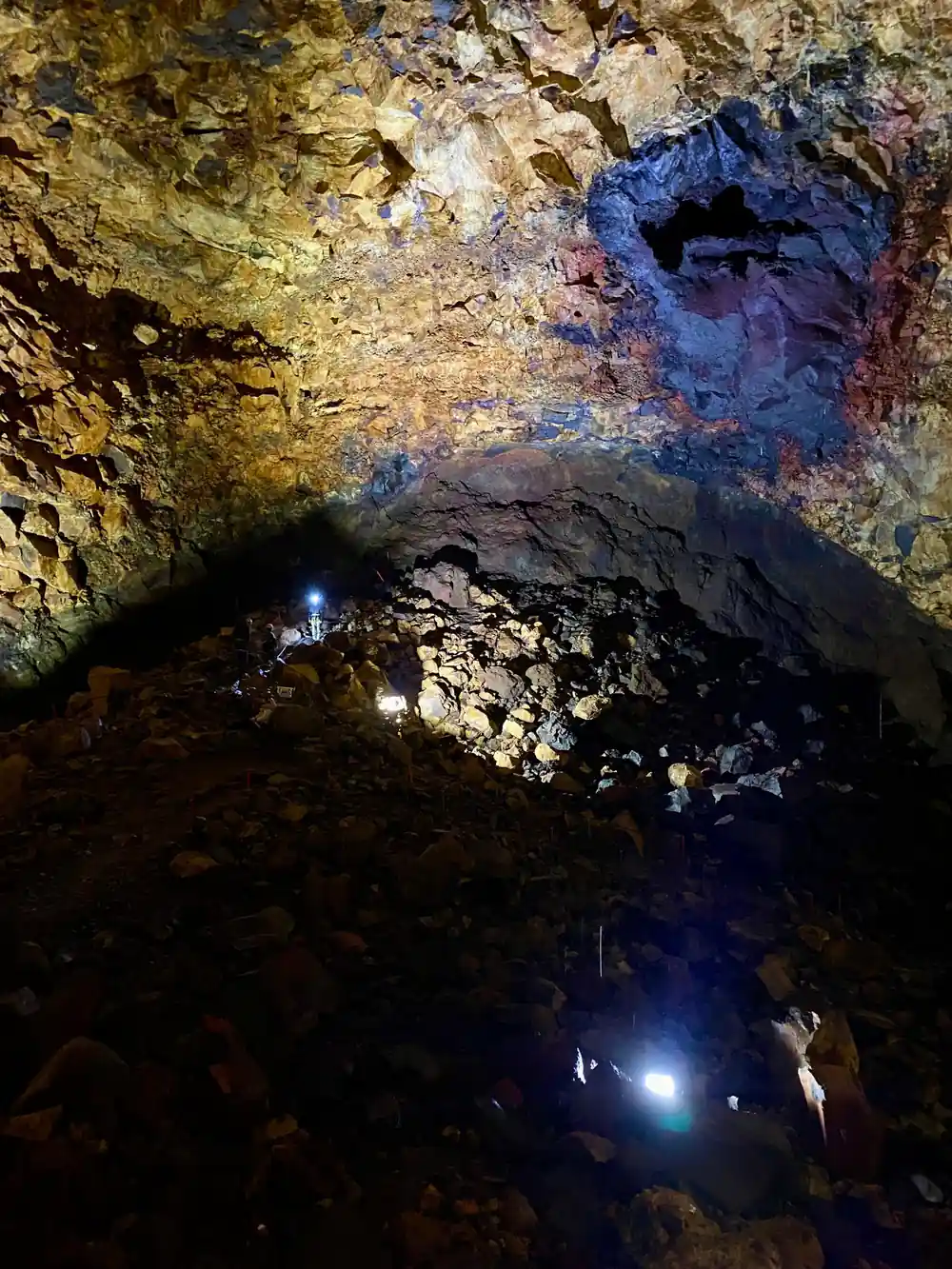
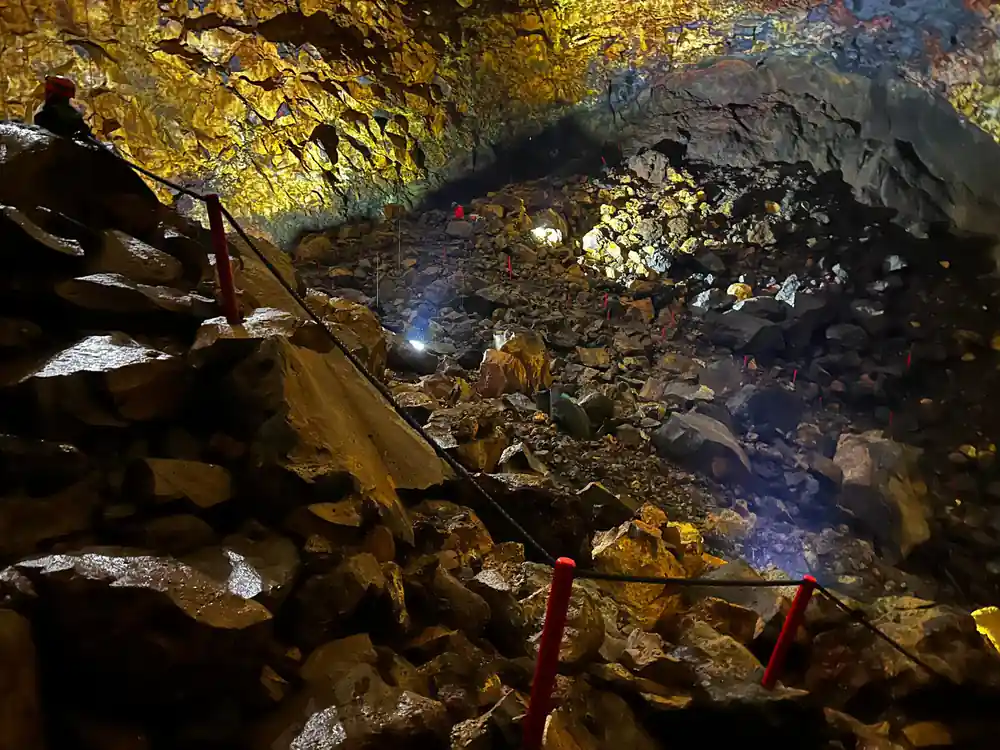
The cave was first entered in 1974 by the cave explorer Árni B. Stefánsson.[4] You enter through a funnel-shaped opening at the top of the cone and step into a lift that carries you down 120 meters (400 feet); the ride takes about 6 minutes.[2] Below is a bottle-shaped vault about 120 m deep, with a bottom floor measuring 50 by 70 m.[4] It is a space big enough to make you feel very small. The air is cool and still, and your voice carries in a strange, soft way.
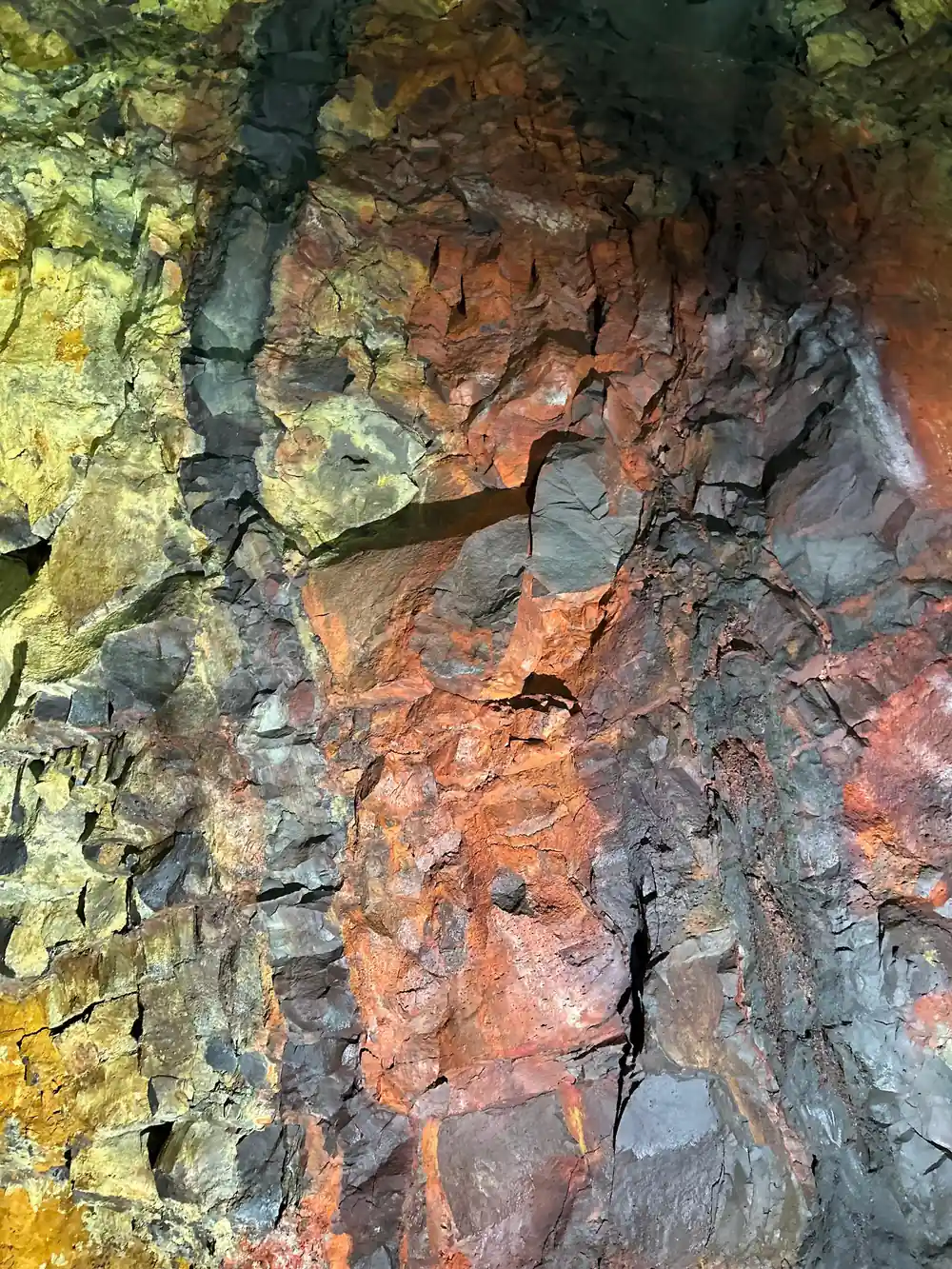
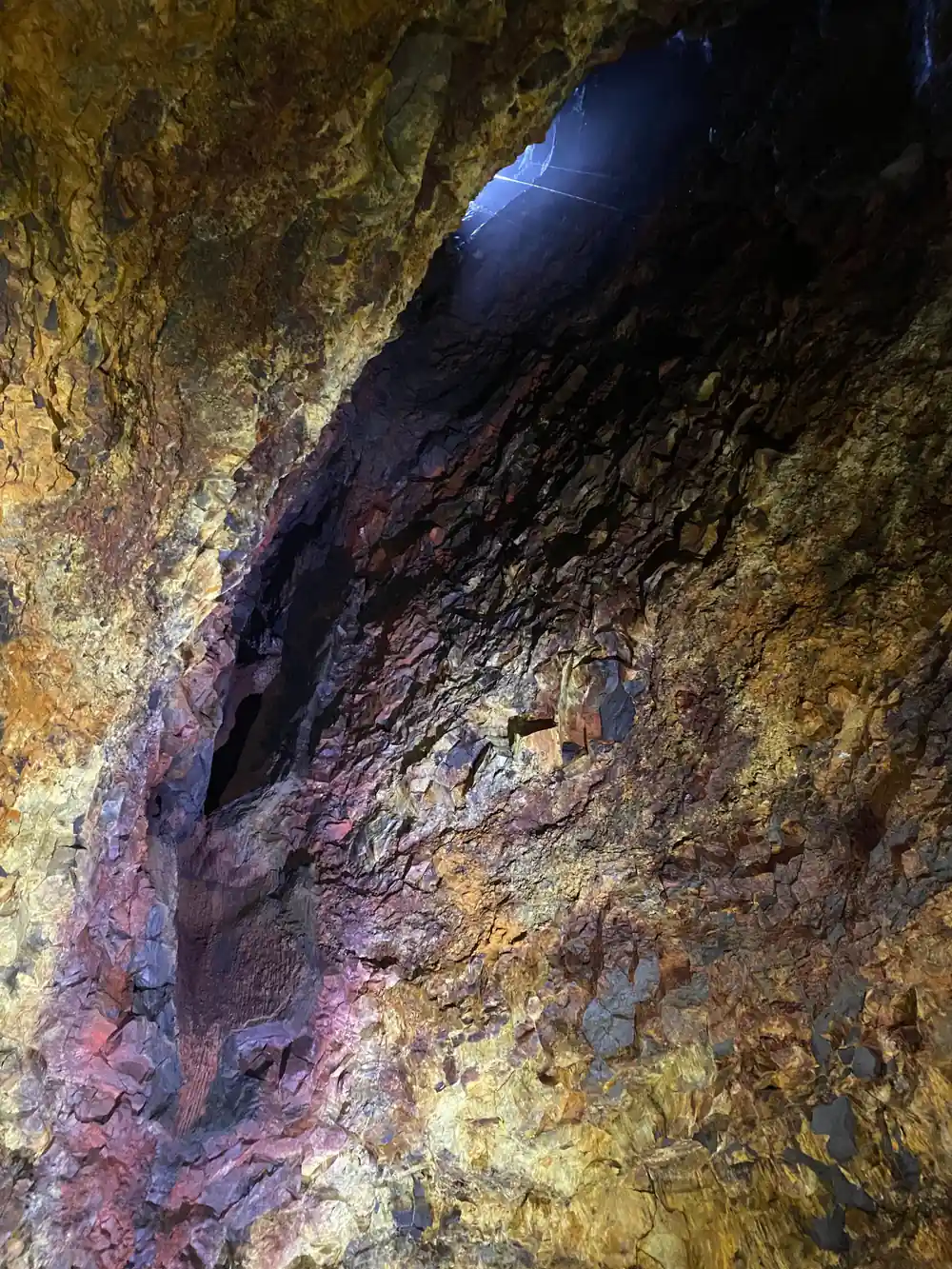
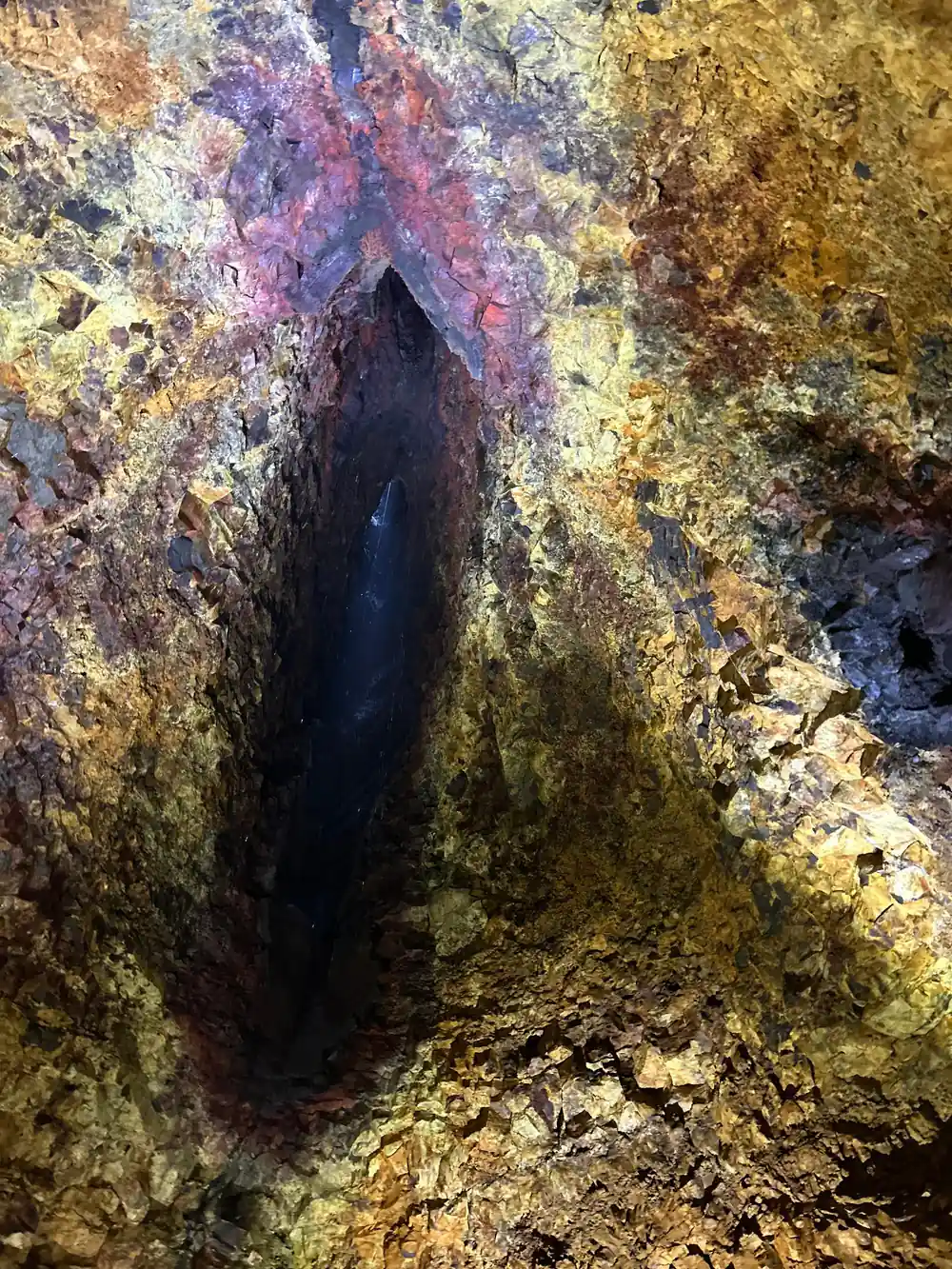
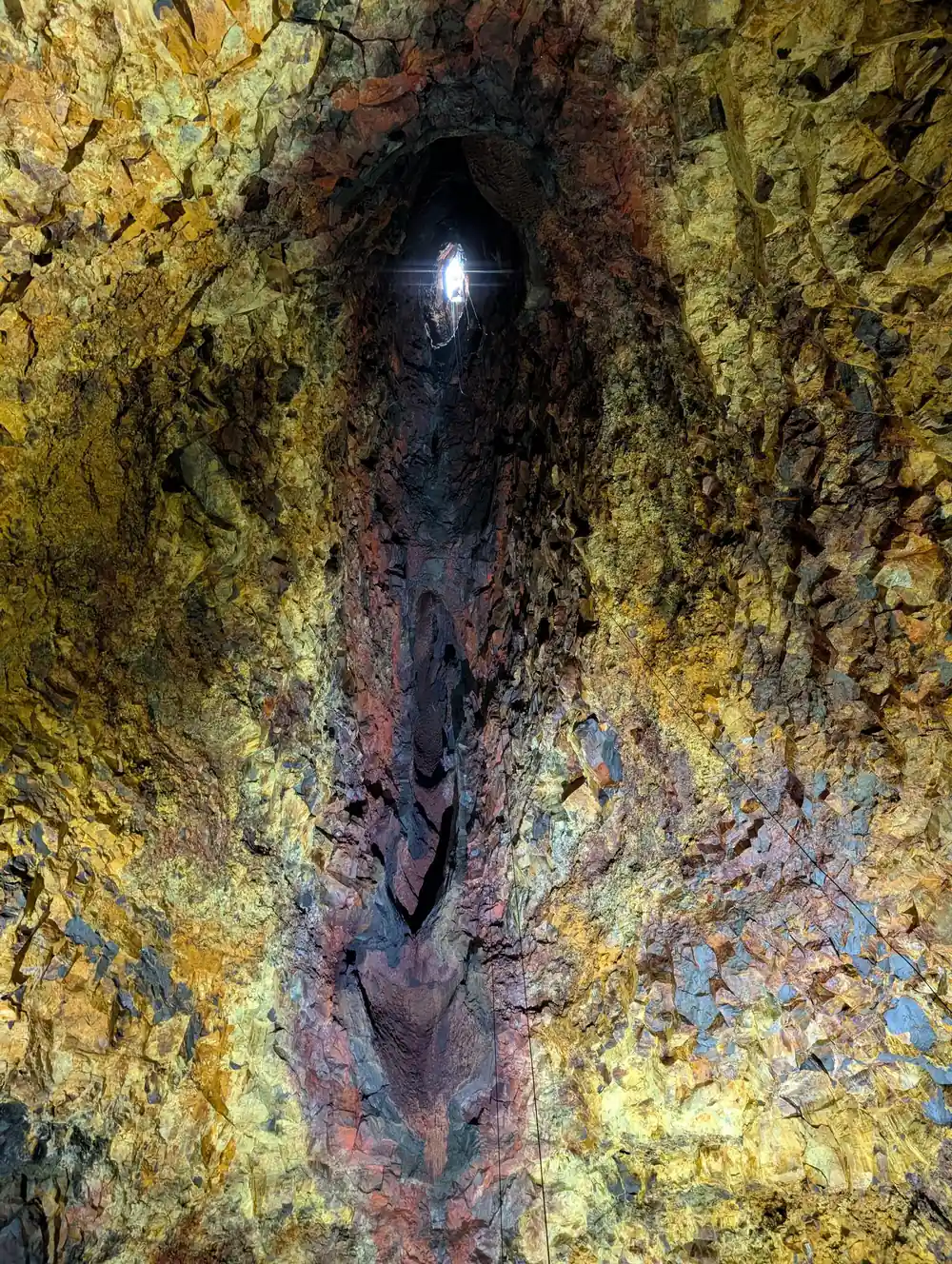
Visitors spend approximately 35-45 minutes inside the volcano including the descent, time on the chamber floor, and ascent.[3] You can wander the floor, look up at the opening far above, and study the walls glowing in bands of red, orange, yellow and green, colours left by mineral deposits from the last eruption.[2] The chamber is empty because the magma is believed to have retreated to the depths of the earth.[4] You can trace the bands of colour on the walls and see how the eruption left its mark at different levels.
For many people the quiet is the most striking part. Stand still and the cave is almost silent, lit only by the lamps and the daylight falling from the entrance. Then the lift takes you back up, and the walk across the lava field returns you to Blafjoll, where the coach waits for the drive to Reykjavik. It is a lot to take in, and the walk back gives you time to let it settle.
Planning your lava field visit
The tour runs every year from May 5th to October 30th.[1] The minimum age is 8 years old.[3] From Reykjavik the full day trip lasts 4 - 6 hours,[5] with pickup available and live guides in English and Icelandic.[5] The price is from US$432, and you can reserve now and pay later, with free cancellation up to 24 hours in advance.[5]
If you want the cave but not the walk, there is a helicopter option that skips the hike to the base.[6] Whichever way you arrive, wear walking shoes or boots, bring a waterproof layer and a bottle of water, and keep your hands free for the steeper bits. The trip takes up a good part of a day, so treat it as the main event rather than an add-on to something else. Late afternoon light turns the scoria slopes amber, a good moment for one last photograph before the coach doors close. If you are travelling with children, consider their walking pace on the return trip as well as the descent.
Thrihnukagigur chamber dimensions
Dimensions from[4]: the vault is about 120 m deep, and the bottom floor measures 50 by 70 m.
Compare volcano day trips from Reykjavik
US dollar from-prices from these GetYourGuide listings: from US$432 ([5]), from US$153 ([8]), from US$132 ([9]), from US$53 ([10]).
When to book the Thrihnukagigur day trip
How the day works
Meet at Blafjoll
Drive about 30 minutes from Reykjavik on paved road to the ski cabin meeting point.[7]
Hike to the crater
Walk about 3 km each way across the lava field, around 45 minutes with your guide.[1]
Descend by lift
Ride the lift 120 meters down into the volcano; the descent takes about 6 minutes.[2]
Explore the chamber
Spend 35-45 minutes inside the volcano, including time on the chamber floor.[3]
Ride and hike back
Take the lift up, then walk the lava field path back to the meeting point.
Return to Reykjavik
Board the coach and head back to the city with 28 drop-off locations.[5]
Step inside a volcano on the Thrihnukagigur day trip
from US$432Reserve now & pay later