Quick summary
- Thrihnukagigur last erupted about 4,500 years ago, and that is the age to remember.[1]
- The eruption left a bottle-shaped chamber about 120 m deep, with a floor measuring 50×70 m.[1]
- The path to the crater is about 3 km (2 miles) each way and usually takes about 45 minutes.[2]
- The lift descent is 120 meters (400 feet) and takes about 6 minutes; plan for 35-45 minutes inside.[3][4]
- The Thrihnukagigur tour operates from May 5th to October 30th each year.[2]
| Thrihnukagigur | Raufarhólshellir | Fagradalsfjall | |
|---|---|---|---|
| Experience | Descend into a drained magma chamber[1] | Walk a lava tunnel formed about 5200 years ago[5] | Hike to an eruption site[6] |
| Tour length | 4 - 6 hours[7] | 3 hours[8] | 9 hours[6] |
| From price | from US$432[7] | from US$153[8] | from US$132[6] |
| Live guide | English, Icelandic[7] | English[8] | English[6] |
| Cancellation | Free up to 24 hours[7] | Free up to 24 hours[8] | Free up to 24 hours[6] |
The last eruption, which took place about 4,500 years ago, left behind a unique natural phenomena: Þríhnúkagígur "Three peak crater".
A walk into an ancient eruption
Plan the trip
The number, and what it means
The Thrihnukagigur volcano eruption happened about 4,500 years ago.[1] That is the date given on the tour operator's volcano page, and it is the first thing to understand about this trip. This is not a freshly erupted crater with steaming rock. It is a drained magma chamber, left behind after an eruption that occurred long before Iceland's written history. The walk itself helps you feel that age: the black rock, the quiet, and the wind are the same forces that have been at work since then.
The number becomes more meaningful when you compare it with other volcanic landmarks. The lava tunnel at Raufarhólshellir formed about 5200 years ago during the Leitahraun eruption.[5] Both sites belong to a period when Iceland's volcanic systems were busily shaping the landscape you see from the road. If you have already walked through a lava tunnel, the comparison is useful: both are reminders that Iceland's crust is young and restless, yet the scale is different.
For practical purposes, the age is part of the story behind the tour. The tour operates from May 5th to October 30th every year.[2] Knowing that the eruption is old but not ancient in geological terms makes the walk and the descent feel less like visiting a museum and more like entering a live landscape.
Dormant against extinct
Visitors sometimes ask whether Thrihnukagigur is dormant or extinct. There is no single authoritative answer in the materials, and geologists usually avoid hard labels because volcanic systems can surprise you. What matters for your trip is that the mountain is quiet now and access is carefully managed.
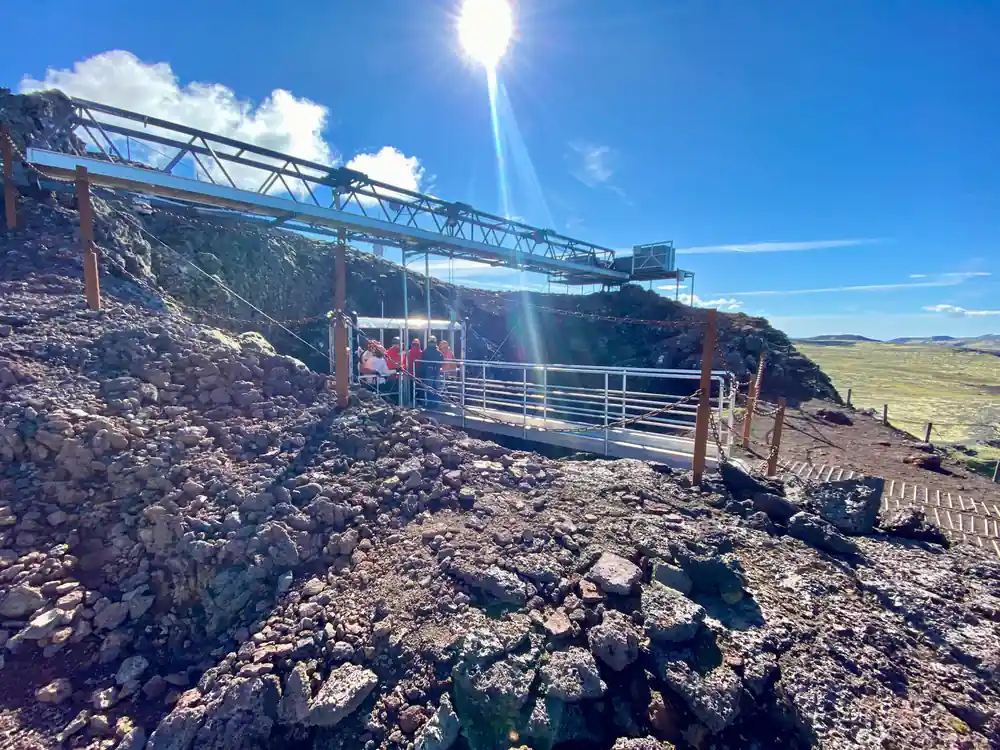
Thrihnukagigur cannot be visited independently; the only ways to get to the base are the guided tour hike or a helicopter tour.[2] That means the hike is not optional. It is part of the experience, and it gives you time to feel the scale of the lava field before you go below. The tour is the practical way to experience it, and the guide does more than lead the way.
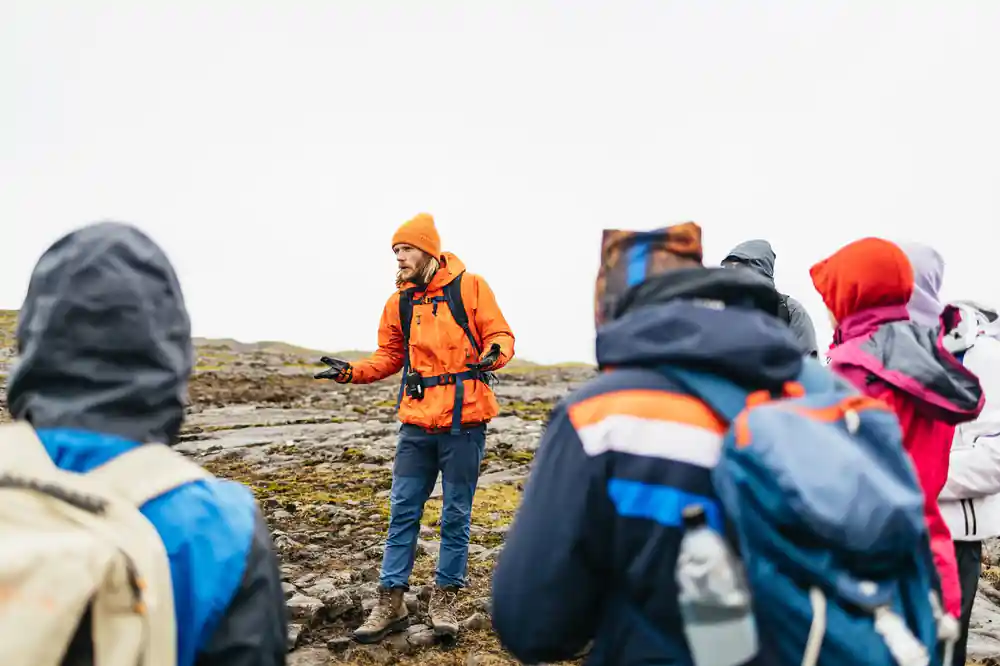
The tour from Reykjavik is guided in English and Icelandic.[7] You will be with people who know the route and the geology, which makes the dormant-versus-extinct question less pressing. The story is what the eruption left, not what might happen next.
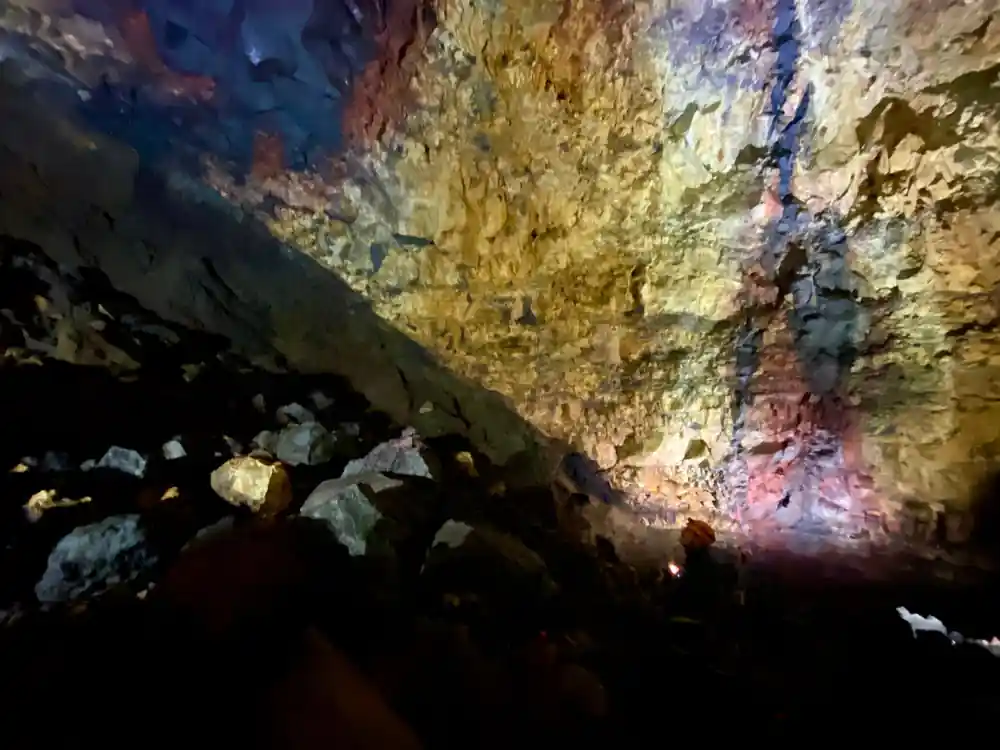
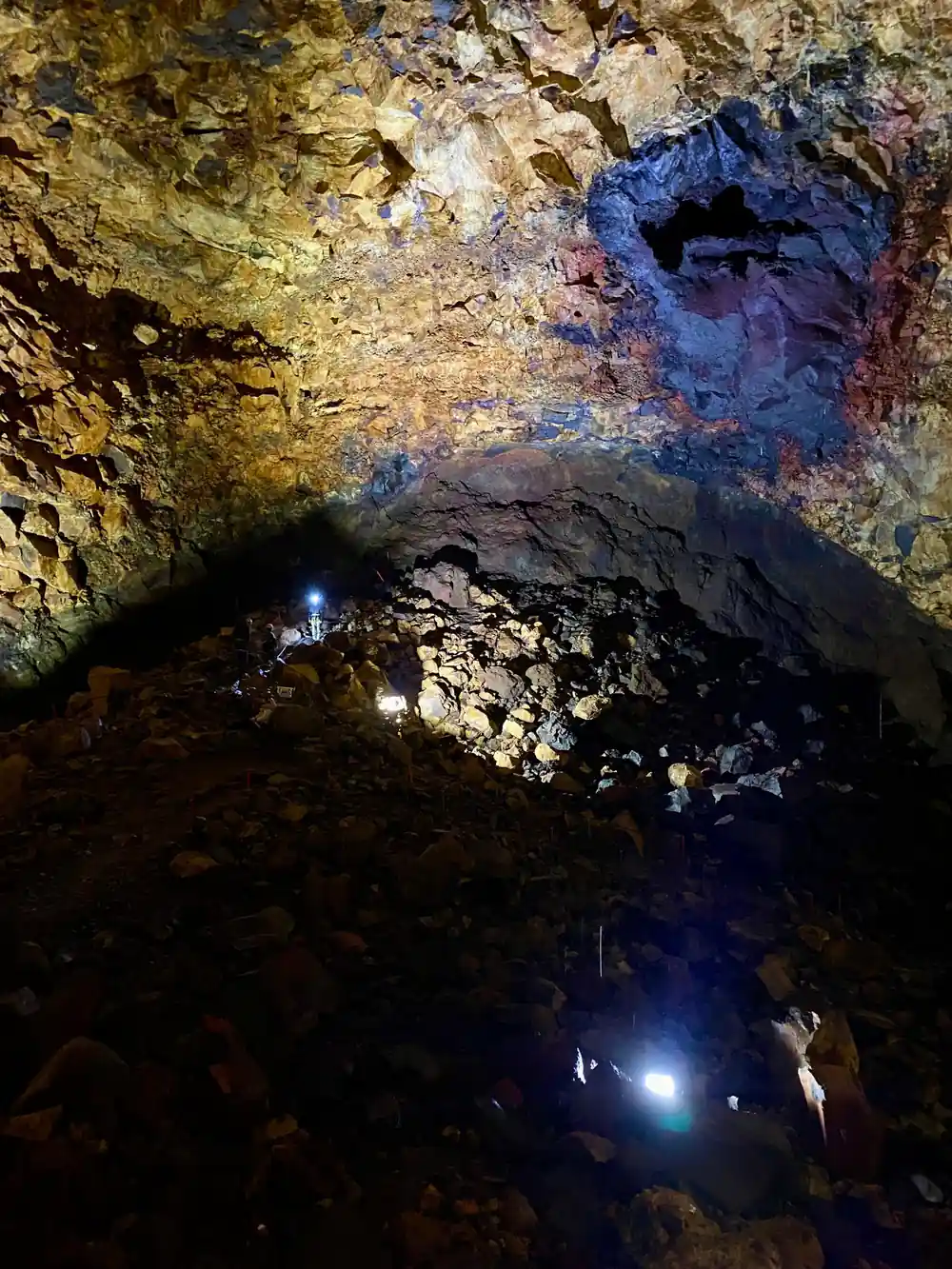
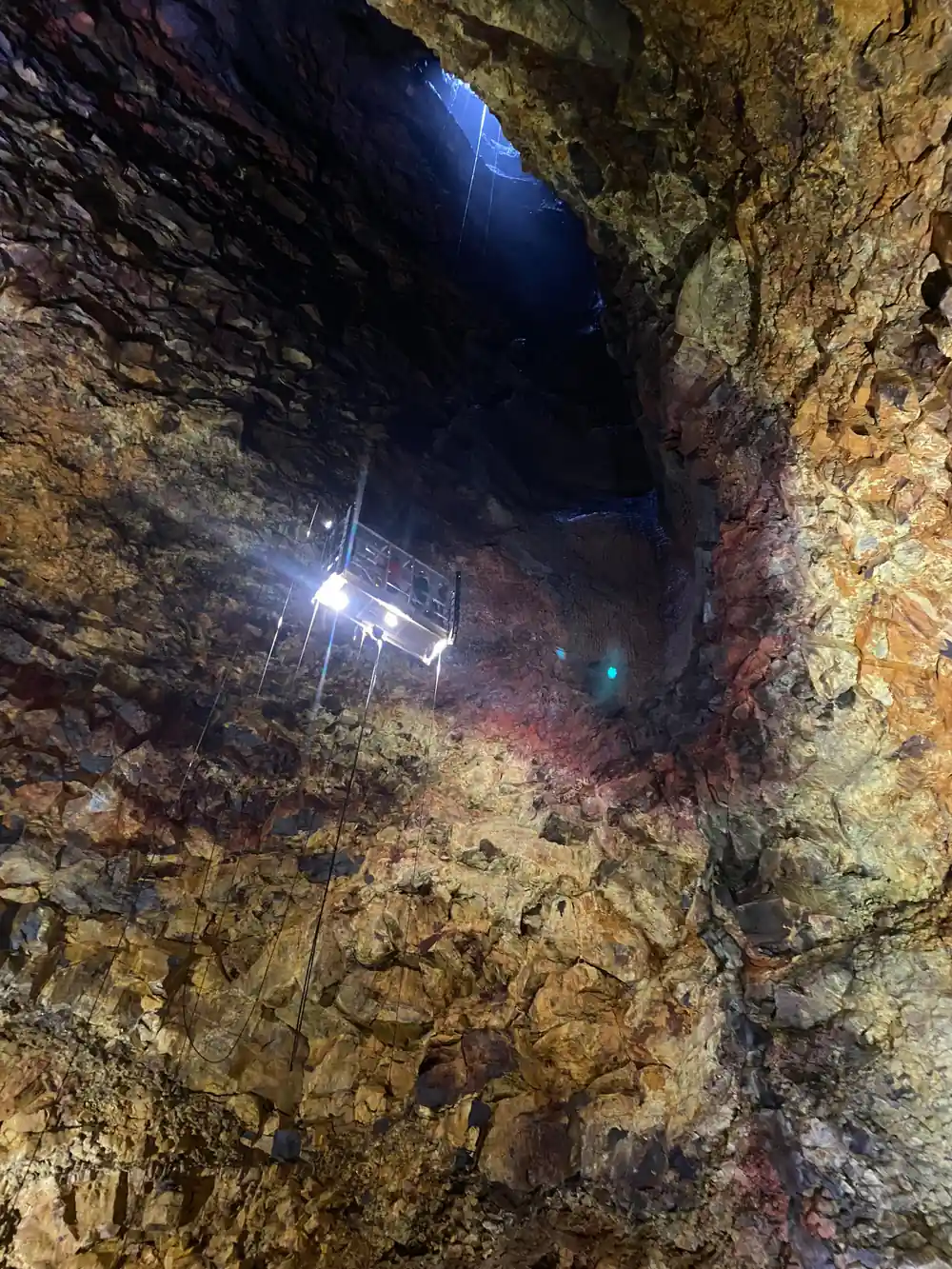
Inside the chamber, lights pick out the mineral colours left by the last eruption.
What the eruption left
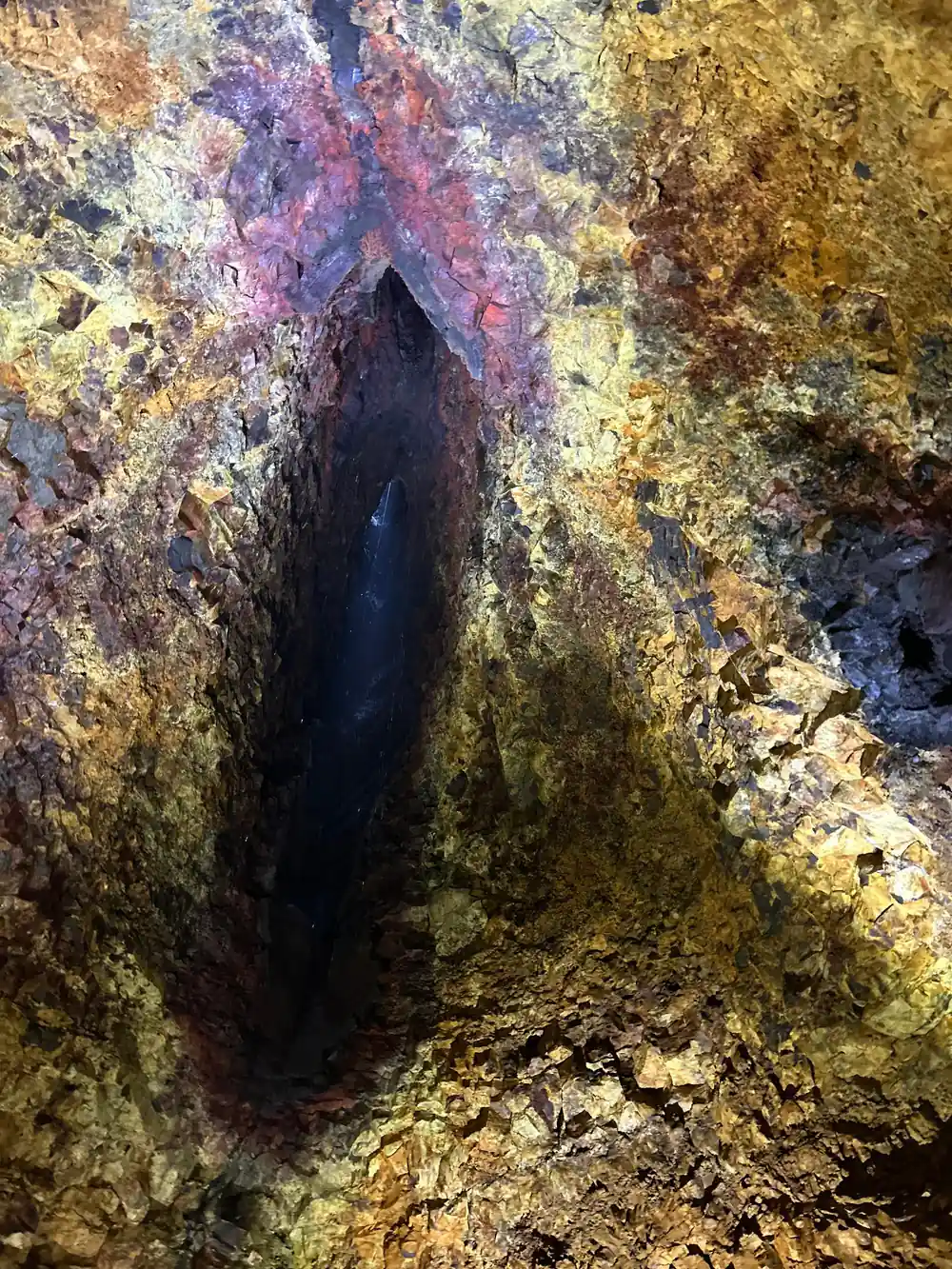
The eruption left behind a bottle-shaped volcanic vault about 120 m deep, with a bottom floor measuring 50×70 m.[1] From the entrance, you look down into an enormous space that used to hold molten rock. Because the chamber was drained by a deep underground rift, it is hollow today.[1] The sense of depth is immediate, and it stays with you long after the lift brings you back to the surface.
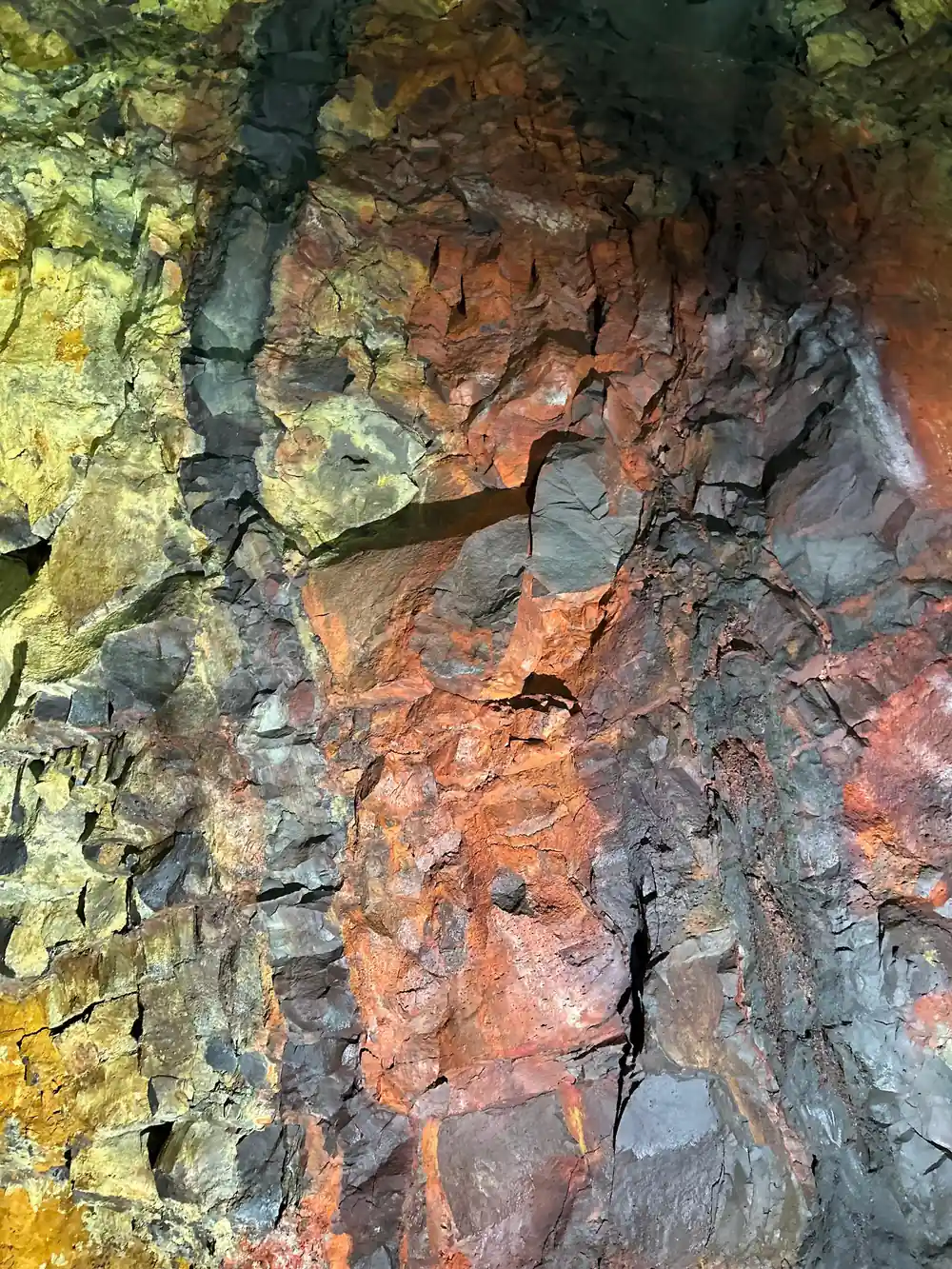
The colours are one of the first things people notice. The walls get their hues from mineral deposits left by the last eruption.[3] In the artificial light they shift through rusty reds, yellows and dark greys, and the guide can point out details you would miss on your own.
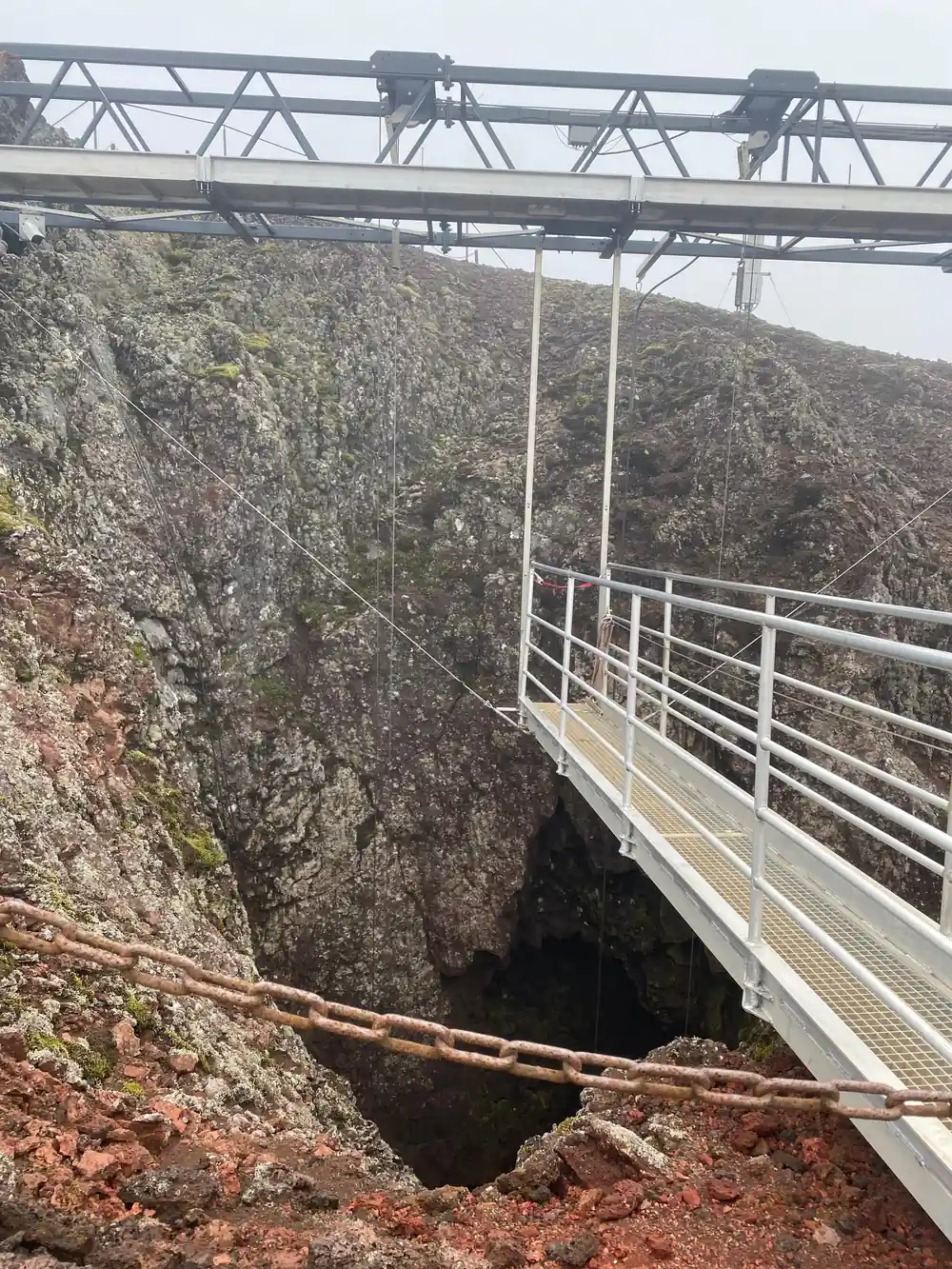
Before you see the chamber, you have to walk. The path to the volcano is about 3 km (2 miles) each way and usually takes about 45 minutes to cover with your guide.[2] It crosses a lava field with the crater cone ahead, and the sense of distance is part of the pay-off.
How an eruption like this is dated
An eruption age is a scientific estimate, not a receipt. Researchers put together evidence from lava layers, ash horizons, soil development and sometimes organic material preserved under the flow. When you see 'about' in front of a number, that is the honest way of saying the date is well supported but not exact. It is the kind of number that changes as research improves, which is why the operator writes it with a cautious 'about'.
The Thrihnukagigur figure sits at about 4,500 years ago.[1] Nearby, the Raufarhólshellir lava tunnel is dated to about 5200 years ago during the Leitahraun eruption.[5] These estimates come from the same kind of fieldwork, and they help build a timeline for Iceland's volcanic past.
The human timeline is much shorter. Þríhnúkagígur was first entered in 1974 by cave explorer Árni B. Stefánsson.[1] So people have only been inside this chamber for a few decades, even though the eruption happened thousands of years ago.
from US$432
The Reykjavik Thrihnukagigur day trip starts at US$432 and lasts 4 - 6 hours, with pickup options from the city.[7]
The volcanoes in the news
Iceland's headline volcanoes are usually in Reykjanes or along the south coast, where eruptions have drawn visitors close to fresh lava. That is a different kind of experience from Thrihnukagigur. On those tours you hike to the surface of an eruption. At Thrihnukagigur you go inside the space where magma once sat.
If you want to see a recent eruption site, the GetYourGuide catalogue has several options. The Volcano Eruption Site and Reykjanes Hiking Tour lasts 9 hours and is guided in English.[6] The Fagradalsfjall Volcano Hike with Geologist lasts 4 - 6 hours and is limited to 6 participants.[10] Both give you the surface view.
There is no need to choose between old and new, of course. Many visitors combine a day inside Thrihnukagigur with a hike to one of the more recent sites. The Thrihnukagigur eruption was about 4,500 years ago.[1] The landscape it created is just as otherworldly as the fresher flows. If you have time, you could plan to do both; the contrast between fresh lava and an older chamber is a compact lesson in how volcanoes work.
What you'll see on the Thrihnukagigur day trip
The tour booked from this site is the Reykjavik: Thrihnukagigur Volcano Guided Hiking Day Trip, from US$432.[7] It lasts 4 - 6 hours and includes live guidance in English and Icelandic.[7] Pickup is available from Reykjavik; check availability for pickup options and starting times.[7]
The day is structured around the descent. You travel by bus and coach from the pickup area, hike about 3 km each way to the crater, then take a lift down 120 meters (400 feet), a ride of about 6 minutes.[2][3] That lift is the only way into the chamber on the tour, and it adds a gentle thrill before you reach the floor. The bus ride from the city is also part of the pacing, giving you time to see the landscape change from green valleys to dark lava.
Once you are down, you have room to move. Visitors generally spend about 35-45 minutes inside the volcano, including the descent, time on the chamber floor and the ascent.[4] The guide stays with the group, so you can ask questions while you take in the colours and the quiet.
Planning your visit
Start with the dates. The tour operates every year from May 5th to October 30th.[2] If you are travelling with children, note the minimum age limit for the Inside the Volcano tour is 8 years old.[4]
The meeting point is at a ski cabin in Bláfjöll, about 30 minutes on paved road from Reykjavik.[9] If you do not want to drive yourself, book the version with pickup and check availability for pickup options.[7] The booking conditions are flexible: reserve now and pay later, and cancel up to 24 hours in advance for a full refund.[7]
Wear sturdy shoes and layers, since the walk is over lava and the air inside the chamber stays cool. You do not need climbing experience. The path is relatively easy and the lift does the deep work. Bring water and a small snack, and let the guide set the pace through the lava field. What you gain is a sense of standing inside a volcano that last erupted about 4,500 years ago.[1]
Tour durations from Reykjavik
Durations from GetYourGuide listings; Thrihnukagigur is shown from the lower bound of its 4 - 6 hour range.[6][7][8]
Compare tour prices
Prices are GetYourGuide from-prices; no child discount shown in those listings.[6][7][8][10]
When to book and go
Planning the day trip
Check the dates
The tour runs from May 5th to October 30th each year.[2] The minimum age is 8 years old.[4]
Book and arrange pickup
Book the tour from this site and check pickup availability in Reykjavik.[7] Free cancellation is available up to 24 hours in advance.[7]
Reach the meeting point
The meeting point is a ski cabin in Bláfjöll, about 30 minutes on paved road from Reykjavik.[9]
Hike to the crater
The path to the crater is about 3 km each way and usually takes about 45 minutes with a guide.[2]
Ride into the chamber
The descent is 120 meters (400 feet) and the lift ride takes about 6 minutes.[3]
Explore and return
Plan for about 35-45 minutes inside, including descent, time on the chamber floor and ascent.[4]
Step inside Iceland's ancient magma chamber
from US$432Reserve now & pay later