Quick summary
- Thrihnukagigur last erupted about 4,500 years ago and left behind a deep, hollow magma chamber.[1]
- The lift ride into the chamber drops 120 meters (400 feet) and takes about 6 minutes.[2]
- The vault is about 120 m deep, and its bottom measures 50×70 m (160×220 ft).[1]
- The Reykjavik day trip takes 4-6 hours, has pickup available, and is listed from US$432.[3]
- The Inside the Volcano tour operates every year from May 5th to October 30th.[4]
- Top choice Inside the Volcano from US$432 Duration4-6 hours[3]Rating4.85 from 630 reviews[3]StyleGuided hike and lift into a magma chamber Check availability
- Lava Tunnel by Bus from US$153 Duration3 hours[5]Rating4.59 from 850 reviews[5]StyleBus tour through a lava tunnel See this tour
- Lava Show Experience from US$53 Duration50-75 minutes[6]Rating4.75 from 4,030 reviews[6]StyleIndoor immersive lava show See this tour
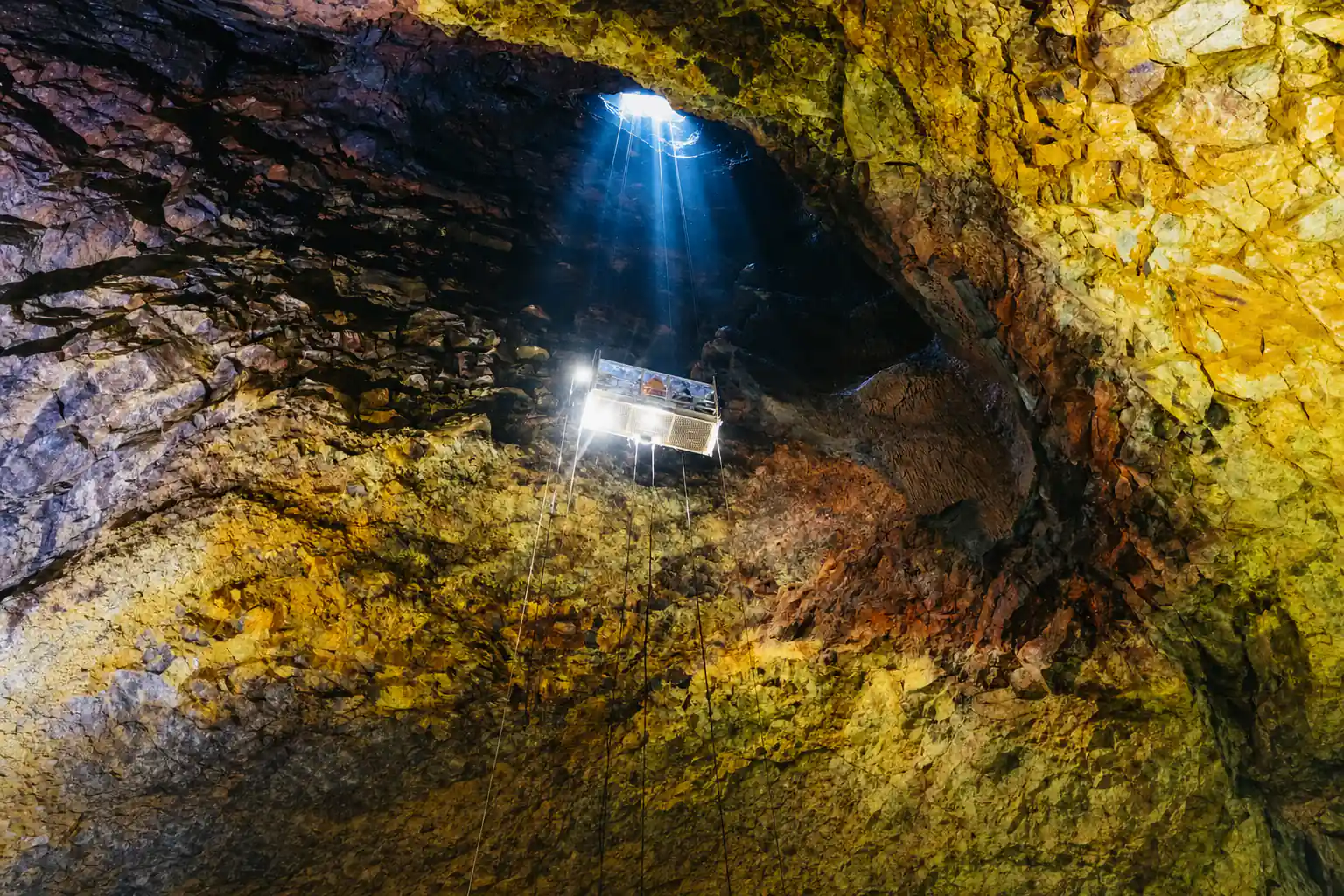
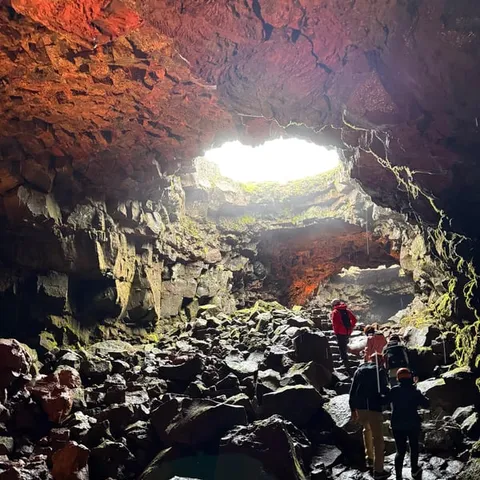
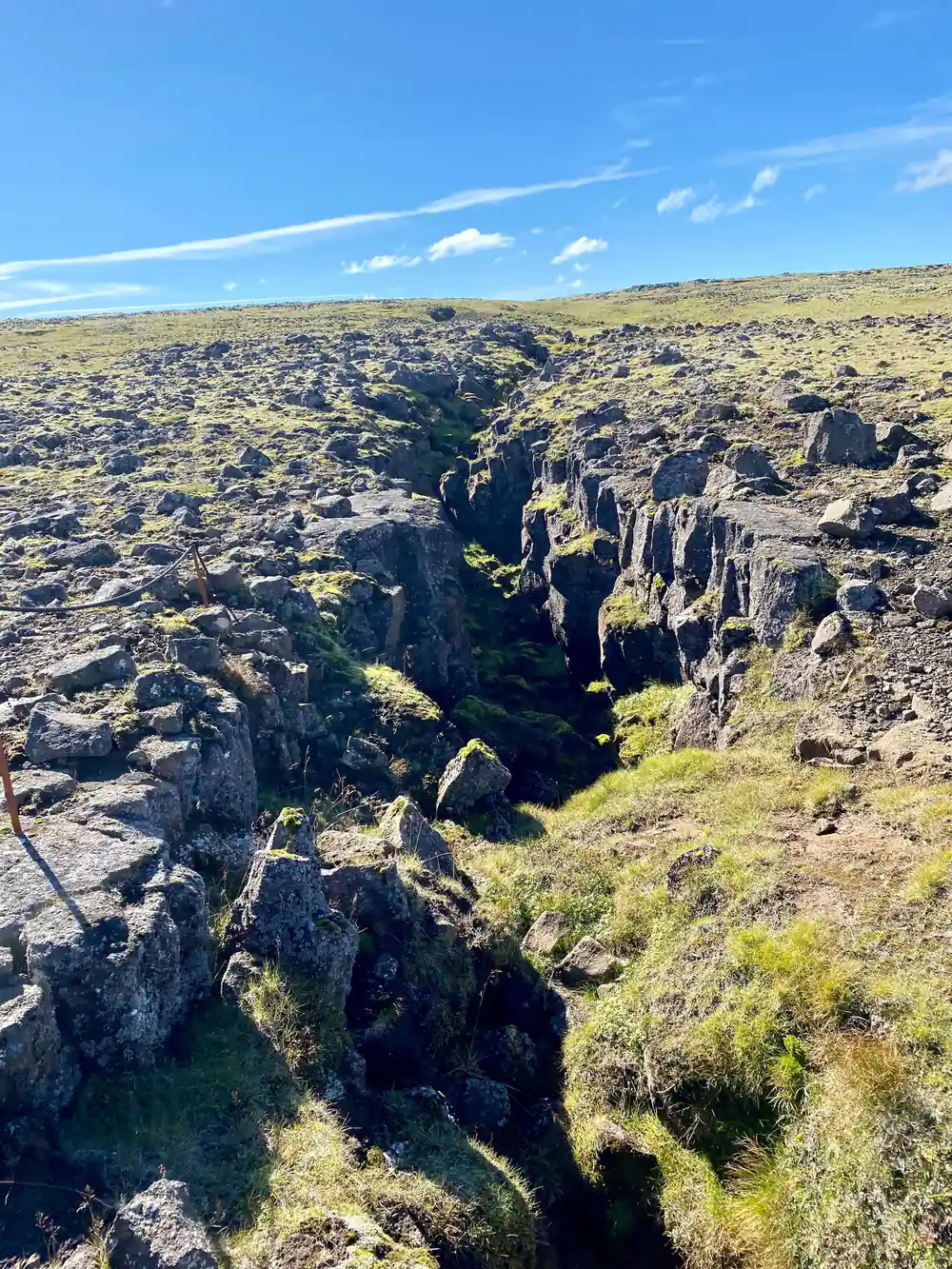
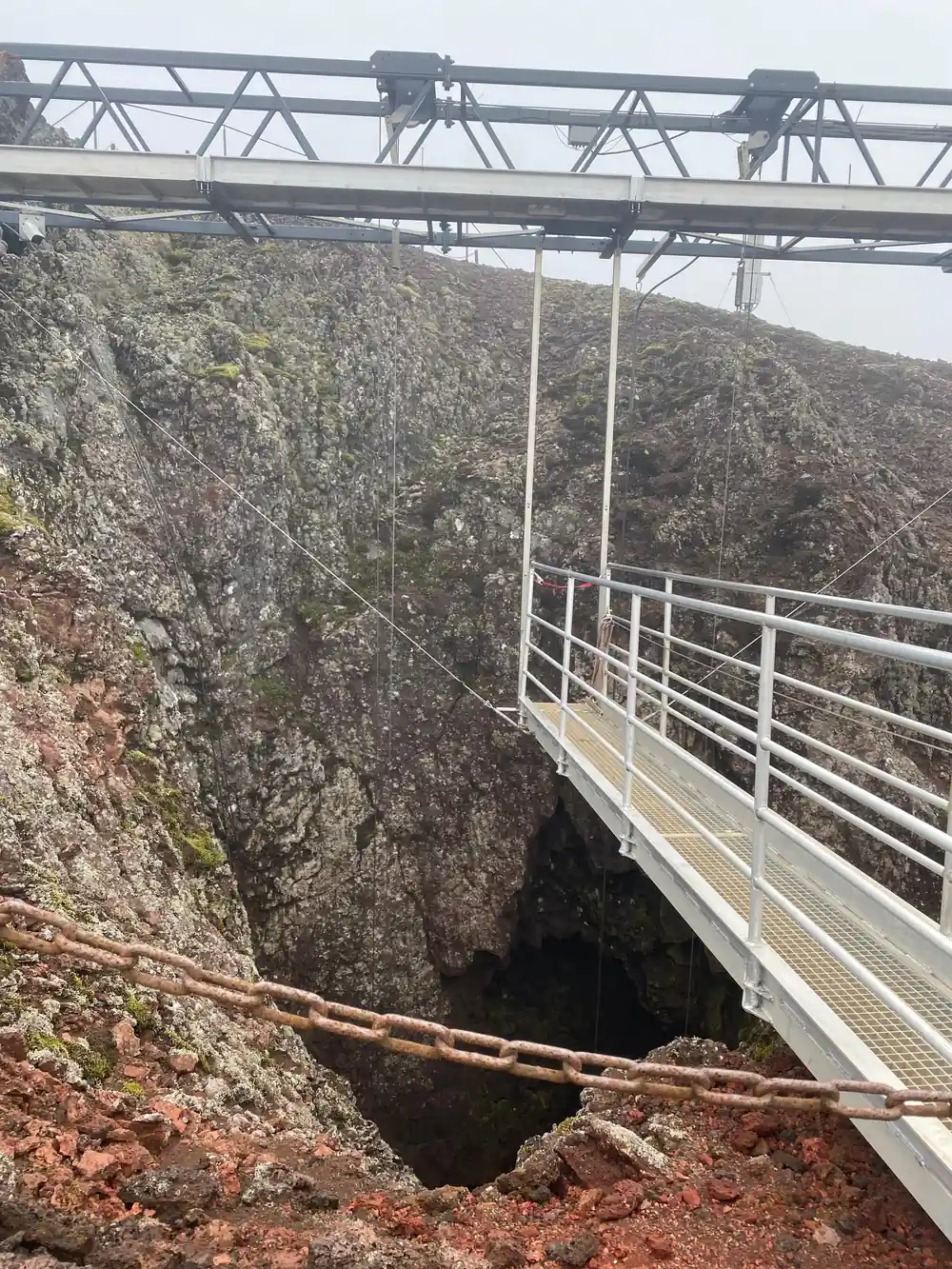
At the top of this cone is a funnel-shaped opening, about 4×4 m (12×12 ft) wide entrance of a huge 120 m (400 ft) deep, bottle-shaped volcanic vault. The bottom measures 50×70 m (160×220 ft).
A rare day inside an empty volcano
The dimensions
The magma chamber of Thrihnukagigur is a bottle-shaped volcanic vault hidden beneath a small, red cone. At the top of the cone is a funnel-shaped opening, about 4x4 m (12x12 ft) wide, that leads into a chamber about 120 m (400 ft) deep. The bottom measures 50x70 m (160x220 ft), so once you are down the space reads as a vast hall rather than a tight cave.[1] The contrast between the modest opening on the surface and the huge room below is one of the first things people mention after the tour. Even before the lift moves, you can feel the scale in the way sound carries across the chamber; the far wall is deeper than any cave you have walked into, and the ceiling disappears into shadow.
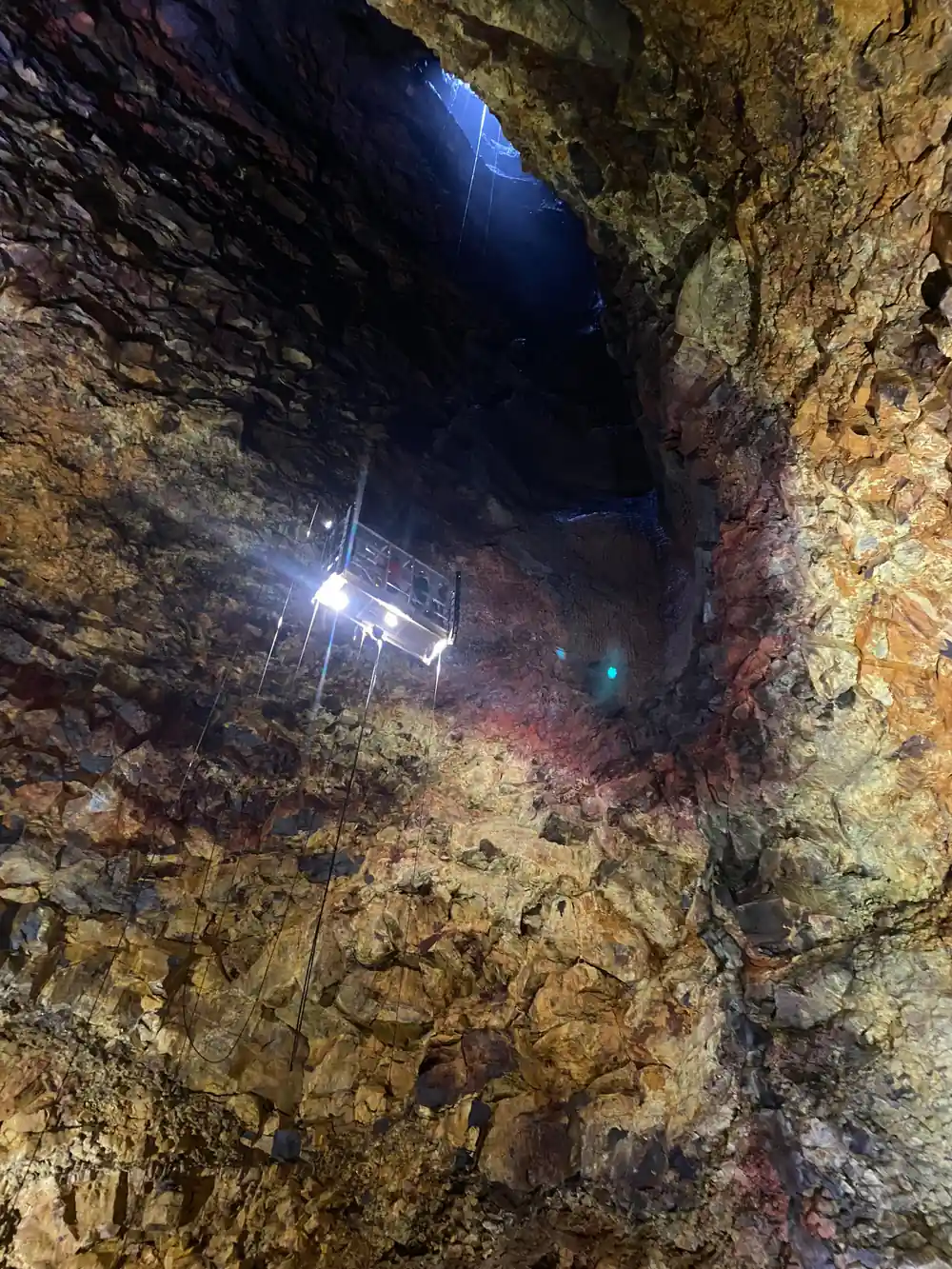
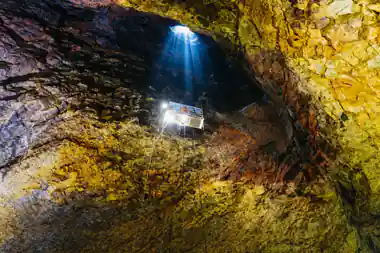
You do not climb down into it. A lift lowers you 120 meters (400 feet) and the ride takes about 6 minutes.[2] For a sense of scale, Raufarhólshellir, a lava tunnel you could also visit from Reykjavik, is 1360 m long and formed about 5200 years ago during the Leitahraun eruption.[9] Where that tunnel runs sideways, Thrihnukagigur drops vertically into the mountain. That vertical drop is what makes the trip feel adventurous, even though the lift itself is steady and unhurried. You step in with a small group, the light above shrinks, and then the chamber opens around you.
What it compares to
People sometimes compare Thrihnukagigur to a balloon or an upside-down bottle. The opening at the surface is compact, but the chamber widens below, and the bottom is large enough for a group to spread out and look up.[1] It is a different experience from walking through a lava tube, where you move along a tunnel rather than standing in one vast room. The shape is the reason the lift works so well; it takes you through the narrow neck and leaves you on a broad floor. You can turn slowly and take in the whole volume at once, which is something no corridor tour can offer.
Raufarhólshellir gives a sense of the other kind of underground Iceland. That lava tunnel is 1360 m long and was formed about 5200 years ago.[9] Thrihnukagigur's chamber, by contrast, is empty because a deep underground rift drained the molten rock after its last eruption.[1] Both are volcanic leftovers, but they feel very different underfoot: one is a long corridor, the other a single giant room. If you have time for both, you will come away with a much fuller picture of how lava shapes the ground below Iceland.
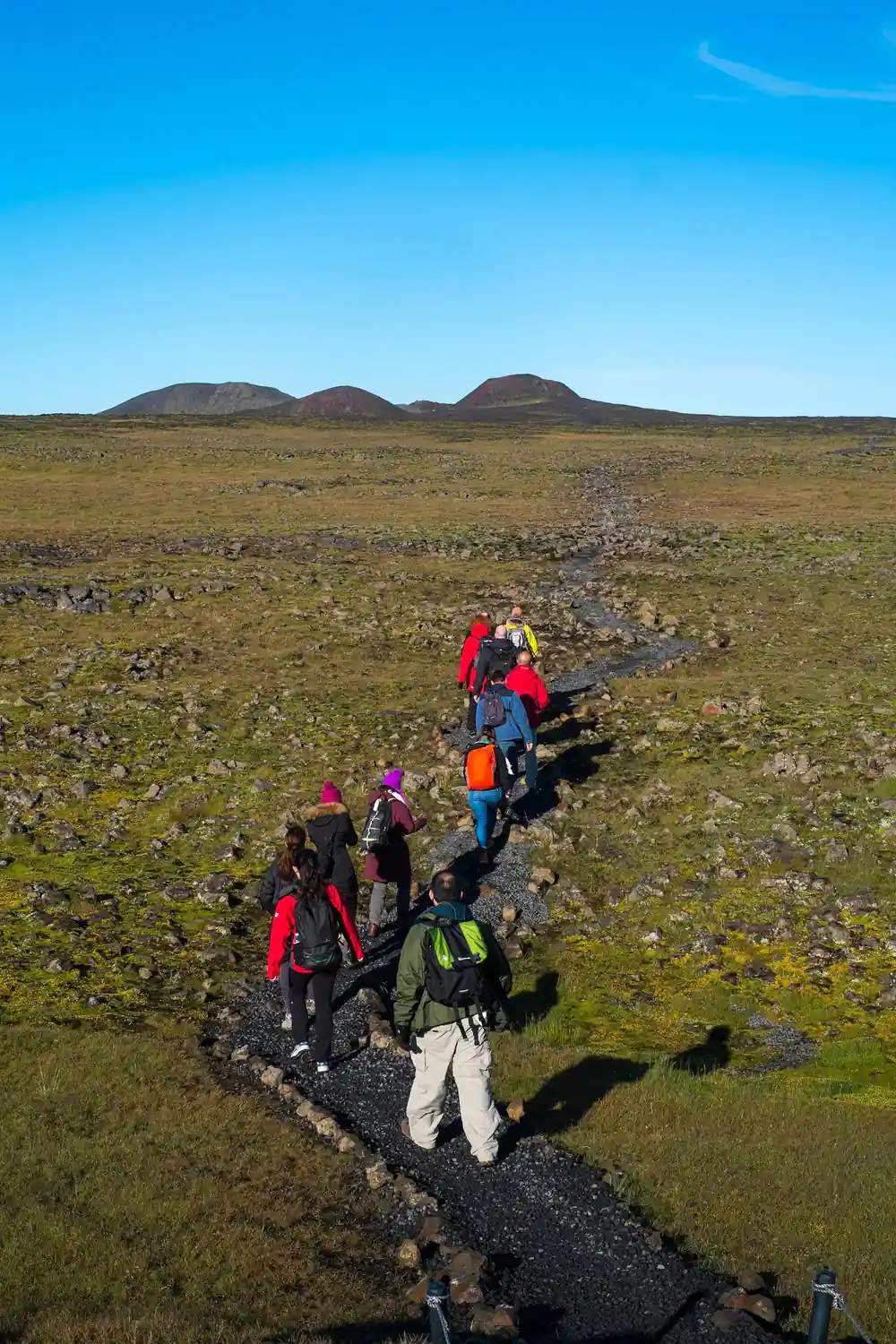
The red scoria cone and the path across the lava field on the way to the crater.
The shape of it
The shape of Thrihnukagigur is unusual even among volcanoes. The funnel-shaped opening at the top is about 4x4 m (12x12 ft) wide, while the main vault below is about 120 m deep.[1] That means the mountain acts like a natural bottle, with a narrow neck and a much wider body underneath. It is not a deep crack or a sloping cave; it is a rounded room that seems to have been hollowed out by the last eruption. First-time visitors often pause at the rim and try to guess what is below before the lift answers the question.
Because the chamber is bottle-shaped, the descent feels like sinking into the mountain rather than hiking into a hillside. The lift is the practical way to manage that vertical drop.[2] Once you are down, the scale becomes clear, and the walls curve above you in a way that is hard to capture in a photo. It is one of those places where dimensions on paper do not prepare you for the actual space. The floor is broad and relatively level, so you can walk from one side to the other and watch how the rock changes colour in different light.
What the walls are made of
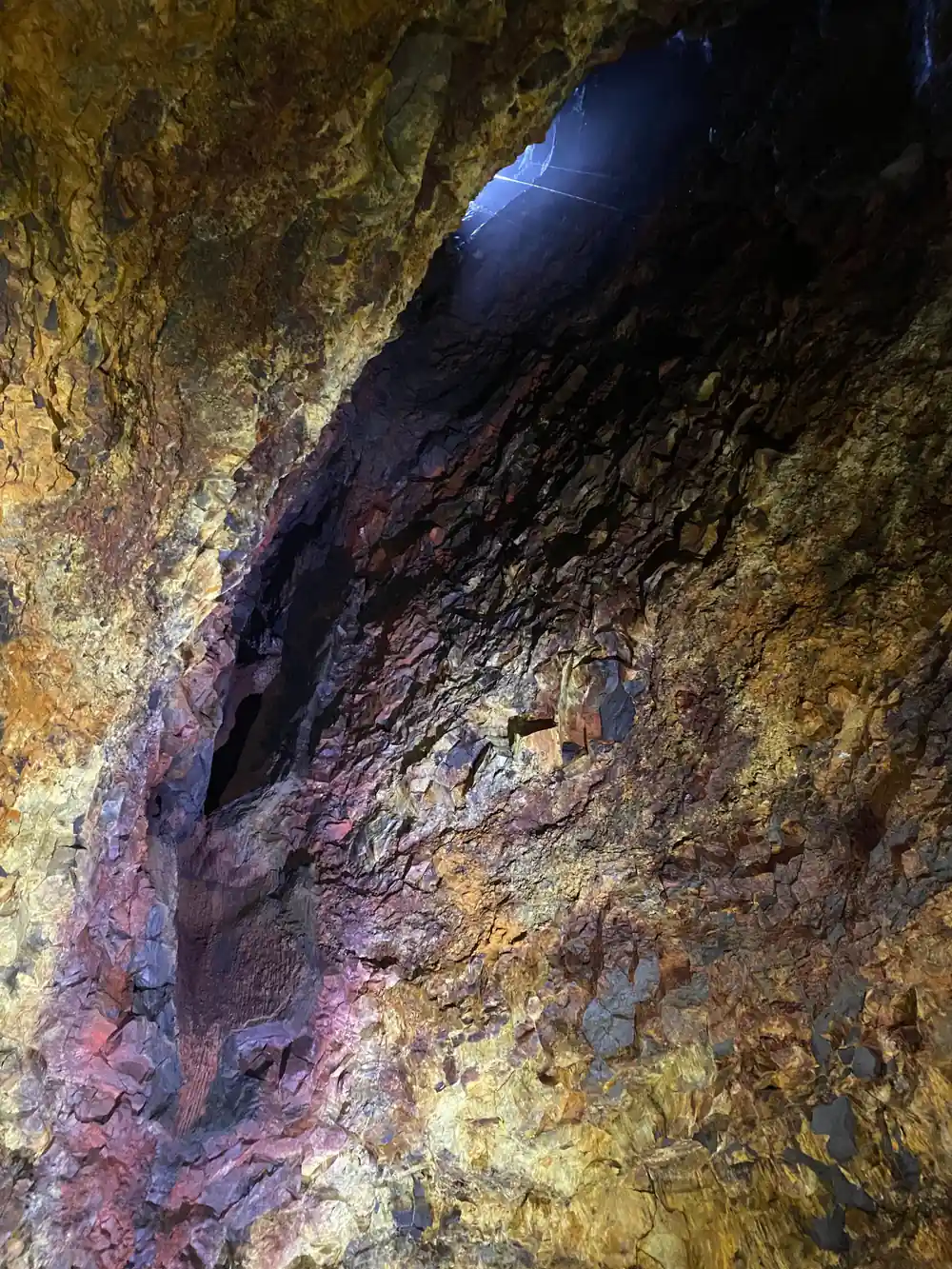
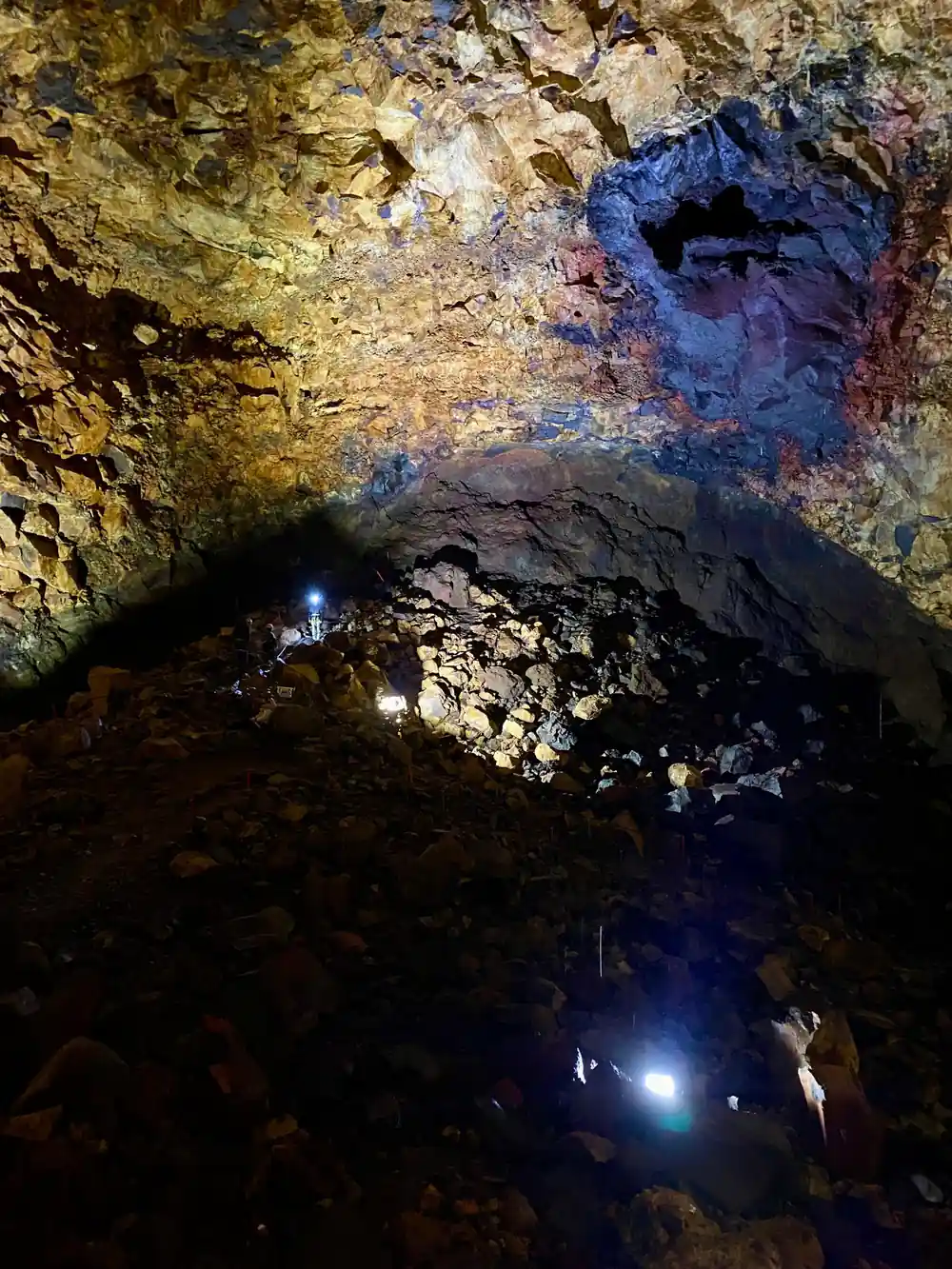
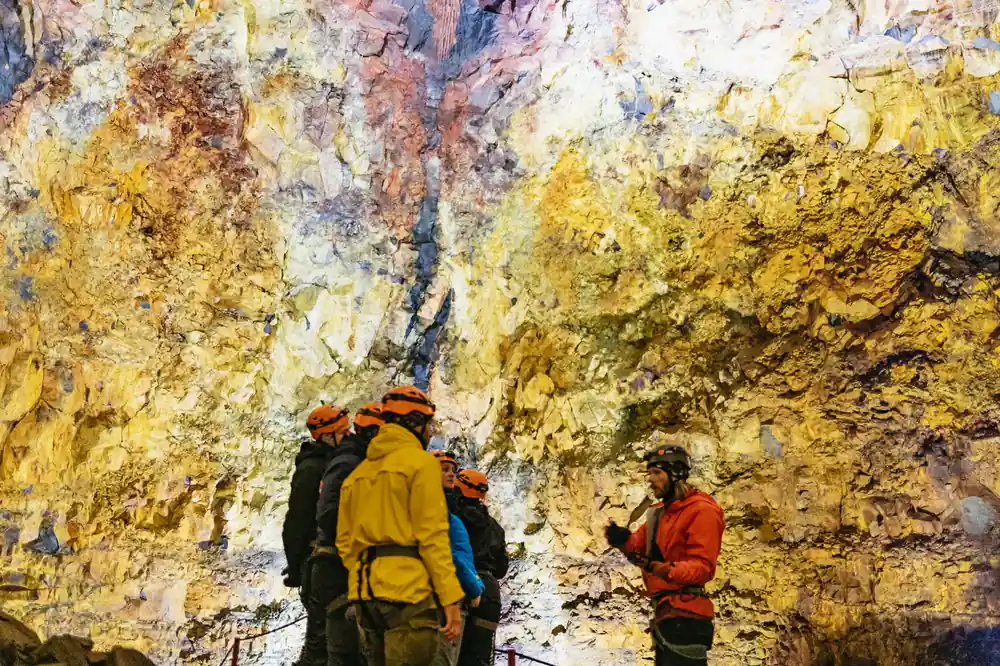
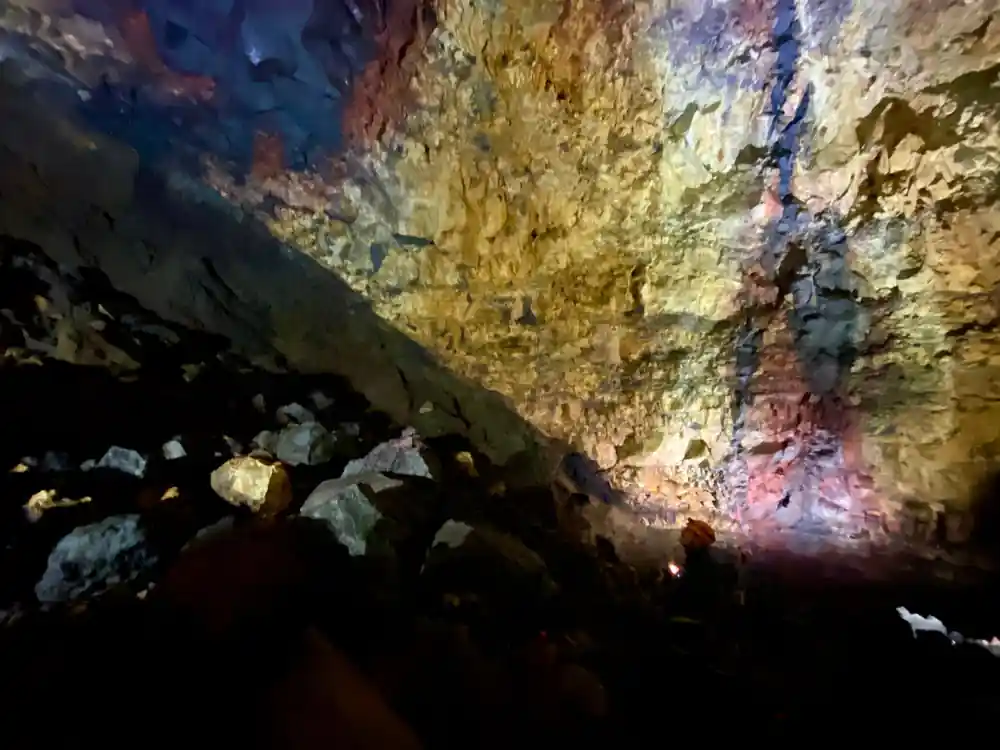
The walls of the magma chamber are not plain black rock. They take their colours from mineral deposits left by the last eruption.[2] The result is a palette of reds, oranges, greens and other tones spread across the volcanic rock. Visitors often spend their first minutes simply turning in circles and looking at the walls. Some patches shine as though freshly painted, while others are streaked and glossy after centuries of cooling. It is easy to forget you are still underground.
The last eruption itself took place about 4,500 years ago.[1] After that eruption, a deep underground rift drained the molten rock and left behind an enormous subterranean cavity.[1] The hollow space you stand in is the old magma chamber, not a passage carved by water or ice. That is what makes this visit so unusual. You are not looking at a cave that formed later; you are standing inside the original plumbing of a volcano, with the colour and texture of the walls telling that story directly.
from US$432
Guided hiking day trip from Reykjavik into Thrihnukagigur, rated 4.85 from 630 reviews.[3]
How much of it you actually see
You see the main chamber from floor to ceiling. The tour takes you down to the bottom of the vault, where visitors spend approximately 35-45 minutes, including the descent, time on the chamber floor, and ascent.[7] The guide gives you context, but the floor is open enough that you can wander and look up at the walls. There is no separate route that only shows part of the chamber; the lift puts you in the middle of it. You have time to pick out individual mineral streaks and to watch how the light from your headlamp moves across the rock.
You also see the mountain from outside. The path to the crater is about 3 km (2 miles) each way and usually takes about 45 minutes.[4] That walk crosses the lava field and gives you views of the red cone before you go underground. Add the descent and the time inside, and the whole outing from Reykjavik runs 4-6 hours.[3] The hike is not strenuous, but the setting is open and exposed, so the weather can change the mood of the walk from calm to windy in a short stretch.
Getting to the magma chamber
Thrihnukagigur cannot be visited independently; the only ways to get to the volcano base are the guided tour hike or a helicopter tour.[4][10] The standard meeting point is at a ski cabin in Blafjoll, about a 30-minute drive from Reykjavik on paved road.[8] From there the guided group hikes to the crater, so the journey is part of the experience rather than just a transfer. The first person to enter the volcano was cave explorer Árni B. Stefánsson in 1974.[1] It is a recent addition to Iceland's tour circuit, which means the infrastructure is practical and well maintained.
The full day trip from Reykjavik is listed from US$432, with pickup available, and is led by guides who speak English and Icelandic.[3] Free cancellation is available up to 24 hours in advance.[3] The minimum age is 8 years old.[7] Wear sturdy shoes and dress in layers; the hike is not technical, but Icelandic conditions can shift without much warning. A waterproof outer layer and a warm mid layer are sensible choices even on a bright morning, and sunglasses help if you reach the crater in sunshine.
Planning your visit
The Inside the Volcano tour operates every year from May 5th to October 30th.[4] That makes summer the main window, and it means mornings can be cool even on sunny days. If you prefer flexibility, the GetYourGuide listing includes reserve now and pay later, so you can lock in the date and still change plans.[3] It is worth checking the weather forecast a day or two ahead, because rain can make the lava field slick and low cloud can hide the crater until you are closer.
If you want more lava experiences in the same trip, consider the Lava Tunnel. Raufarhólshellir is 1360 m long and was formed about 5200 years ago.[9] The bus tour from Reykjavik takes 3 hours and is listed from US$153.[5] For a shorter option, the Lava Show in Reykjavik lasts 50-75 minutes and is from US$53.[6] You could pair a morning at Thrihnukagigur with one of these, depending on your schedule. Both make good companions to the volcano visit, yet neither replaces the feeling of standing inside an empty magma chamber.
Traveller ratings at a glance
Compare what you'll pay
When to book
HOW TO PLAN YOUR DAY
Book the tour
Reserve the Reykjavik guided day trip, from US$432, with free cancellation up to 24 hours ahead.[3]
Meet at Blafjoll
The meeting point is a ski cabin in Blafjoll, about a 30-minute drive from Reykjavik.[8]
Hike to the crater
Walk about 3 km each way to the crater, usually taking about 45 minutes.[4]
Descend by lift
Ride the lift 120 meters (400 feet) into the volcano; the ride takes about 6 minutes.[2]
Explore the chamber
Spend time on the chamber floor, which measures 50×70 m (160×220 ft) at the bottom.[1]
Return to Reykjavik
The whole trip takes 4-6 hours from Reykjavik with pickup available.[3]
Your chance to stand inside an empty magma chamber
from US$432Reserve now & pay later