Quick summary
- Beneath a small crater lies a huge magma chamber left empty when molten rock drained away after an eruption about 4,500 years ago.[1]
- A lift lowers you 120 meters into the vault, and visitors spend 35-45 minutes inside.[2][3]
- The route to the crater is about 3 km each way and usually takes about 45 minutes.[4]
- You cannot visit independently; the guided tour hike or a helicopter tour are the only ways to reach the volcano.[4][5]
- The day trip is from US$432, runs May 5 to October 30, and lasts 4 to 6 hours.[4][6]
- Top choice Thrihnukagigur day trip from US$432 Duration4 to 6 hours[6]What you seeDrained magma chamber, mineral coloursGuide languageEnglish and Icelandic[6]Great forStanding inside a volcano Check availability
- Lava tunnel by bus from US$153 Duration3 hours[7]What you see1360 m lava tunnel[9]Guide languageEnglish[7]Great forUnderground geology without a long hike See this tour
- Eruption site hike from US$132 Duration9 hours[8]What you seeRecent eruption site and ReykjanesGuide languageEnglish[8]Great forSeeing fresh lava landscapes See this tour
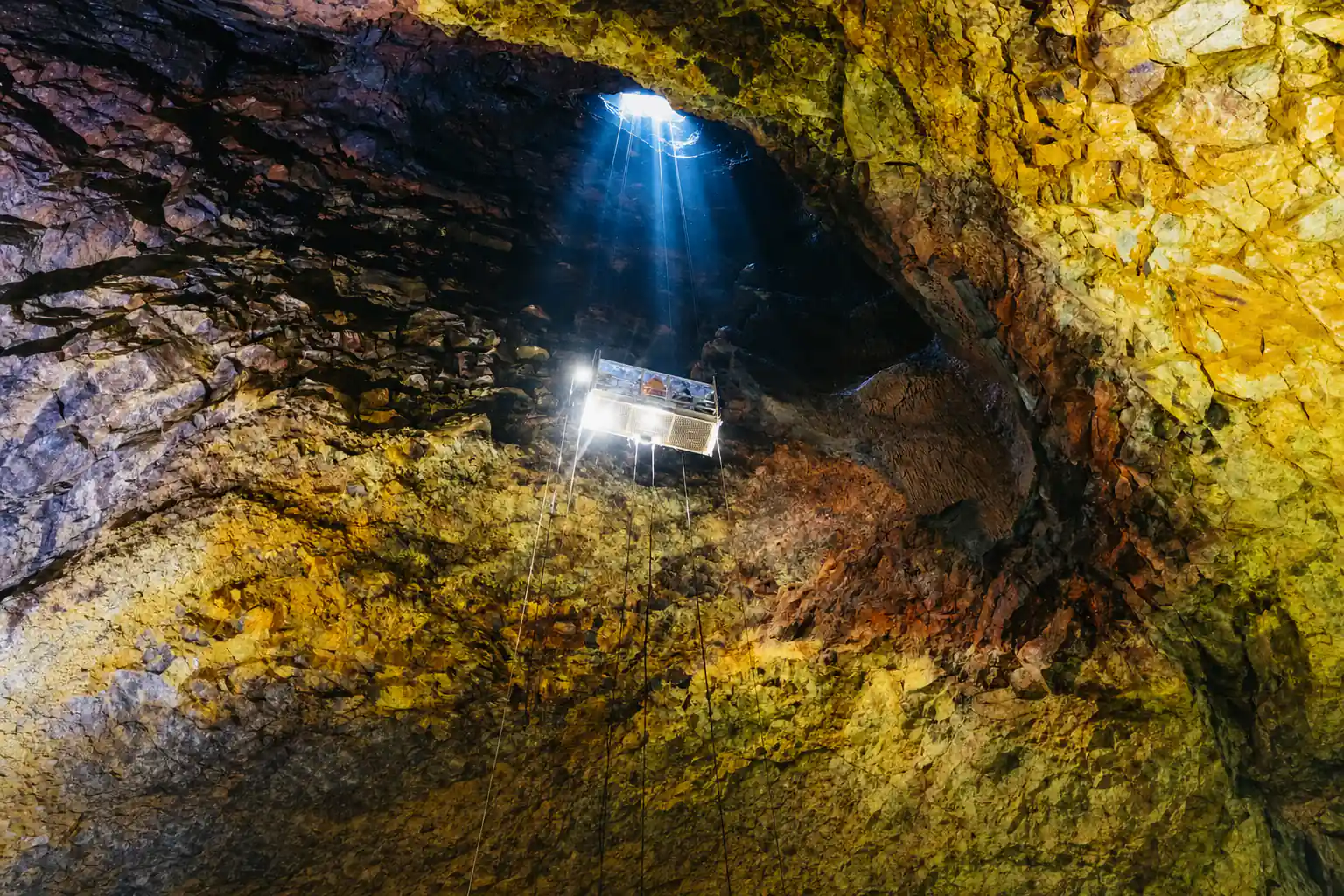
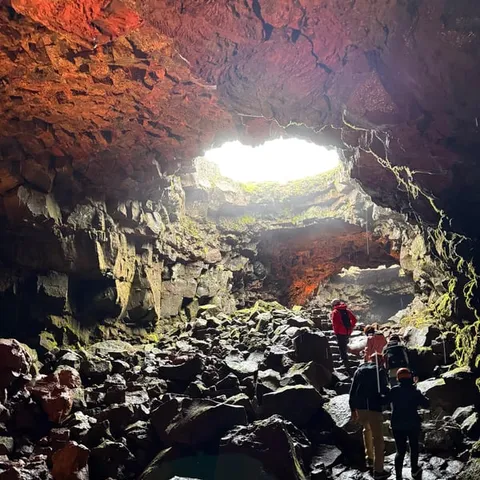
It’s believed that the magma retreated to the depths of the earth.
The empty chamber is the headline
Before setting off
What normally happens to a magma chamber
A magma chamber is the reservoir where molten rock collects below a volcano. When an eruption ends, that chamber rarely stays open. The remaining magma cools and crystallises into solid rock, or the roof collapses under the weight above. Over time, fluids and rubble can fill whatever space is left. Most volcanic plumbing stays hidden, sealed and impossible to walk through. That is why a place like Thrihnukagigur catches the imagination: it offers a way into a part of a volcano that is normally invisible.
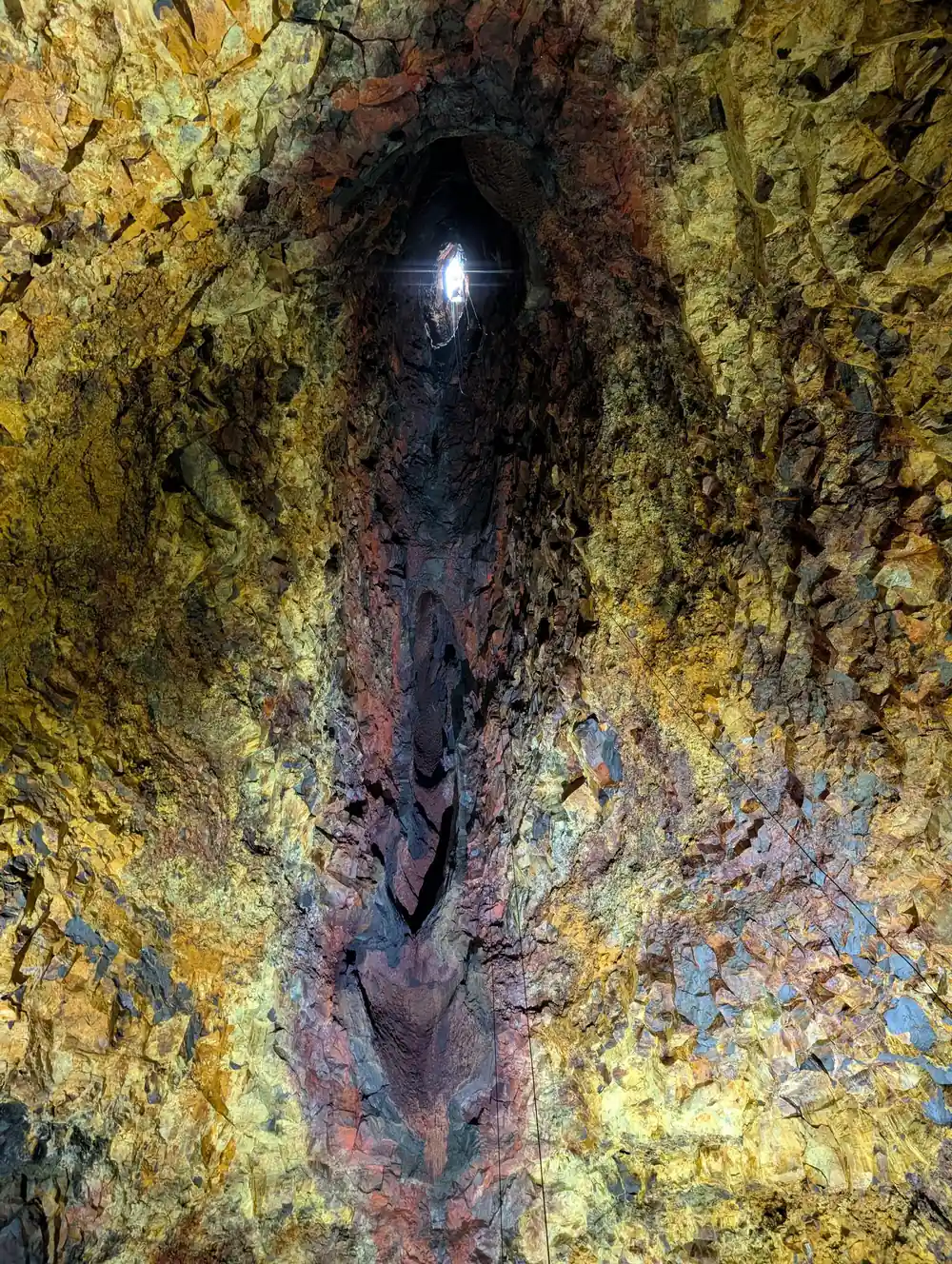
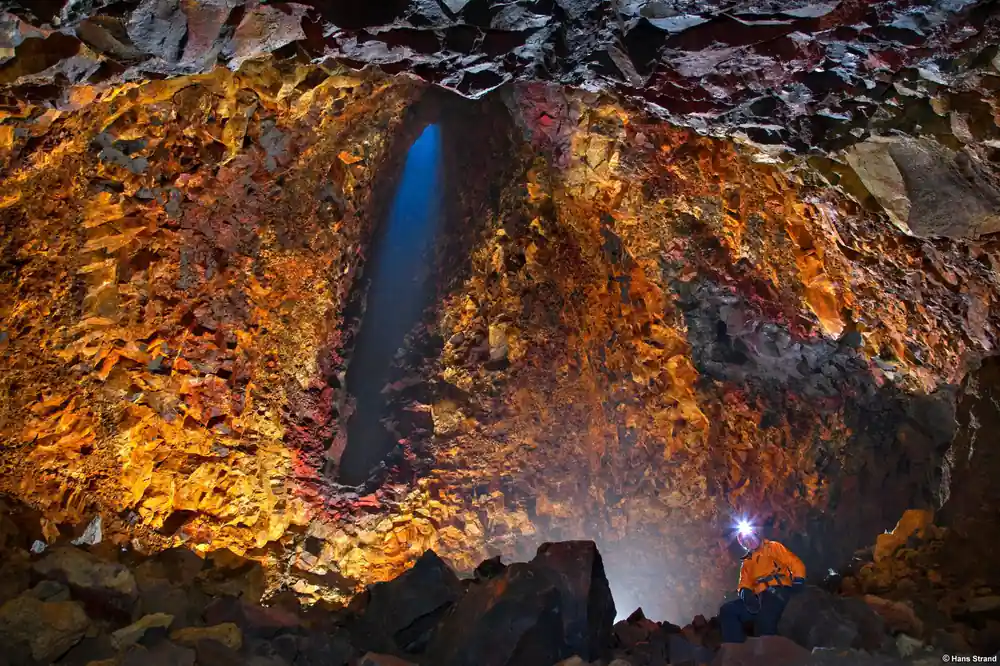
The last eruption here took place about 4,500 years ago[1], yet beneath the crater there is an open vault. It is a bottle-shaped volcanic chamber about 120 m deep, with a bottom floor measuring 50 by 70 m.[1] If you stood at one end of that floor, the far wall would be a long walk away. The scale is hard to grasp from photographs. It feels less like a cave and more like a cathedral carved by heat.
For visitors, that contrast is the first surprise. You hike up a quiet lava field, peer into a small opening, and then descend into a space that dwarfs everything around it. The ordinary outside and the extraordinary inside are part of the same short journey.
What happened here instead
At Thrihnukagigur, the molten rock did not simply cool in place. It is believed that the magma retreated to the depths of the earth, leaving the chamber empty.[1] That left a space that has stayed open instead of filling with rubble.
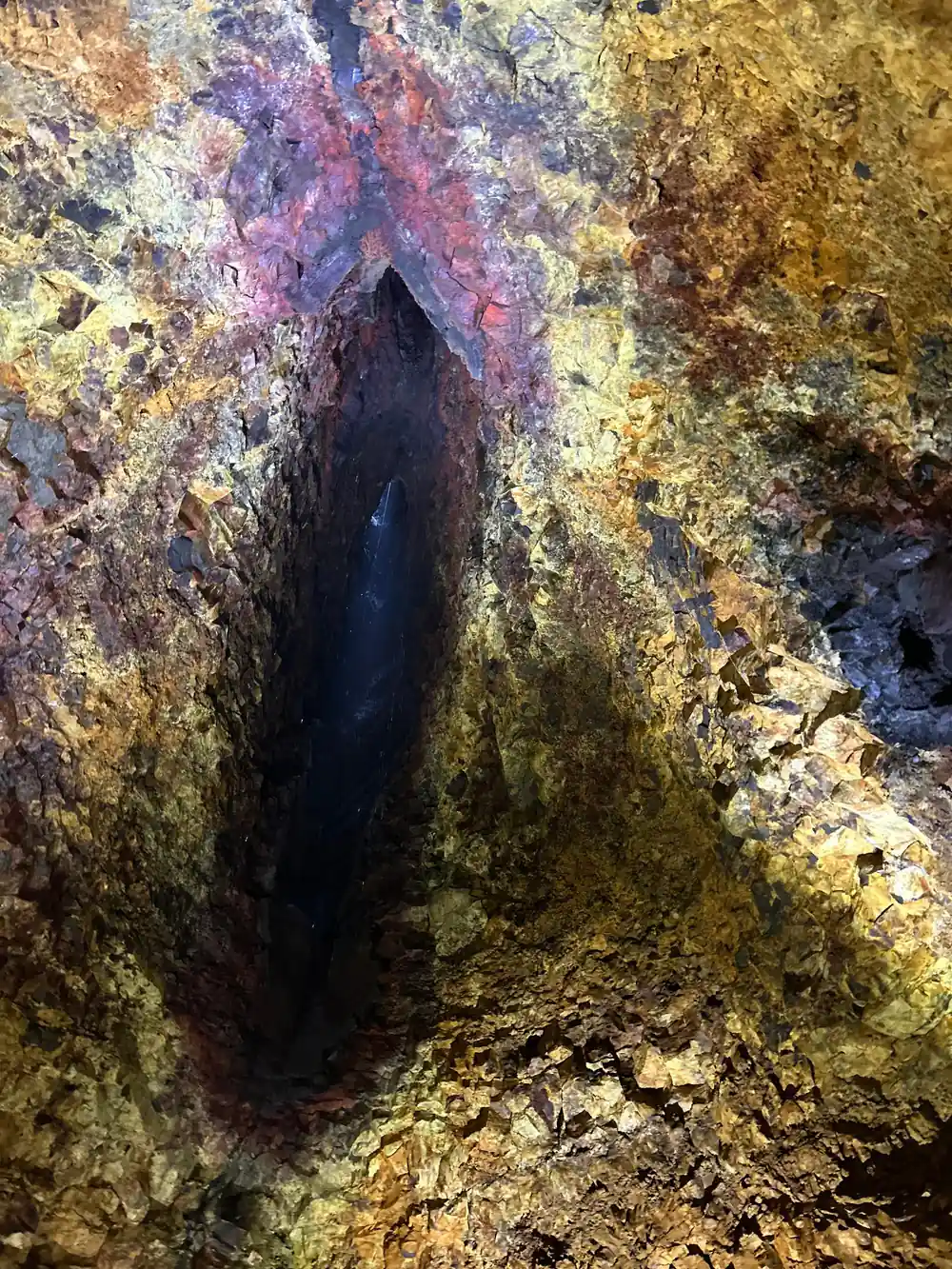
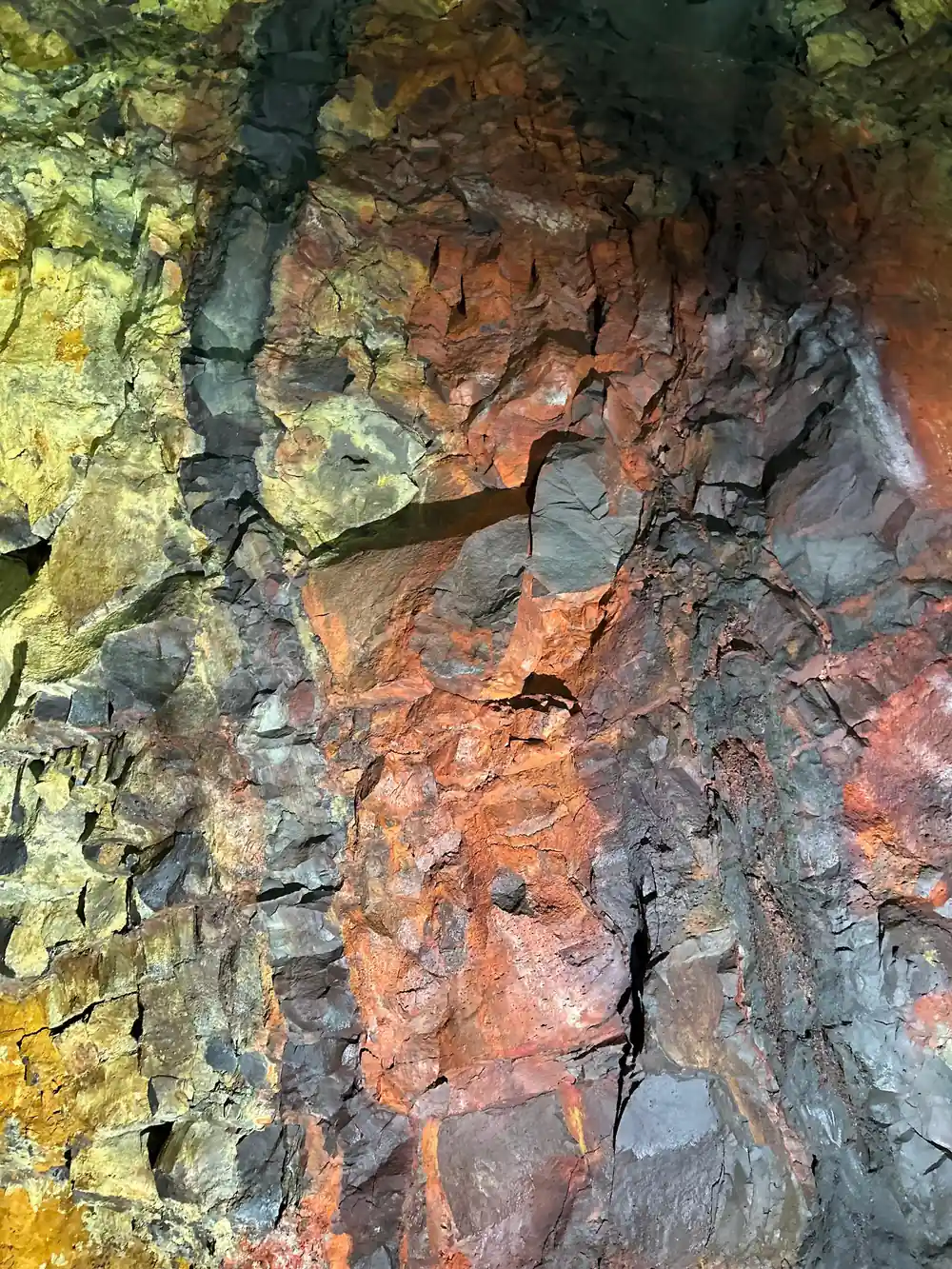
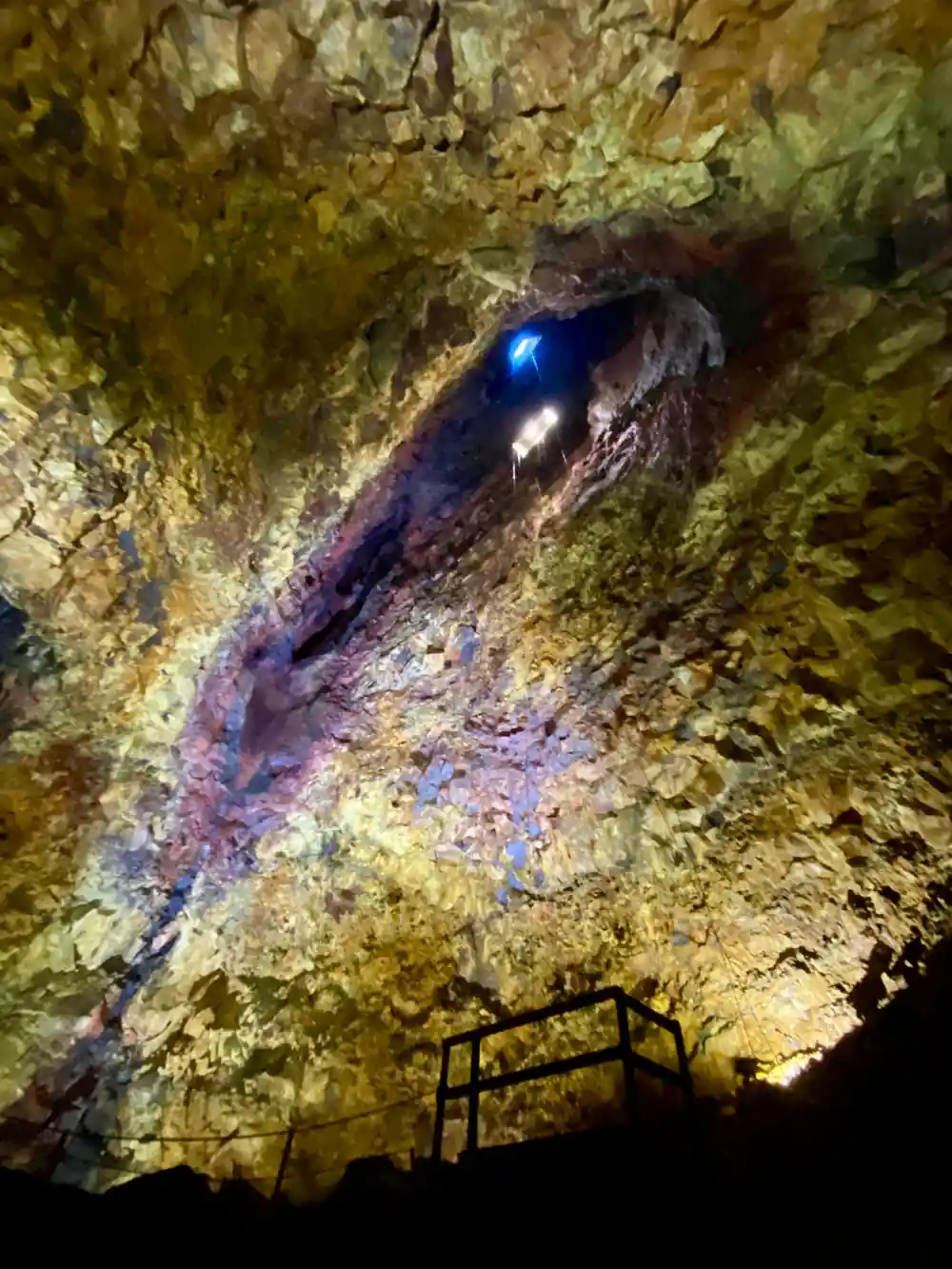
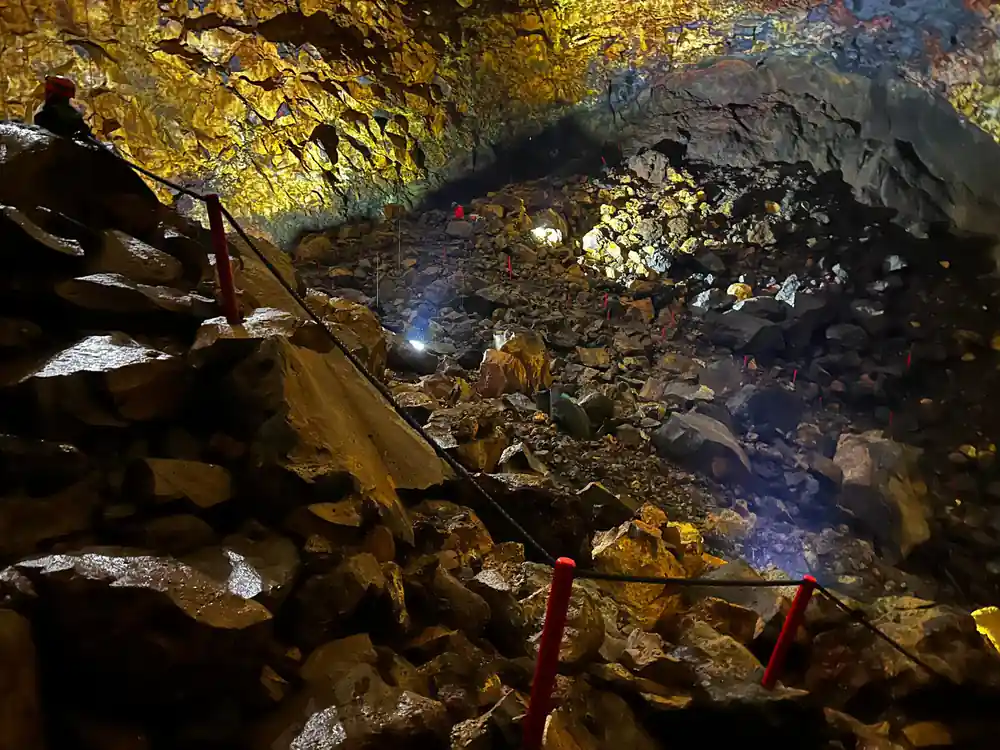
The same eruption left its mark on the walls. The colours inside come from mineral deposits left by the last eruption, so the rock reads like a record of what happened.[2] Stand on the floor and you can look up at stained walls, ceiling folds and the small opening far above. The light changes as you move, and the mineral layers show up in reds, greens and yellows.
A guided descent makes the geological story tangible. The guide shows you the chamber floor, points out the textures in the rock and lets you take in the silence. It is a rare chance to see a volcano from the inside, rather than only from the rim.
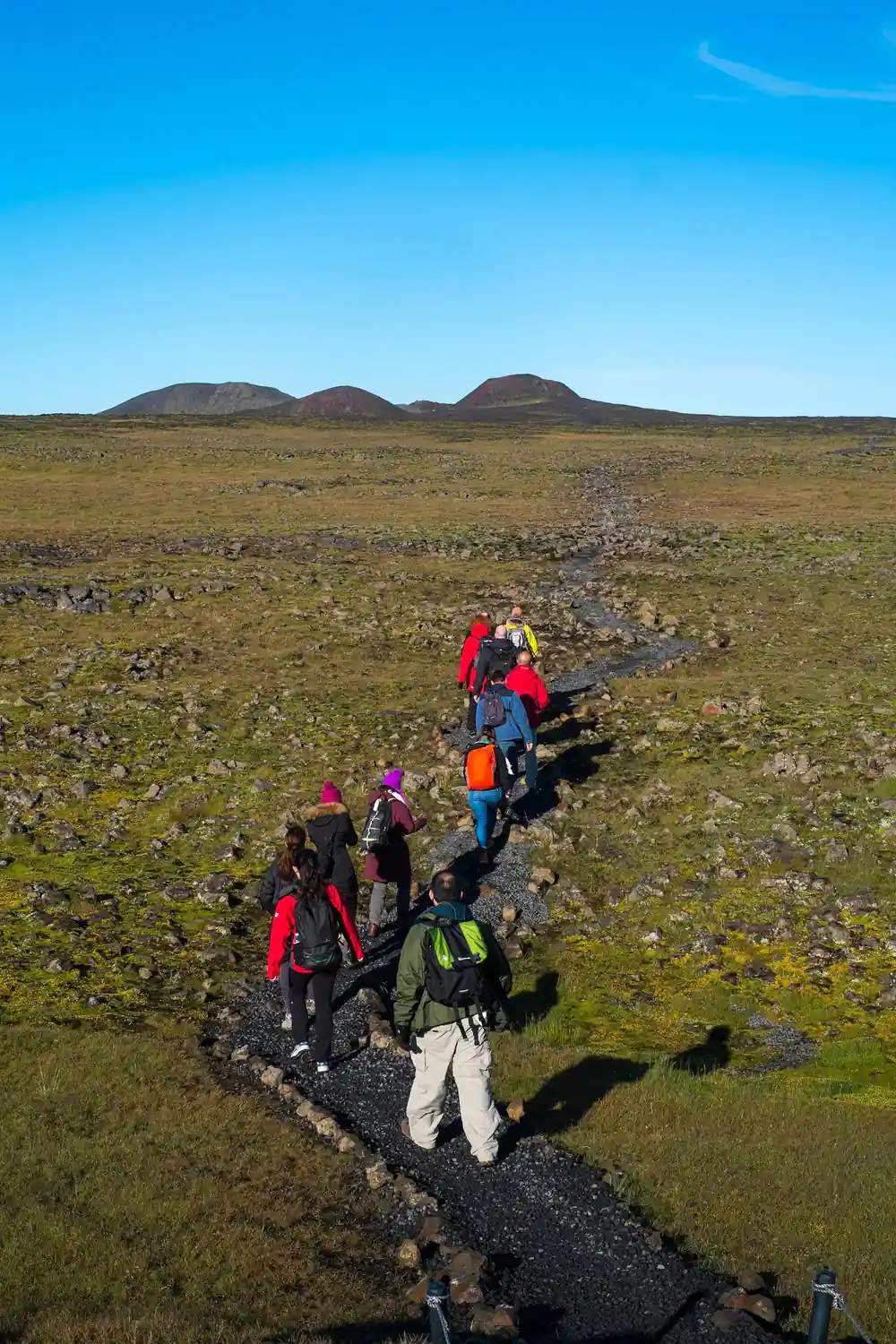
Line of walkers crosses the lava field toward the volcanic cone.
Why the roof stayed up
Part of the answer is in the shape. At the top of the cone is a funnel-shaped opening about 4 by 4 m, the entrance to a huge, bottle-shaped vault.[1] The opening is small compared with the chamber below, and the cone around it remains intact. Instead of a wide blast crater, visitors find a modest summit with a hidden interior.
The result is a space that has survived long enough for people to explore. The volcano cannot be visited independently; the guided tour hike or a helicopter tour are the only ways to get to the base.[4][5] Once there, the narrow entrance leads into the vast room below. Guides often pause at the top so you can look down before you commit to the lift.
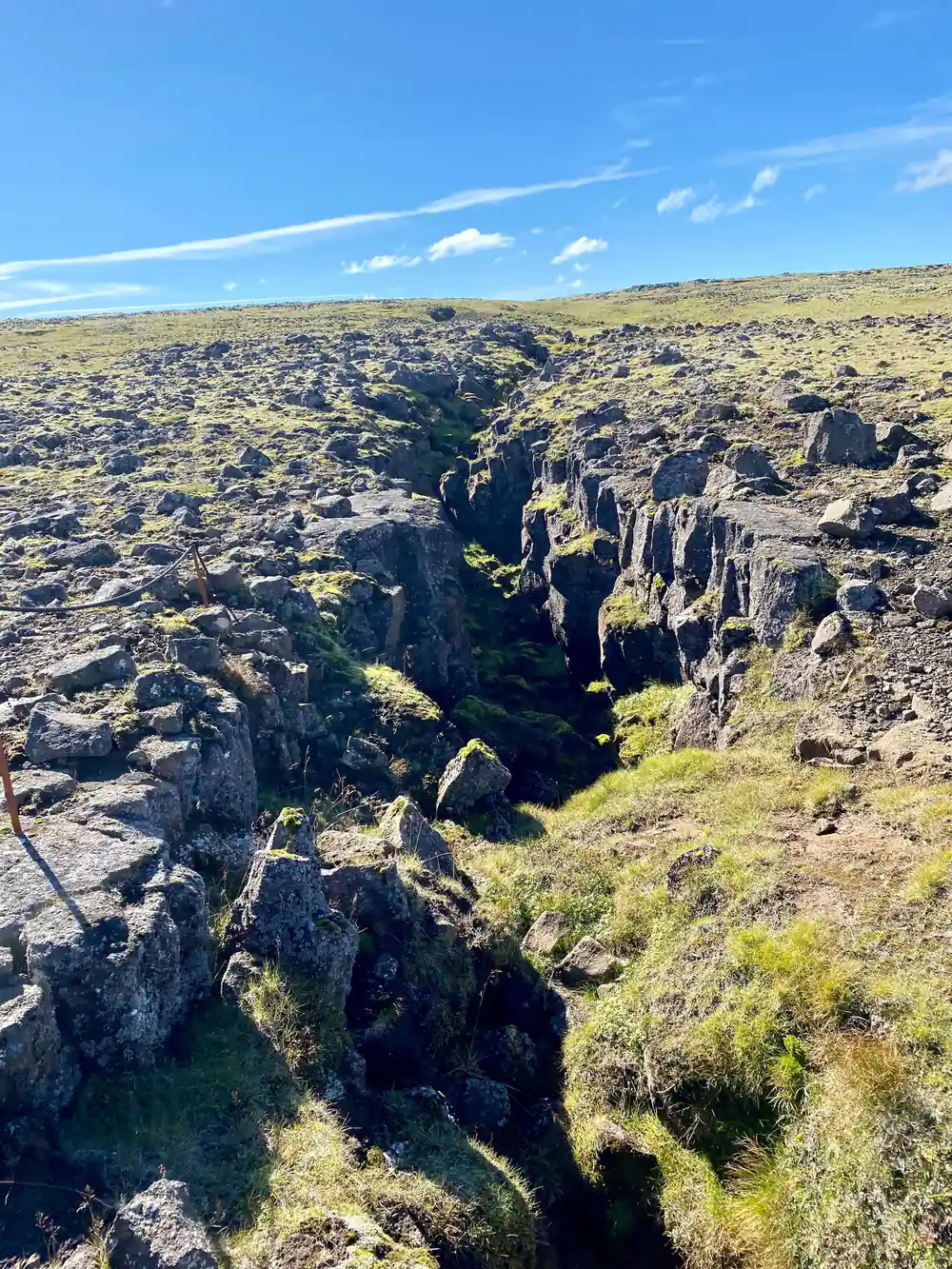
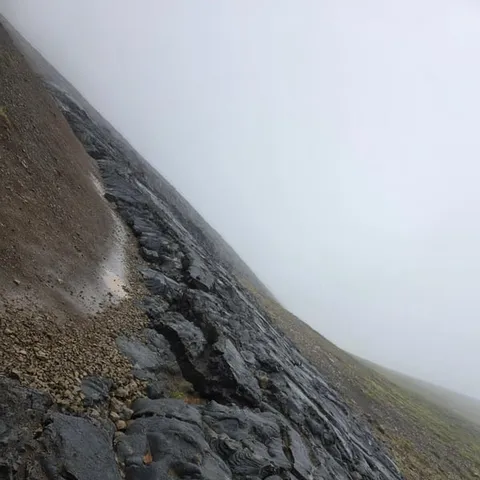
On the hike out, you get a second view of the same geology. The trail sits on lava from the same volcanic system, and the cone stands against the sky. It is a reminder that the empty chamber is part of a larger landscape, not an isolated curiosity.
How unusual this actually is
An empty magma chamber is not the kind of thing geologists expect to find. Most chambers stay deep below the surface, and when eruptions happen the rock above often collapses. At Thrihnukagigur, the chamber is a bottle-shaped vault about 120 m deep, with a bottom floor measuring 50 by 70 m.[1] It is large enough to move through freely and small enough to feel intimate.
The story of how it became known makes it feel even rarer. Thrihnukagigur was first entered in 1974 by cave explorer Árni B. Stefánsson.[1] For many guests, the unusual part is not just the size but the silence. Inside the chamber, the city feels far away. You hear your own footsteps on the rock and the voice of the guide echoing off the walls. That atmosphere is hard to put into words but impossible to forget.
from US$432
Descend into a dormant volcano and stand on the floor of an empty magma chamber, where mineral colours cover the walls.
What geologists get out of it
For geologists, the chamber is a chance to study what happens after magma moves away. The walls carry mineral deposits left by the last eruption, and those deposits became the colours visitors see today.[2] The eruption itself is distant enough to be safe: it happened about 4,500 years ago.[1] That timescale also means the rock has had time to settle, crack and reveal its internal structure.
The practical geology continues outside. The hike to the volcano is an integral part of the tour and one of only two ways of getting to the base.[4] The path to the volcano is about 3 km each way and usually takes about 45 minutes.[4] It is a walk across lava landscapes, with the crater as the reward. You can stop to look at moss, rock textures and the views of nearby mountains.
Inside, a guide helps translate what you see. Because the chamber is open, you can touch the walls, examine mineral streaks and look at the ceiling from below. For anyone curious about volcanoes, it is a lesson that stays with you.
Visiting the empty chamber
The Reykjavik: Thrihnukagigur Volcano Guided Hiking Day Trip costs from US$432.[6] It lasts 4 to 6 hours, with pickup available from Reykjavik and live guiding in English and Icelandic.[6] The operating window is May 5 to October 30 every year.[4]
Inside the experience, the numbers are simple. The descent into Thrihnukagigur is 120 meters, and the lift ride takes about 6 minutes.[2] Visitors then spend approximately 35-45 minutes inside, including the descent, time on the chamber floor, and the ascent.[3] The minimum age is 8.[3] That leaves plenty of time to explore without feeling rushed, and enough structure for first-time visitors.
The day trip is designed to be accessible for walkers with a reasonable level of fitness. The hiking section is not technical, and the lift does the vertical work. What matters most is being ready for changeable Iceland weather and having a sense of wonder.
Planning your inside the volcano Thrihnukagigur tour
To make the most of your inside the volcano Thrihnukagigur tour, book ahead and leave yourself a full half-day. The season is limited: the tour operates from May 5 to October 30.[4] Wear solid footwear, carry a rain layer and expect a 3 km walk each way across the lava field.[4]
The tour operator handles the logistics, but you can help yourself by arriving on time and following the guide's instructions. The chamber is cool and the rock can be damp, so a light hat or gloves can make the time inside more comfortable. Bring a camera, though the best memories tend to be the ones you cannot frame.
If you prefer to skip the hike, a helicopter option to Thrihnukagigur gets you to the volcano without the trail.[5] Either way, you need to join an organised visit because the volcano cannot be reached independently.[4] The GetYourGuide listing offers reserve now and pay later, with free cancellation up to 24 hours in advance.[6]
Distances around the volcano
Bar values: hike to crater 3[4], descent by lift 120[2], chamber depth 120[1], Raufarhólshellir tunnel 1360[9].
Compare the from-prices
US$ from-prices from GetYourGuide listings: from US$432[6], from US$153[7], from US$132[8].
When to book and go
How to visit Thrihnukagigur
Book the day trip
Reserve the Reykjavik: Thrihnukagigur Volcano Guided Hiking Day Trip from US$432. The tour lasts 4 to 6 hours.[6]
Meet at the base
Pickup is available in Reykjavik. The meeting point sits in Bláfjöll, about a 30-minute drive from the city.[6][10]
Walk to the crater
Follow the trail about 3 km each way. It usually takes about 45 minutes and is relatively easy.[4]
Ride the lift down
The descent into Thrihnukagigur is 120 meters, and the lift ride takes about 6 minutes.[2]
Explore the chamber
Expect to spend approximately 35-45 minutes inside, including the descent, time on the floor, and the ascent.[3]
Hike back out
Return along the same 3 km trail, then take the coach back to Reykjavik.[4]
Ready to stand inside a dormant volcano?
from US$432Reserve now & pay later